Quantum-Safe Data Security for US Businesses: 5 Steps to 2026 Resilience
Anúncios
The dawn of quantum computing is not just a scientific marvel; it’s a looming cybersecurity challenge of unprecedented scale. For U.S. businesses, the year 2026 represents a critical juncture – a deadline by which many experts predict quantum computers will be powerful enough to break current encryption standards, rendering vast amounts of sensitive data vulnerable. This isn’t a distant, abstract threat; it’s a concrete, near-future reality that demands immediate and strategic action. Securing your data against these advanced threats is no longer optional; it’s an imperative for survival and sustained trust in the digital economy. This comprehensive guide will walk U.S. businesses through five critical steps to bolster their quantum data security posture, ensuring resilience and compliance in the face of this evolving landscape.
The Quantum Threat: Why U.S. Businesses Can’t Afford to Wait
Traditional cryptographic algorithms, the bedrock of modern digital security, rely on mathematical problems that are computationally infeasible for classical computers to solve. However, quantum computers, with their ability to perform calculations exponentially faster, are poised to dismantle these foundations. Shor’s algorithm, for instance, can efficiently break widely used public-key cryptography like RSA and ECC, which protect everything from online banking and secure communications to government secrets and critical infrastructure. Grover’s algorithm, while not breaking encryption, significantly speeds up brute-force attacks on symmetric-key ciphers.
The implications for U.S. businesses are staggering. Imagine financial transactions being easily intercepted, intellectual property stolen, sensitive customer data exposed, and national security compromised. The threat isn’t just about immediate breaches; it’s also about ‘harvest now, decrypt later’ attacks, where encrypted data is collected today, stored, and then decrypted once quantum computers become powerful enough. This means data encrypted today could be compromised years down the line, affecting long-term data security and compliance.
Anúncios
The urgency is amplified by the fact that transitioning to quantum-safe data security isn’t an overnight process. It requires extensive planning, resource allocation, system overhauls, and workforce training. The National Institute of Standards and Technology (NIST) has been actively working on standardizing post-quantum cryptographic (PQC) algorithms, a clear signal that the U.S. government recognizes the immediacy of this threat. Businesses that fail to prepare risk not only devastating financial losses and reputational damage but also potential regulatory penalties and a significant competitive disadvantage. The time to act on quantum data security is now.
Step 1: Conduct a Comprehensive Quantum-Readiness Assessment
The first and most crucial step for any U.S. business is to understand its current vulnerability to quantum threats. This involves a thorough audit of all digital assets, systems, and processes that rely on cryptography. Think of it as a cybersecurity stress test against a future, more powerful adversary.
Identify Cryptographic Dependencies
Begin by mapping out every instance where cryptography is used within your organization. This includes, but is not limited to:
Anúncios
- Data in Transit: VPNs, TLS/SSL connections (HTTPS), email encryption.
- Data at Rest: Encrypted databases, cloud storage encryption, hard drive encryption.
- Digital Signatures: Code signing, software updates, document authenticity.
- Authentication Systems: Smart cards, multi-factor authentication, secure boot processes.
- Key Management Systems: How cryptographic keys are generated, stored, and managed.
- Legacy Systems: Older infrastructure that might use outdated or custom cryptographic implementations.
This inventory should detail the specific cryptographic algorithms used (e.g., RSA, ECC, AES-256, SHA-256), their key lengths, and the systems or applications that depend on them. Pay particular attention to public-key cryptography, as these are the most vulnerable to Shor’s algorithm.
Assess Data Longevity and Sensitivity
Not all data has the same shelf life or sensitivity level. Categorize your data based on how long it needs to remain confidential and secure. Data that requires long-term protection (e.g., intellectual property, patient records, financial archives, government contracts) is at higher risk of ‘harvest now, decrypt later’ attacks. Understand the regulatory and compliance requirements for each data type (e.g., HIPAA, GDPR, CCPA, CMMC) and how a quantum breach would impact these obligations.
Evaluate Supply Chain Vulnerabilities
Your quantum data security is only as strong as your weakest link. Extend your assessment to your supply chain, including third-party vendors, cloud service providers, and business partners. Inquire about their quantum-readiness plans, their cryptographic practices, and their timelines for adopting PQC. A single vulnerable link in your supply chain can expose your entire organization.
Resource Allocation and Expertise Gap Analysis
Finally, assess your internal capabilities. Do you have the necessary cybersecurity talent with expertise in cryptography and emerging threats? What resources (budget, personnel, tools) will be required to undertake a quantum migration? Identifying these gaps early will be crucial for developing a realistic and effective transition plan.
Step 2: Develop a Phased Migration Strategy to PQC
Once you understand your current cryptographic landscape, the next step is to formulate a detailed, phased strategy for transitioning to post-quantum cryptography (PQC). This is not a ‘rip and replace’ operation but a carefully orchestrated migration.
Monitor NIST PQC Standardization
NIST has been leading the charge in standardizing PQC algorithms. As of early 2024, several algorithms have been selected for standardization (e.g., CRYSTALS-Kyber for key encapsulation mechanisms and CRYSTALS-Dilithium for digital signatures), with others still under review. Your strategy must align with these evolving standards to ensure interoperability and long-term security. Stay informed about NIST’s announcements and recommendations.
Prioritize High-Risk Assets
Based on your quantum-readiness assessment, prioritize the systems and data that are most vulnerable and critical to your business operations. Begin your PQC migration with these high-risk areas. This might include:
- Long-lived secrets: Encryption keys, digital certificates, and data that needs to remain secure for decades.
- Critical infrastructure: Systems that, if compromised, would lead to significant operational disruption or national security risks.
- Customer-facing applications: Protecting customer trust and sensitive personal data.
Embrace Cryptographic Agility
Cryptographic agility is the ability to easily swap out or upgrade cryptographic primitives without re-engineering entire systems. This is paramount in the quantum era, as PQC standards are still evolving, and new threats or more efficient algorithms may emerge. Design your systems to be flexible, allowing for easy integration of new PQC algorithms as they mature and are standardized. This might involve:
- Using cryptographic libraries rather than hard-coding algorithms.
- Implementing modular cryptographic components.
- Adopting hybrid modes that combine classical and PQC algorithms for added security during the transition.

Pilot Programs and Testing
Before a full-scale deployment, implement pilot programs for PQC integration in non-critical environments. This allows you to test the new algorithms’ performance, compatibility with existing systems, and any potential operational disruptions. Gather data, identify challenges, and refine your migration strategy based on these pilot results. Testing should include:
- Performance benchmarks: How do PQC algorithms impact latency and throughput?
- Interoperability tests: Do PQC-enabled systems communicate effectively with existing infrastructure and third-party services?
- Security validation: Ensure the PQC implementation is correct and robust.
Step 3: Invest in Quantum-Secure Infrastructure and Solutions
Transitioning to PQC necessitates investing in new technologies, tools, and potentially entirely new infrastructure components. This investment is not merely an expense; it’s a strategic imperative for long-term business resilience and quantum data security.
Upgrade Hardware and Software
Many existing hardware security modules (HSMs), network devices, and software libraries are not designed to support PQC algorithms. You will likely need to upgrade or replace these components. Look for vendors who are actively developing quantum-safe solutions and are committed to supporting NIST-standardized algorithms. Key areas of investment include:
- PQC-ready cryptographic libraries: Software libraries that implement the new algorithms.
- Quantum-resistant HSMs: Hardware modules capable of generating, storing, and processing PQC keys securely.
- Network devices: Routers, firewalls, and VPN gateways that can handle PQC-encrypted traffic.
- Cloud services: Engage with your cloud providers to understand their PQC roadmap and ensure their services will align with your migration strategy.
Explore Quantum Key Distribution (QKD) and Post-Quantum Cryptography (PQC) Hybrid Approaches
While PQC focuses on new mathematical problems, Quantum Key Distribution (QKD) offers another layer of quantum data security by using quantum mechanics to establish cryptographic keys. While QKD has limitations (e.g., distance, cost, infrastructure requirements), hybrid approaches combining PQC with QKD are being explored for extremely sensitive communications. For most U.S. businesses, PQC will be the primary focus, but understanding QKD’s potential and limitations is beneficial for a holistic view of the quantum threat landscape.
Implement Robust Key Management Systems (KMS)
The complexity of managing cryptographic keys will increase with the introduction of PQC algorithms, which often have larger key sizes. A robust and agile Key Management System (KMS) is essential. This system should be capable of:
- Generating, storing, and distributing PQC keys securely.
- Supporting cryptographic agility, allowing for easy rotation and replacement of algorithms and keys.
- Integrating seamlessly with your PQC-enabled applications and infrastructure.
- Providing strong auditing and logging capabilities for compliance.
Step 4: Educate and Train Your Workforce
Technology alone cannot secure your organization. Your employees are your first line of defense, and their understanding of quantum threats and PQC best practices is critical. A comprehensive education and training program is indispensable for successful quantum data security.
Raise Awareness Across All Levels
Start by educating leadership and management about the strategic importance of quantum readiness. They need to understand the risks, the investment required, and the long-term benefits of proactive preparation. For the broader workforce, general awareness training should highlight the evolving threat landscape and the importance of secure data handling practices.
Technical Training for IT and Security Teams
Your IT and cybersecurity teams will be on the front lines of PQC implementation and management. They require in-depth technical training on:
- The principles of quantum computing and its impact on cryptography.
- The specifics of NIST-standardized PQC algorithms, their strengths, and limitations.
- Best practices for implementing, configuring, and managing PQC solutions.
- Troubleshooting common issues related to PQC deployment.
- The importance of cryptographic agility in their daily operations.
Develop New Policies and Procedures
As you transition to PQC, your existing cybersecurity policies and procedures will need to be updated. This includes:
- Data classification policies: Re-evaluating data sensitivity in the context of quantum threats.
- Key management policies: New guidelines for PQC key generation, storage, rotation, and revocation.
- Incident response plans: Updating protocols to address potential quantum-related breaches.
- Vendor management policies: Requiring third-party providers to demonstrate their quantum readiness.
Ensure that all relevant employees are trained on these new policies and understand their roles and responsibilities in maintaining quantum data security.
Step 5: Establish a Continuous Monitoring and Adaptation Framework
The quantum threat landscape is dynamic. What is considered secure today might not be tomorrow. Therefore, your quantum data security strategy cannot be a one-time project; it must be an ongoing process of monitoring, evaluation, and adaptation.
Stay Abreast of Quantum Computing Advancements
Actively monitor developments in quantum computing hardware and algorithms. Subscribe to industry newsletters, follow research from institutions like NIST and major tech companies, and participate in cybersecurity forums. Understanding the pace of quantum development will help you anticipate future threats and adjust your PQC strategy accordingly.
Regularly Review and Update PQC Implementations
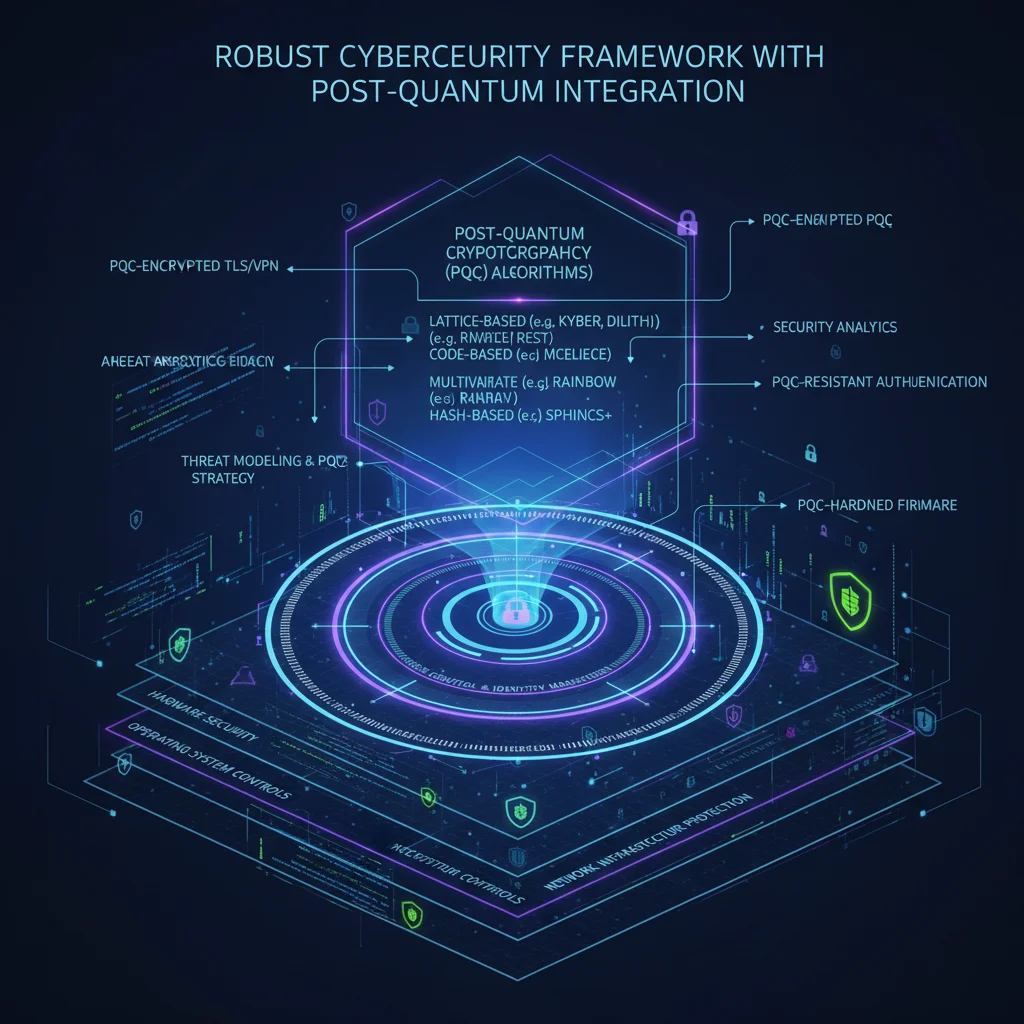
As NIST continues its PQC standardization process, new algorithms may be introduced, and existing ones might be refined or even retired if vulnerabilities are discovered. Regularly review your PQC implementations to ensure they align with the latest standards and best practices. This includes:
- Algorithm updates: Be prepared to swap out algorithms if better or more secure options become available.
- Software patches: Apply updates to cryptographic libraries and PQC-enabled solutions promptly.
- Configuration reviews: Ensure your PQC systems are configured optimally for security and performance.
Conduct Quantum-Threat Simulations and Drills
Periodically conduct simulations and tabletop exercises to test your organization’s response to a quantum-related cyberattack. This can help identify weaknesses in your incident response plans, evaluate the effectiveness of your PQC controls, and ensure your teams are prepared to act swiftly and decisively in a crisis. These drills should involve key stakeholders from IT, security, legal, and executive management.
Engage with Industry Peers and Experts
Collaborate with other U.S. businesses, industry groups, and cybersecurity experts. Share knowledge, discuss challenges, and learn from collective experiences in the quantum transition. The quantum threat is a shared challenge, and a collaborative approach can accelerate the adoption of effective quantum data security measures across the industry.
Conclusion: Building a Quantum-Resilient Future for U.S. Businesses
The year 2026 is rapidly approaching, and with it, the potential for quantum computers to shatter the cryptographic foundations of our digital world. For U.S. businesses, proactive engagement with quantum data security is not merely a technical upgrade; it’s a strategic imperative that will determine future competitiveness, regulatory compliance, and customer trust. By meticulously conducting a quantum-readiness assessment, developing a phased migration strategy to PQC, investing in quantum-secure infrastructure, educating your workforce, and establishing a continuous monitoring framework, your organization can navigate this complex transition successfully.
Embracing these five critical steps will position your business at the forefront of cybersecurity innovation, transforming a potential threat into an opportunity for enhanced resilience and long-term security. The future of data protection is quantum, and the time for U.S. businesses to prepare is now. Don’t wait for the quantum computers to arrive; secure your future today.
