US Critical Mineral Strategy 2026: Securing the Future
Anúncios
The Geopolitical Race for Critical Minerals in 2026: What the US Strategy Means for Supply Chain Resilience and Economic Security
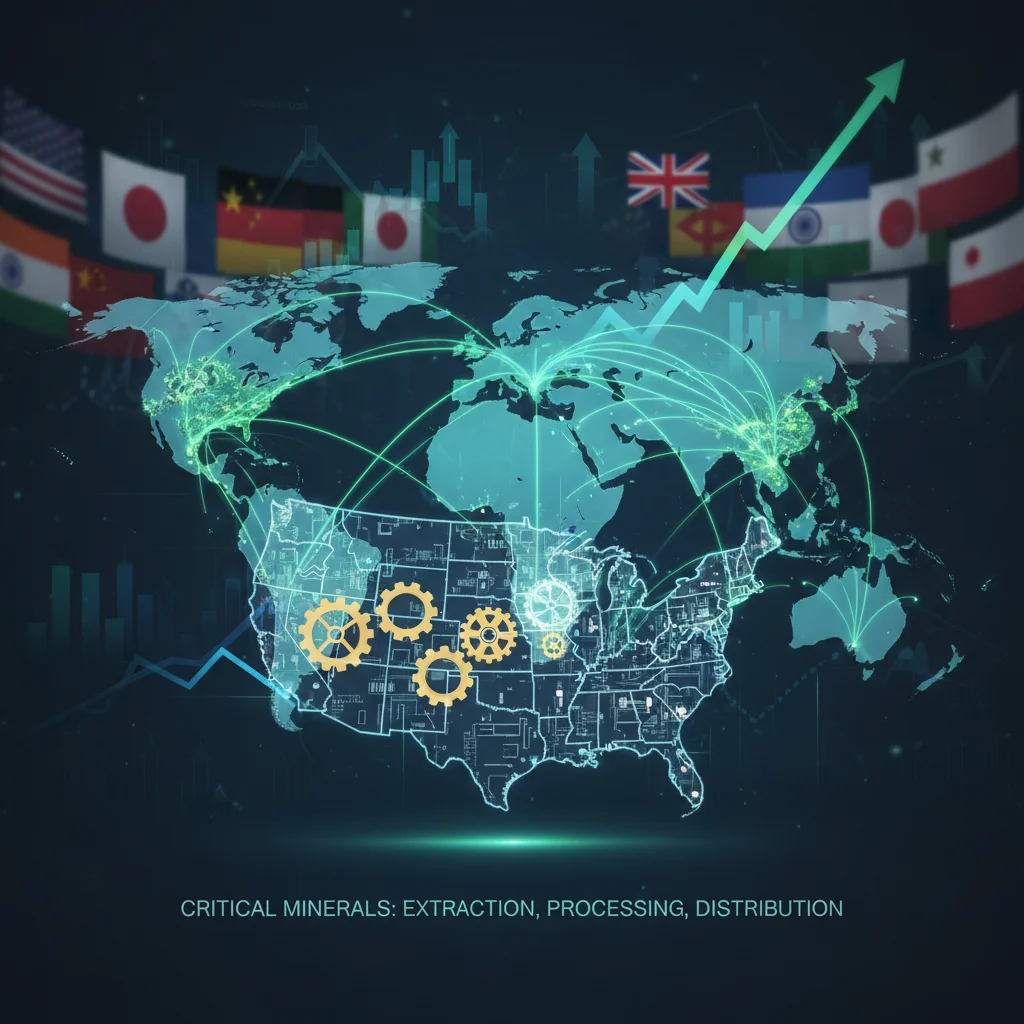
In an increasingly interconnected yet volatile world, the control and secure supply of critical minerals have emerged as a paramount concern for nations globally. These aren’t just any commodities; they are the bedrock of modern technology, from smartphones and electric vehicles to advanced defense systems and renewable energy infrastructure. As we look towards 2026, the United States is intensifying its efforts to secure these vital resources, recognizing that its economic security, technological leadership, and national defense hinge on a robust and resilient supply chain. The US Critical Mineral Strategy for 2026 is not merely a policy document; it’s a declaration of intent in a new geopolitical race.
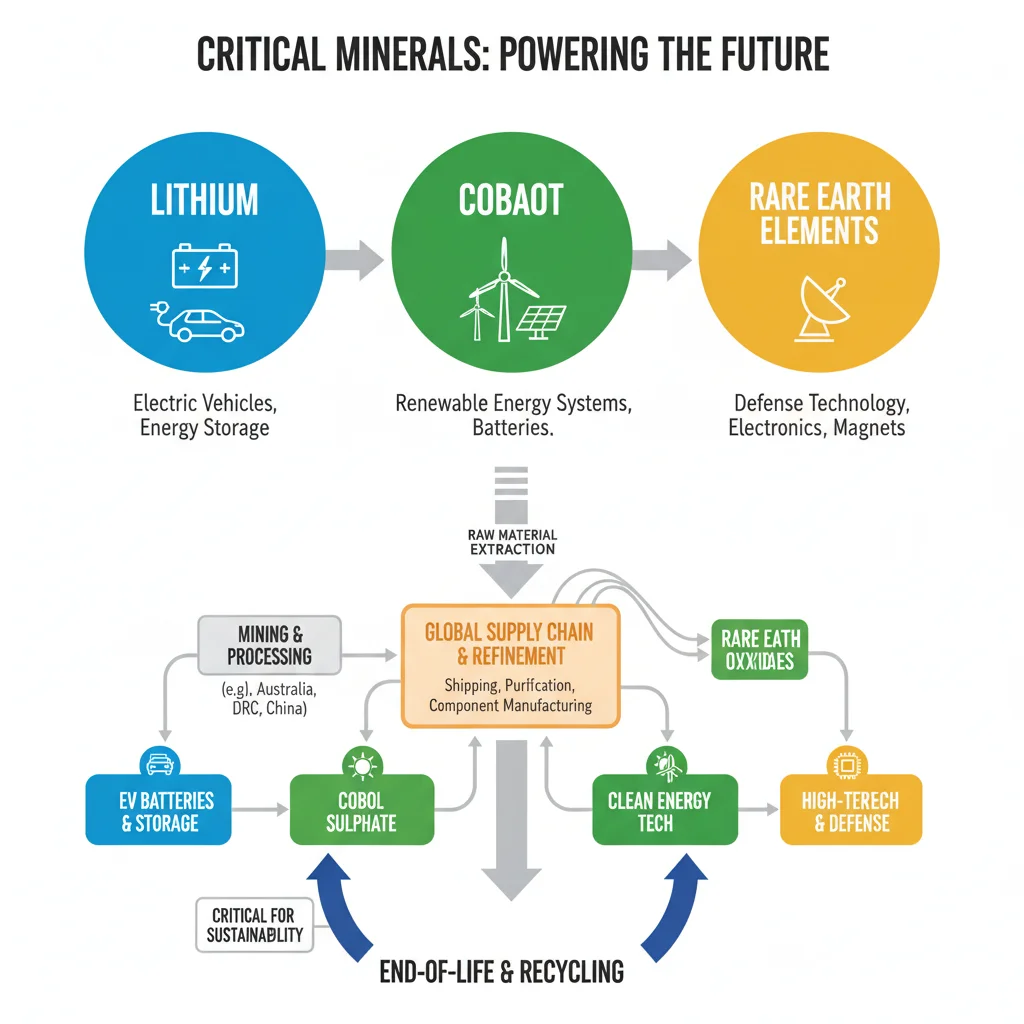
The demand for critical minerals is skyrocketing, driven by the global push for decarbonization and the rapid pace of technological innovation. Minerals like lithium, cobalt, nickel, graphite, and various rare earth elements are indispensable for the batteries powering electric vehicles, the magnets in wind turbines, and the semiconductors in virtually every electronic device. However, the supply chains for many of these minerals are highly concentrated, often in countries that may not align with US strategic interests. This concentration creates significant vulnerabilities, exposing the US to potential disruptions, price volatility, and geopolitical leverage by competitor nations.
Understanding the intricacies of the US Critical Minerals strategy for 2026 is crucial for policymakers, industry leaders, investors, and indeed, every citizen. This comprehensive overview will delve into the challenges, explore the key pillars of the US approach, analyze its potential impact on supply chain resilience and economic security, and discuss the broader geopolitical ramifications. We will examine how the US plans to diversify its sources, boost domestic production, foster international partnerships, and drive innovation to mitigate risks and secure its future.
Anúncios
The Imperative for a Robust US Critical Mineral Strategy
The urgency behind the US strategy for critical minerals cannot be overstated. Several converging factors have elevated this issue to the forefront of national policy discussions:
1. Geopolitical Competition and Supply Concentration
A significant portion of critical mineral processing and, in some cases, extraction, is controlled by a handful of countries, most notably China. China’s dominance in rare earth elements, for example, gives it substantial leverage over industries reliant on these materials. This concentration presents a national security risk, as supply disruptions, whether intentional or accidental, could cripple key sectors of the US economy and defense industrial base. The US aims to reduce this reliance and challenge existing monopolies.
2. Energy Transition and Decarbonization Goals
The global transition to clean energy technologies is heavily dependent on critical minerals. Achieving ambitious decarbonization targets, such as those outlined in the Paris Agreement and domestic climate policies, requires a massive increase in the production of electric vehicles, renewable energy infrastructure, and battery storage solutions. Without a secure supply of the necessary minerals, these goals will remain out of reach. The US Critical Minerals strategy directly supports the nation’s climate objectives by ensuring access to these foundational materials.
Anúncios
3. Economic Security and Technological Leadership
Access to critical minerals is intrinsically linked to economic security and technological competitiveness. Industries such as aerospace, automotive, electronics, and defense are all critically dependent on these materials. A lack of secure supply can lead to manufacturing bottlenecks, increased costs, and a loss of competitive advantage. By strengthening its critical mineral supply chains, the US seeks to protect its industries, create high-paying jobs, and maintain its position as a global innovation leader.
4. National Defense Needs
Modern military equipment, from advanced fighter jets to precision-guided munitions and communication systems, relies heavily on critical minerals. Ensuring a stable and secure supply is therefore a matter of paramount national defense. Any disruption could compromise military readiness and operational capabilities. The US strategy prioritizes securing minerals essential for its defense industrial base.
Pillars of the US Critical Mineral Strategy 2026
The US approach to critical minerals is multifaceted, encompassing domestic initiatives, international diplomacy, and technological innovation. While specific policies may evolve, the core pillars remain consistent, aiming to build a resilient and diversified critical mineral ecosystem by 2026 and beyond.
Pillar 1: Boosting Domestic Production and Processing
A cornerstone of the strategy is to reduce reliance on foreign sources by increasing domestic mining, processing, and refining capabilities. This involves:
- Streamlining Permitting Processes: Expediting the environmental review and permitting process for new mines and processing facilities, while maintaining high environmental standards. This is a delicate balance, as environmental protection is also a key concern.
- Investing in Research and Development: Funding R&D into new, more environmentally friendly, and efficient extraction and processing technologies. This includes exploring novel methods for extracting minerals from unconventional sources.
- Financial Incentives: Providing grants, loans, and tax credits to companies investing in domestic critical mineral projects. This aims to de-risk investments and encourage private sector participation in a capital-intensive industry.
- Mapping and Assessment: Enhancing geological surveys and resource assessments to identify new domestic deposits of critical minerals. Understanding the full extent of national reserves is the first step towards extraction.
Pillar 2: Diversifying International Supply Chains Through Partnerships
Recognizing that complete domestic self-sufficiency for all critical minerals may not be feasible or economically viable, the US is actively pursuing partnerships with like-minded countries. This involves:
- Bilateral and Multilateral Agreements: Forging agreements with allies and partners (e.g., Canada, Australia, European Union, Japan, South Korea) to secure diverse sources of critical minerals. These agreements often involve joint investments, shared research, and coordinated supply chain development.
- Mineral Security Partnership (MSP): An initiative launched by the US, bringing together key partners to catalyze public and private investment in secure critical mineral supply chains globally. The MSP aims to diversify sourcing and processing outside of traditional concentrated areas.
- Technical Assistance and Capacity Building: Supporting developing countries with critical mineral endowments to responsibly develop their resources, ensuring ethical practices and environmental sustainability. This can create new, reliable supply corridors.
- "Friendshoring" and "Ally-shoring": Prioritizing trade and investment relationships with trusted allies to build resilient supply chains that are less susceptible to geopolitical risks. This strategy aims to create a network of reliable partners.
Pillar 3: Promoting Recycling, Reuse, and Circular Economy Principles
Reducing the demand for newly mined minerals through recycling and reuse is a crucial component of long-term sustainability and supply chain resilience. This pillar includes:
- Investing in Recycling Infrastructure: Developing advanced technologies and infrastructure for the efficient recycling of critical minerals from end-of-life products, particularly batteries and electronics.
- Designing for Circularity: Encouraging manufacturers to design products with ease of disassembly and material recovery in mind, facilitating future recycling efforts.
- Research into Substitutes: Funding research into developing substitute materials that can reduce or eliminate the need for certain critical minerals, thereby lessening dependency.
- Policy and Regulatory Frameworks: Implementing policies that incentivize recycling and mandate responsible disposal of products containing critical minerals.
Pillar 4: Enhancing Transparency and Data Collection
Effective strategy relies on accurate and timely information. This pillar focuses on:
- Supply Chain Mapping: Developing comprehensive maps of critical mineral supply chains to identify vulnerabilities, choke points, and potential areas for diversification.
- Market Intelligence: Improving data collection and analysis on global critical mineral markets, including production, consumption, price trends, and geopolitical factors.
- Early Warning Systems: Establishing mechanisms to detect and respond to potential supply disruptions promptly.
Impact on Supply Chain Resilience and Economic Security
The successful implementation of the US Critical Minerals strategy by 2026 promises significant benefits for both supply chain resilience and broader economic security.
Enhanced Supply Chain Resilience
A diversified and robust critical mineral supply chain will be far less vulnerable to single points of failure. By reducing reliance on any one country or region, the US can mitigate risks associated with political instability, trade disputes, natural disasters, or deliberate weaponization of supply. Increased domestic processing capabilities mean that even if raw materials are sourced internationally, the crucial midstream processing steps are more secure, reducing the impact of disruptions further up the chain.
Strengthened Economic Security
Economic security will be bolstered through several avenues. Stable access to critical minerals ensures that US manufacturing industries can continue to operate and innovate without interruption, protecting jobs and investment. It also reduces price volatility, as a more diversified market is less susceptible to cartel-like behavior or sudden supply shocks. Furthermore, by investing in domestic mining, processing, and recycling, the US can create new industries and high-tech jobs, contributing to economic growth and technological self-sufficiency. The clean energy sector, in particular, stands to benefit immensely, ensuring the US can lead the global energy transition.
Geopolitical Implications of the US Critical Mineral Strategy
The US strategy for critical minerals in 2026 is not just an economic or industrial policy; it is a significant geopolitical move with far-reaching consequences.
Shifting Global Power Dynamics
By actively seeking to diversify supply chains and reduce reliance on dominant players, the US is directly challenging existing power structures in the critical minerals landscape. This could lead to a rebalancing of influence, as countries with significant mineral reserves or processing capabilities become more important strategic partners. The strategy implicitly aims to diminish the geopolitical leverage currently held by nations with concentrated control over these resources.
Increased International Cooperation and Competition
The strategy will likely spur both increased cooperation and competition. On one hand, the formation of alliances like the Mineral Security Partnership demonstrates a clear intent for multilateral collaboration among like-minded nations to secure shared interests. On the other hand, countries that currently dominate the critical mineral supply chain may view these efforts as a direct threat to their economic and strategic advantages, potentially leading to increased competition for resources and influence, particularly in resource-rich developing nations.
Impact on Developing Nations
Developing countries with significant critical mineral deposits will find themselves at the center of this geopolitical competition. The US strategy emphasizes responsible sourcing and ethical practices, potentially offering an alternative to less scrupulous actors. This could empower these nations to negotiate better terms for their resources, leading to more sustainable development and greater economic benefits for their populations, provided they navigate the complexities of international demands effectively.
Environmental and Social Governance (ESG) Standards
A critical aspect of the US strategy is to promote higher Environmental, Social, and Governance (ESG) standards throughout the critical mineral supply chain. This is not only about ethical sourcing but also about creating a competitive advantage. Consumers and investors are increasingly demanding products made with responsibly sourced materials. By championing higher standards, the US can differentiate its supply chains and encourage a global shift towards more sustainable and ethical practices, which in turn can create more resilient supply chains less prone to disruptions from environmental or social controversies.

Challenges and Roadblocks Ahead
Despite the ambitious goals, the implementation of the US Critical Minerals strategy faces significant challenges:
- High Capital Costs: Establishing new mines and processing facilities is incredibly capital-intensive and time-consuming, often requiring billions of dollars and years to bring online.
- Environmental Concerns: Mining operations carry environmental risks, and balancing the need for domestic production with environmental protection is a delicate act. Public opposition to new mining projects can also be a significant hurdle.
- Skilled Workforce Shortage: A shortage of skilled labor in mining, geology, and advanced materials processing could impede the rapid expansion of domestic capabilities.
- Technological Hurdles: While R&D is underway, scaling up new extraction and processing technologies to commercial viability can be challenging.
- Geopolitical Resistance: Dominant players in the critical mineral market may react to US diversification efforts, potentially leading to trade tensions or other forms of geopolitical maneuvering.
- Price Volatility: The market for critical minerals can be highly volatile, making long-term investment decisions risky. Government support and stable policy frameworks are essential to mitigate this.
Looking Towards 2026 and Beyond
By 2026, the US aims to have made substantial progress in establishing a more secure and resilient critical mineral supply chain. This will likely involve a combination of increased domestic output, a robust network of trusted international partners, and advanced recycling capabilities. The success of this strategy will not only safeguard US economic and national security but also contribute to a more stable and sustainable global supply of these essential materials.
The US Critical Minerals strategy is a long-term endeavor that requires sustained commitment, adaptable policies, and continuous innovation. It represents a proactive response to the evolving geopolitical and technological landscape, ensuring that the US remains at the forefront of global competitiveness and can meet the demands of the future energy and technology revolutions.
The journey to mineral security is complex, but the stakes are too high to ignore. As nations vie for control over the resources that power the future, the US strategy provides a clear roadmap for navigating this intricate terrain, building resilience, and securing prosperity for generations to come. The emphasis on collaboration over isolation, innovation over stagnation, and sustainability over exploitation will define the success of this critical national undertaking.
