U.S. Semiconductor Shortage: 3 Innovative Solutions & Future Outlook

Anúncios
The U.S. Semiconductor Shortage: 3 Innovative Solutions Emerging in the Past 6 Months
The global economy has been grappling with an unprecedented challenge over the last few years: the U.S. semiconductor shortage. This scarcity of crucial electronic components has sent ripple effects across virtually every industry, from automotive and consumer electronics to healthcare and defense. The implications are profound, leading to production delays, inflated costs, and significant economic uncertainty. While the roots of this complex issue are multi-faceted, stemming from a combination of surging demand, geopolitical tensions, and unforeseen disruptions like the COVID-19 pandemic, the past six months have witnessed a concerted and innovative push towards sustainable solutions. This article will delve into three pivotal and emerging strategies that are actively being implemented to alleviate the U.S. semiconductor shortage, offering a glimmer of hope and a clear path forward for an industry vital to modern life.
Understanding the gravity of the situation is paramount. Semiconductors, often referred to as the ‘brains’ of modern technology, power everything from our smartphones and laptops to advanced medical devices and critical infrastructure. A disruption in their supply chain isn’t merely an inconvenience; it’s a fundamental threat to technological progress and economic stability. The U.S., once a dominant force in semiconductor manufacturing, has seen its share of global production dwindle over decades, making it increasingly reliant on foreign suppliers, particularly in Asia. This reliance became a critical vulnerability when global events strained existing supply lines, exposing the urgent need for domestic resilience and strategic innovation.
The journey to overcome the U.S. semiconductor shortage is not a sprint but a marathon, requiring significant investment, collaboration, and a long-term vision. However, the solutions emerging in the recent past are not just reactive measures; they represent a fundamental shift in how the industry approaches manufacturing, design, and global collaboration. These strategies aim not only to address the immediate crisis but also to build a more robust, secure, and resilient semiconductor ecosystem for the future. We will explore how these innovative solutions are transforming the landscape, fostering a new era of domestic production, technological advancement, and diversified supply chains.
Anúncios
1. Reshoring and Expanding Domestic Manufacturing Capabilities
One of the most significant and impactful responses to the U.S. semiconductor shortage has been the aggressive push towards reshoring and expanding domestic manufacturing capabilities. For decades, the trend was towards offshoring semiconductor production to regions with lower labor costs and established infrastructure, primarily in Asia. This strategy, while initially cost-effective, inadvertently created a fragile global supply chain heavily concentrated in a few geographic locations. The recent shortage starkly highlighted the risks associated with this over-reliance, prompting a national imperative to bring chip manufacturing back to American soil.
<
The U.S. government, through initiatives like the CHIPS and Science Act, has committed substantial financial incentives – billions of dollars in subsidies, tax credits, and research funding – to encourage semiconductor companies to build and expand fabrication plants (fabs) within the United States. This legislation is a game-changer, aiming to revitalize domestic production and restore the U.S.’s competitive edge in advanced semiconductor manufacturing. The impact of this legislation is already visible, with major players in the semiconductor industry announcing multi-billion dollar investments in new fabs across various states.
Anúncios
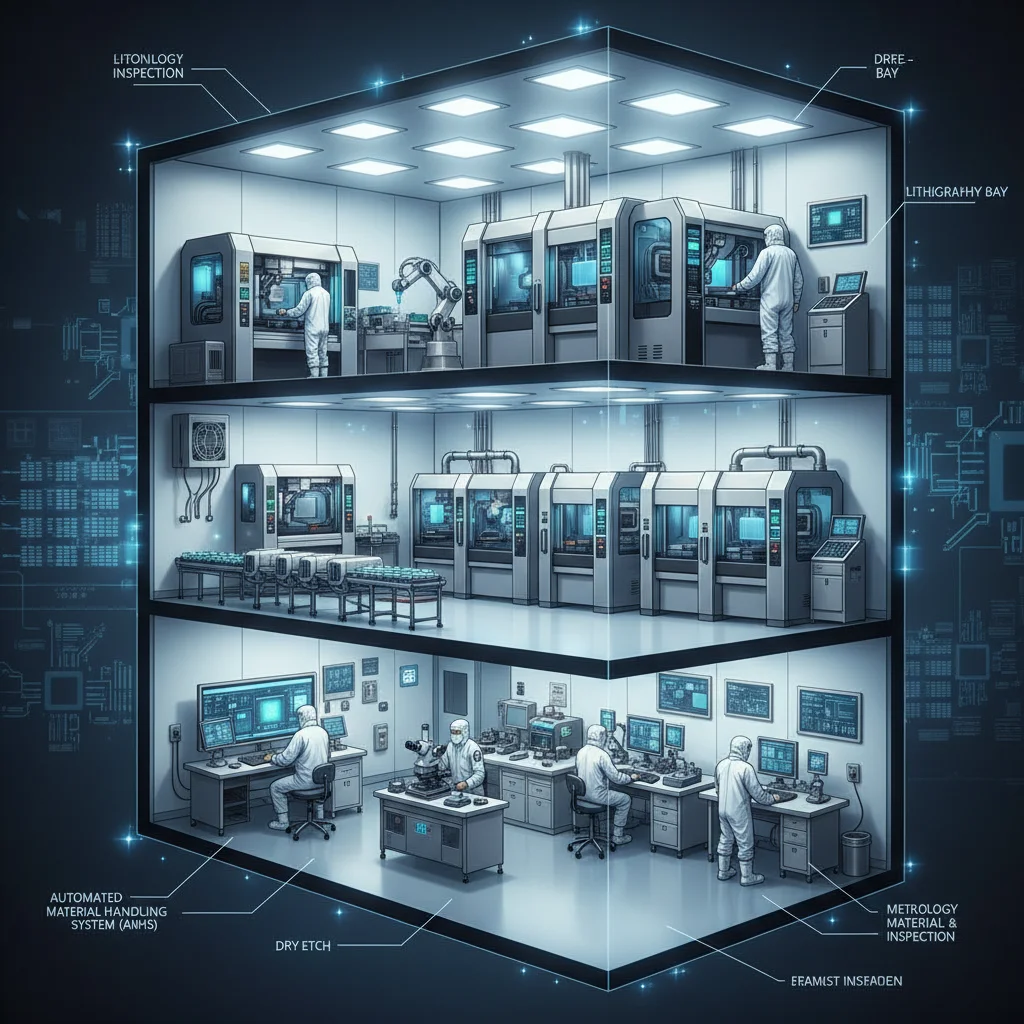
These new fabs are not just about increasing capacity; they are about building state-of-the-art facilities equipped with the latest technology to produce advanced chips. The focus is on cutting-edge nodes, such as 3nm and 2nm processes, which are critical for powering the next generation of artificial intelligence, high-performance computing, and advanced wireless communication. The construction of these fabs is a massive undertaking, requiring years of planning, significant capital investment, and a highly skilled workforce. However, the long-term benefits of a more resilient domestic supply chain, reduced lead times, and enhanced national security far outweigh the initial challenges.
Beyond the financial incentives, there’s also a growing recognition of the need to cultivate a robust ecosystem around these fabs. This includes investing in research and development, fostering partnerships between industry and academia, and developing a pipeline of skilled talent – engineers, technicians, and researchers – to support the burgeoning domestic semiconductor industry. Universities and technical colleges are collaborating with industry leaders to create specialized training programs and apprenticeships, ensuring that the workforce is ready to meet the demands of advanced manufacturing. This holistic approach is crucial for the sustained success of reshoring efforts and for building a truly self-sufficient semiconductor industry in the U.S.
The strategic importance of reshoring goes beyond mere economics. It’s a matter of national security, ensuring that critical components for defense systems and essential infrastructure are not vulnerable to geopolitical disruptions. It also offers a significant economic boost, creating high-paying jobs and stimulating innovation across various sectors. While the full impact of these reshoring efforts will take time to materialize, the past six months have shown an undeniable commitment and tangible progress in establishing a stronger, more independent U.S. semiconductor manufacturing base.
2. Advancements in Advanced Packaging Technologies
While building new fabs is crucial for manufacturing the silicon wafers themselves, an equally important and rapidly evolving solution to the U.S. semiconductor shortage lies in advancements in advanced packaging technologies. Traditionally, packaging was seen as a relatively mundane final step in chip manufacturing, primarily focused on protecting the silicon die and providing electrical connections. However, as the physical limits of Moore’s Law (the observation that the number of transistors on a microchip doubles approximately every two years) become more apparent, advanced packaging has emerged as a critical driver of performance, power efficiency, and cost reduction.
Advanced packaging techniques, such as 3D stacking, chiplets, and fan-out wafer-level packaging, allow for the integration of multiple disparate chips (e.g., CPU, GPU, memory, specialized accelerators) into a single, compact package. This approach offers several compelling advantages. Firstly, it enables the creation of highly complex and powerful systems that might be impossible or prohibitively expensive to manufacture as a single monolithic chip. By combining smaller, specialized ‘chiplets’ – each potentially manufactured at its most optimal process node – designers can achieve superior performance and efficiency while managing costs more effectively.
Secondly, advanced packaging can help mitigate the U.S. semiconductor shortage by optimizing the use of existing fab capacity. Instead of requiring a single, cutting-edge fab to produce an entire complex chip, companies can leverage different fabs for different chiplets, potentially reducing reliance on the most constrained and expensive advanced process nodes. This modular approach provides greater flexibility in sourcing components and can accelerate time-to-market for new products, easing some of the pressure on the supply chain.
The U.S. is making significant investments in advanced packaging research and development, recognizing its strategic importance. Companies are establishing new facilities and forming partnerships to accelerate the adoption of these technologies. For instance, initiatives are underway to develop domestic capabilities for advanced packaging, reducing reliance on overseas facilities for this critical step. This not only enhances supply chain resilience but also positions the U.S. at the forefront of a key technological frontier.
Furthermore, advanced packaging plays a vital role in enabling heterogeneous integration, where different types of materials and functionalities are brought together in a single package. This opens up new possibilities for innovation in areas like artificial intelligence, quantum computing, and specialized sensors. The ability to integrate diverse components efficiently and effectively is paramount for developing the next generation of electronic devices and systems. The ongoing breakthroughs in advanced packaging are therefore not just a solution to the current shortage but a catalyst for future technological evolution, firmly placing the U.S. in a leading position.
3. Diversification of Supply Chains and Strategic Partnerships
The third major innovative solution addressing the U.S. semiconductor shortage involves a concerted effort to diversify supply chains and forge strategic international partnerships. The over-concentration of semiconductor manufacturing in a few regions, particularly East Asia, proved to be a critical vulnerability when unforeseen events disrupted global logistics and production. Recognizing this, governments and industry leaders are actively working to spread manufacturing and sourcing across a wider geographical footprint, thereby building greater resilience into the global semiconductor ecosystem.
Diversification is not simply about moving production from one country to another; it’s about creating a more robust network of suppliers, manufacturers, and partners globally. This involves investing in new production capacities in allied nations, exploring alternative sources for raw materials, and fostering collaboration across borders. For example, the U.S. is actively engaging with countries in Europe, Japan, and other regions to establish reciprocal investment and supply agreements, ensuring that critical components can be sourced from multiple reliable partners.
Strategic partnerships are also playing a crucial role. These partnerships extend beyond simple buyer-supplier relationships to encompass joint research and development initiatives, technology sharing agreements, and collaborative efforts to standardize processes and intellectual property. The goal is to create a more interconnected yet distributed network that can withstand localized disruptions. This ‘friend-shoring’ approach, where supply chains are redirected to politically stable and allied countries, is gaining traction as a means to balance efficiency with security.
Furthermore, companies are implementing sophisticated supply chain visibility and risk management strategies. This involves leveraging data analytics and artificial intelligence to monitor global production, anticipate potential bottlenecks, and identify alternative suppliers in real-time. By having a clearer understanding of their entire supply chain, from raw materials to finished products, companies can react more swiftly and effectively to disruptions, minimizing their impact on production.
Another aspect of diversification includes exploring new materials and manufacturing processes. While silicon remains the dominant material for semiconductors, research into alternative materials like gallium nitride (GaN) and silicon carbide (SiC) is accelerating. These materials offer superior performance in certain applications, such as power electronics and high-frequency communication, and can potentially ease demand on traditional silicon-based processes. Developing diverse material science capabilities adds another layer of resilience to the overall semiconductor supply chain.
The long-term vision for supply chain diversification is to create a multi-polar semiconductor industry where no single region holds undue influence over global production. This not only mitigates the risks associated with geopolitical tensions and natural disasters but also fosters greater competition and innovation across the board. The past six months have seen concrete steps taken towards this vision, with new agreements, investments, and collaborations signaling a significant shift towards a more distributed and secure global semiconductor landscape.

Challenges and the Road Ahead for Semiconductor Shortage Solutions
While the innovative solutions discussed – reshoring, advanced packaging, and supply chain diversification – offer a promising path forward, the journey to fully resolve the U.S. semiconductor shortage is fraught with significant challenges. These hurdles require sustained commitment, substantial investment, and collaborative efforts from both the public and private sectors.
One of the primary challenges in reshoring manufacturing is the immense capital expenditure required to build and equip state-of-the-art fabs. A single advanced fab can cost tens of billions of dollars, and the return on investment can take many years. Furthermore, the construction process itself is lengthy, often spanning several years from groundbreaking to full production. This means that while new fabs are being announced, their impact on alleviating the current shortage will not be immediate. There’s also the challenge of finding and training a highly specialized workforce. The U.S. needs to significantly expand its talent pipeline for semiconductor engineers, technicians, and researchers to staff these new facilities and maintain a competitive edge. Educational institutions and vocational training programs must align with industry needs to bridge this skills gap effectively.
For advanced packaging, while it offers incredible potential, its widespread adoption also faces challenges. The complexity of these technologies requires significant research and development, and the integration of diverse chiplets from different manufacturers demands robust standardization and interoperability protocols. Moreover, scaling up advanced packaging capabilities domestically requires considerable investment in specialized equipment and expertise, an area where the U.S. has historically lagged behind some Asian counterparts. Overcoming these technological and infrastructure hurdles is crucial for realizing the full benefits of advanced packaging.
Diversifying supply chains, while essential for resilience, is not without its complexities. Shifting established supply routes and building new partnerships takes time, negotiation, and trust. Geopolitical considerations, trade policies, and intellectual property concerns can all complicate efforts to create a truly diversified and secure global network. Companies must also balance the desire for diversification with the economic realities of efficiency and cost-effectiveness. A completely localized supply chain for every component might not be economically viable, necessitating a strategic balance between domestic production and reliable international sourcing.
Moreover, the inherent cyclical nature of the semiconductor industry adds another layer of complexity. Periods of shortage are often followed by periods of oversupply, making long-term capacity planning a delicate balancing act. Governments and industry players must work together to develop sophisticated forecasting models and agile production strategies to avoid future boom-and-bust cycles that can destabilize the market.
Another ongoing challenge is the rapidly evolving technological landscape. The demand for increasingly powerful and efficient chips continues unabated, driven by advancements in AI, 5G/6G, IoT, and autonomous systems. This constant push for innovation means that even as current shortages are addressed, the industry must continuously invest in next-generation technologies and manufacturing processes to stay ahead of the curve. The solutions implemented today must be flexible enough to adapt to tomorrow’s technological demands.
Finally, the global nature of the semiconductor industry means that unilateral actions by any one country, while important, are not sufficient. International cooperation and a shared understanding of the challenges are vital. Collaborative efforts on research, standards, and global trade policies will be essential to building a truly resilient and equitable global semiconductor ecosystem. The path ahead is challenging, but the proactive and innovative steps taken in the past six months demonstrate a strong commitment to overcoming these obstacles and securing a robust future for the U.S. semiconductor industry.
The Future Outlook: A More Resilient Semiconductor Ecosystem
The U.S. semiconductor shortage has served as a powerful wake-up call, forcing a critical re-evaluation of global supply chain strategies and highlighting the indispensable role of domestic technological capabilities. The innovative solutions emerging over the past six months – aggressive reshoring, breakthroughs in advanced packaging, and strategic diversification of supply chains – are not merely temporary fixes but foundational shifts designed to build a more resilient, secure, and competitive semiconductor ecosystem for the future.
The commitment to reshoring manufacturing, bolstered by significant government incentives, is already transforming the landscape. The construction of new, state-of-the-art fabs in the U.S. will not only increase domestic production capacity but also foster a vibrant ecosystem of ancillary industries, research institutions, and a highly skilled workforce. This long-term investment is crucial for national security and economic prosperity, reducing dependence on volatile global supply chains and ensuring access to cutting-edge chip technology.
Simultaneously, the rapid advancements in advanced packaging technologies are revolutionizing how chips are designed and integrated. By enabling heterogeneous integration and the efficient use of chiplets, these innovations are pushing the boundaries of performance and power efficiency, even as traditional scaling becomes more challenging. The U.S.’s focus on leading in this area positions it to drive the next wave of technological innovation across various sectors, from AI to high-performance computing.
Moreover, the strategic diversification of supply chains, through ‘friend-shoring’ and enhanced global partnerships, is building a more robust and distributed network. This approach aims to mitigate risks associated with geopolitical tensions, natural disasters, and localized disruptions, ensuring a more stable and predictable supply of semiconductors globally. The emphasis on supply chain visibility and risk management tools further strengthens the industry’s ability to adapt to unforeseen challenges.
While significant challenges remain, including the substantial capital investment required, the need for a skilled workforce, and the complexities of international collaboration, the momentum generated in the past six months is undeniable. The U.S. is not just reacting to a crisis; it is proactively shaping the future of the semiconductor industry. This involves a holistic strategy encompassing technological leadership, economic incentives, workforce development, and strategic international engagement.
The long-term outlook suggests a semiconductor industry that is more geographically diverse, technologically advanced, and inherently resilient. This will lead to greater stability in the supply of critical components, fostering sustained innovation and economic growth not only in the U.S. but globally. The lessons learned from the U.S. semiconductor shortage are paving the way for a more secure and prosperous technological future, where the ‘brains’ of our modern world are produced with greater foresight and strategic independence.
The ongoing efforts represent a pivotal moment in the history of the semiconductor industry. As these innovative solutions continue to mature and integrate, we can anticipate a future where the disruptions caused by chip shortages become less frequent and less severe, allowing industries to thrive and technological progress to accelerate unimpeded. The next few years will be critical in solidifying these gains and ensuring the U.S. maintains a leading role in the foundational technology of the 21st century.
