Global Supply Chain Resilience: 7 Practical Solutions for U.S. Companies Facing 2026 International Trade Disruptions
Anúncios
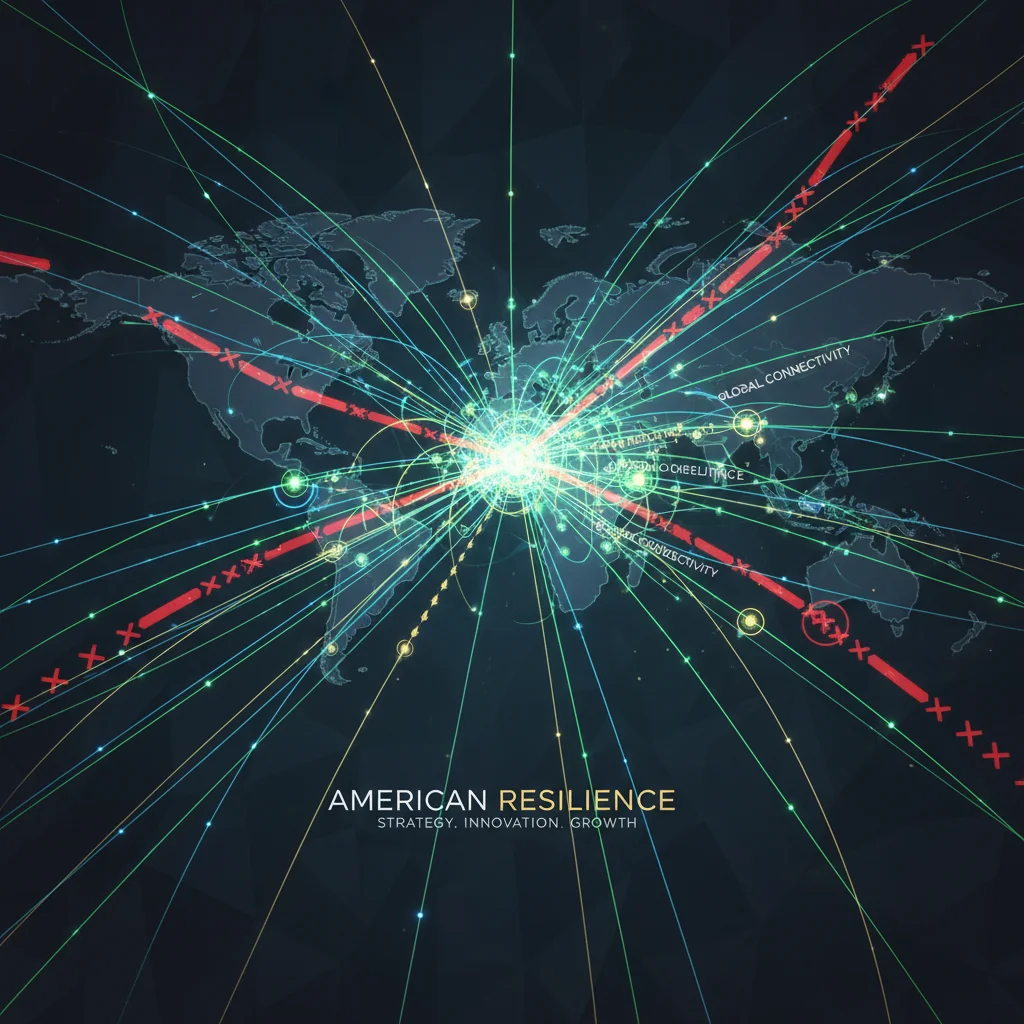
The landscape of global trade is shifting at an unprecedented pace, presenting both challenges and opportunities for U.S. companies. As we approach 2026, the specter of international trade disruptions, geopolitical tensions, and unforeseen global events looms large, making robust supply chain resilience not just a buzzword, but a critical imperative for survival and growth. The vulnerabilities exposed during recent years, from pandemics to geopolitical conflicts, have underscored the urgent need for businesses to re-evaluate and fortify their global supply networks. For U.S. companies, whose operations often span multiple continents, developing proactive strategies to ensure continuous flow and mitigate risks is paramount.
This comprehensive guide delves into seven practical solutions designed to enhance supply chain resilience, preparing U.S. businesses to navigate the complexities and potential upheavals of international trade by 2026. From strategic diversification to advanced technological adoption, each solution offers actionable insights to build more robust, adaptable, and future-proof supply chains. Understanding these strategies and implementing them effectively will not only safeguard operations but also provide a competitive edge in an increasingly unpredictable global marketplace.
The Evolving Landscape of Global Trade: Why Supply Chain Resilience Matters More Than Ever
The global economy is a tapestry woven with intricate supply chains, connecting manufacturers, suppliers, distributors, and consumers across borders. For decades, the emphasis was primarily on efficiency and cost reduction, often leading to highly optimized, yet fragile, single-source or concentrated supply networks. This model, while economically advantageous in stable times, proved dangerously susceptible to disruptions. The COVID-19 pandemic, the Suez Canal blockage, geopolitical tensions (such as those between the U.S. and China), and the war in Ukraine have all served as stark reminders of this inherent fragility, triggering shortages, price spikes, and significant operational hurdles for U.S. companies.
Anúncios
Looking ahead to 2026, several factors suggest that these disruptions are not anomalies but rather a new normal. Climate change is increasing the frequency and intensity of natural disasters, impacting production and logistics. Cyber threats are becoming more sophisticated, targeting critical infrastructure and data within supply chains. Furthermore, evolving trade policies and protectionist tendencies in various nations can abruptly alter market access and sourcing options. In this volatile environment, merely reacting to crises is insufficient. U.S. companies must proactively cultivate supply chain resilience – the ability to anticipate, absorb, adapt to, and recover from disruptions – to maintain operational continuity and safeguard their market position.
The shift towards resilience involves a fundamental rethinking of supply chain design, moving away from a sole focus on lean principles to incorporate redundancy, flexibility, and robust risk management. It means understanding not just tier-one suppliers, but delving deeper into the entire network to identify hidden vulnerabilities. Companies that successfully embed resilience into their DNA will be better positioned to weather future storms, minimize financial losses, protect brand reputation, and continue delivering value to their customers, even when the global trade winds turn turbulent. This proactive approach to supply chain resilience is no longer a luxury; it is a strategic imperative for every U.S. business operating on the global stage.
1. Diversify Sourcing and Manufacturing Locations
One of the most critical steps a U.S. company can take to enhance supply chain resilience is to reduce over-reliance on single geographic regions or suppliers. The ‘China+1’ strategy, or a broader ‘multi-source’ approach, has gained significant traction for good reason. Concentrating production or sourcing in one country, no matter how cost-effective, exposes a business to immense risk from localized disruptions, whether they be natural disasters, political instability, labor issues, or trade disputes. By diversifying, companies create alternative pathways and contingency plans, significantly bolstering their overall supply chain resilience.
Anúncios
Geographic Diversification: Spreading the Risk
This involves establishing manufacturing facilities or sourcing materials from multiple countries or regions. For example, instead of relying solely on a single Asian country for electronics components, a company might also develop suppliers in Mexico, Eastern Europe, or even within the U.S. This strategy not only mitigates geopolitical risks but also hedges against regional economic downturns or specific regulatory changes. It’s about building a portfolio of options, ensuring that if one node in the network is compromised, others can step up to fill the gap.
Supplier Diversification: Beyond Geography
Beyond geography, it’s also crucial to diversify the supplier base itself. Even within a single country, having multiple approved vendors for critical components or raw materials prevents reliance on a sole provider. This provides leverage in negotiations, encourages competition, and, most importantly, offers alternatives if a primary supplier faces production issues, quality control problems, or even financial distress. Developing strong relationships with a diverse set of suppliers is key to maintaining flexibility and responsiveness in the face of unexpected events.
Nearshoring and Reshoring: Bringing Production Closer
For some U.S. companies, a component of diversification might involve nearshoring (moving production to neighboring countries like Mexico or Canada) or reshoring (bringing production back to the U.S.). While these options might involve higher labor costs, they can significantly reduce transit times, shipping costs, and exposure to distant geopolitical risks. Furthermore, a domestic or nearshore supply chain often benefits from greater transparency, easier oversight, and potentially more stable regulatory environments. This strategic shift is a direct investment in enhancing supply chain resilience by shortening and simplifying critical links in the chain.
Implementing diversification requires careful planning, including thorough due diligence on new suppliers, understanding local regulations, and potentially investing in new infrastructure. However, the long-term benefits in terms of stability and reduced risk exposure far outweigh the initial complexities, making it a cornerstone of modern supply chain resilience strategies.
2. Enhance End-to-End Supply Chain Visibility
You cannot manage what you cannot see. This adage holds particularly true for global supply chains. A lack of comprehensive, real-time visibility into every stage of the supply chain – from raw material extraction to final product delivery – is a major vulnerability for U.S. companies. Without it, businesses are often caught off guard by disruptions, unable to react swiftly or make informed decisions. Enhancing end-to-end visibility is a fundamental pillar of building effective supply chain resilience.
Mapping the Entire Network
The first step is to meticulously map out the entire supply chain, not just the direct (tier-1) suppliers, but also their suppliers (tier-2), and so on, as far down the chain as practically possible. This includes understanding the origins of raw materials, manufacturing processes, transportation routes, and storage facilities. Many U.S. companies are surprised to discover hidden dependencies or single points of failure deep within their network once they undertake this mapping exercise. Tools like supply chain mapping software and risk assessment platforms can aid in this complex endeavor, providing a visual representation of the entire ecosystem.
Leveraging Technology for Real-time Data
Achieving true end-to-end visibility requires significant technological investment. This includes:
- IoT Sensors and GPS Tracking: For real-time tracking of goods in transit, monitoring environmental conditions (temperature, humidity), and detecting potential delays or diversions.
- Advanced Analytics and AI: To process vast amounts of data, identify patterns, predict potential disruptions (e.g., weather events, port congestion), and provide actionable insights.
- Blockchain Technology: While still evolving, blockchain offers the potential for an immutable, transparent ledger of transactions and movements, enhancing traceability and trust across the supply chain, particularly for high-value goods or ethical sourcing.
- Integrated ERP and SCM Systems: Ensuring that all internal systems communicate seamlessly and integrate with external partners’ systems allows for a unified view of inventory, orders, and logistics.
Predictive Analytics and Early Warning Systems
With enhanced visibility comes the power of prediction. By analyzing historical data, current trends, and external factors, U.S. companies can develop predictive models that forecast potential disruptions before they fully materialize. Early warning systems can alert supply chain managers to impending issues, whether it’s a looming labor strike at a critical port, an adverse weather forecast in a manufacturing region, or a sudden surge in demand. This foresight allows for proactive mitigation strategies, such as rerouting shipments, activating alternative suppliers, or adjusting production schedules, thereby significantly bolstering supply chain resilience.
Investing in visibility solutions is an investment in proactive risk management. It transforms a reactive supply chain into a responsive and resilient one, capable of adapting to the unforeseen challenges of 2026 and beyond.
3. Implement Robust Risk Management Frameworks
Building supply chain resilience is intrinsically linked to having a sophisticated and proactive risk management framework. It’s not enough to react to crises; U.S. companies must systematically identify, assess, mitigate, and monitor potential risks across their global operations. A comprehensive risk management framework provides the structure and processes necessary to achieve this, moving beyond mere contingency planning to strategic foresight.
Risk Identification and Assessment
The first step is a thorough and ongoing process of identifying all potential risks that could impact the supply chain. These can be categorized into several areas:
- Geopolitical Risks: Trade wars, tariffs, sanctions, political instability, regional conflicts.
- Natural Disasters: Earthquakes, floods, hurricanes, pandemics, extreme weather events.
- Economic Risks: Currency fluctuations, inflation, demand volatility, supplier bankruptcy.
- Operational Risks: Production failures, quality issues, labor disputes, transportation delays, cyberattacks.
- Regulatory Risks: Changes in customs regulations, environmental laws, compliance requirements.
Once identified, each risk needs to be assessed based on its likelihood of occurrence and its potential impact on the business. This often involves quantitative analysis, assigning scores to risks, and prioritizing them based on severity. Tools like FMEA (Failure Mode and Effects Analysis) or quantitative risk modeling can be invaluable here.

Mitigation Strategies and Contingency Planning
For each high-priority risk, specific mitigation strategies must be developed. This goes beyond simply identifying the risk; it involves creating actionable plans to reduce its likelihood or lessen its impact. Examples include:
- Buffer Stock: Maintaining safety stock for critical components or finished goods to absorb short-term supply shocks.
- Alternative Logistics Routes: Pre-identifying and validating backup transportation methods or routes in case primary ones are disrupted.
- Supplier Agreements: Negotiating contracts with built-in flexibility clauses, dual-sourcing requirements, or penalties for non-performance during disruptions.
- Cybersecurity Measures: Implementing robust cybersecurity protocols across the entire digital supply chain to protect against data breaches and operational shutdowns.
- Business Continuity Plans (BCPs): Detailed plans outlining steps to maintain essential business functions during and after a major disruption.
Contingency planning involves creating ‘what-if’ scenarios and developing specific responses. For instance, ‘What if our primary port is closed for two weeks?’ The plan would detail alternative ports, transportation modes, and communication protocols. This proactive approach is a hallmark of strong supply chain resilience.
Continuous Monitoring and Review
Risk management is not a one-time activity. The global environment is constantly changing, so the risk framework must be continuously monitored and reviewed. This involves:
- Regular Audits: Periodically assessing suppliers, logistics partners, and internal processes for compliance with risk mitigation strategies.
- Performance Metrics: Tracking key performance indicators (KPIs) related to risk exposure and resilience (e.g., supplier lead time variability, on-time delivery rates, inventory turns).
- Scenario Planning: Regularly running simulations of potential disruptions to test the effectiveness of mitigation plans and identify new vulnerabilities.
- Feedback Loops: Learning from past disruptions and incorporating those lessons into updated risk management strategies.
By embedding a robust risk management framework, U.S. companies can transform potential threats into manageable challenges, significantly enhancing their ability to achieve sustainable supply chain resilience.
4. Invest in Digital Transformation and Automation
The digital revolution offers unparalleled tools for strengthening supply chain resilience. For U.S. companies aiming to navigate the complexities of international trade by 2026, embracing digital transformation and automation is not optional; it’s essential. These technologies provide the speed, accuracy, and insights needed to manage dynamic global networks effectively.
Leveraging Advanced Analytics and AI
As mentioned in visibility, advanced analytics and Artificial Intelligence (AI) are game-changers. AI algorithms can analyze vast datasets from various sources – market trends, weather patterns, geopolitical news, supplier performance – to identify subtle risks and predict disruptions with greater accuracy than human analysis alone. Predictive analytics can forecast demand fluctuations, potential supplier failures, and optimal inventory levels, reducing the bullwhip effect and improving responsiveness. Machine learning can optimize routes, manage warehouse operations, and even automate procurement decisions, leading to more adaptive and efficient supply chains.
Automation in Logistics and Warehousing
Automation extends beyond data analysis into physical operations. Robotic process automation (RPA) can streamline administrative tasks like order processing, invoice matching, and customs documentation, reducing human error and accelerating workflows. In warehouses, autonomous mobile robots (AMRs) and automated storage and retrieval systems (AS/RS) can significantly increase throughput, improve inventory accuracy, and reduce reliance on manual labor, which can be a point of vulnerability during disruptions. Automated sorting and packing systems enhance efficiency and speed, ensuring goods move through the supply chain with minimal delays. These automated systems contribute directly to supply chain resilience by increasing operational speed and reducing human-dependent bottlenecks.
Digital Twins for Scenario Planning
A ‘digital twin’ is a virtual replica of a physical supply chain, allowing U.S. companies to simulate various scenarios without impacting real-world operations. By creating a digital twin, businesses can test the impact of a port closure, a sudden surge in demand, or a supplier failure on their entire network. This enables them to identify vulnerabilities, optimize contingency plans, and understand the ripple effects of decisions before implementation. Digital twins are powerful tools for proactive risk management and significantly enhance decision-making capabilities, thus bolstering supply chain resilience.
Blockchain for Transparency and Trust
While still maturing, blockchain technology holds immense promise for enhancing transparency and trust in global supply chains. Its decentralized, immutable ledger can provide an unalterable record of every transaction, movement, and certification. This can be particularly valuable for tracking goods, verifying authenticity, ensuring ethical sourcing, and streamlining customs processes. For U.S. companies dealing with complex international regulations and multiple intermediaries, blockchain could offer a new level of verifiable data, reducing fraud and improving data integrity, which are crucial for a resilient supply chain.
The strategic adoption of these digital tools transforms a traditional supply chain into an intelligent, self-optimizing network, capable of responding with agility and precision to the challenges of the future. This investment in digital transformation is a cornerstone for achieving long-term supply chain resilience.
5. Foster Strong Supplier Relationships and Collaboration
While technology and diversification are crucial, the human element of supply chain management remains indispensable. Building strong, collaborative relationships with key suppliers and logistics partners is a powerful, yet often overlooked, aspect of enhancing supply chain resilience. These relationships move beyond transactional exchanges to become strategic partnerships, fostering mutual trust and shared objectives.
Moving Beyond Transactional to Strategic Partnerships
Instead of viewing suppliers merely as vendors, U.S. companies should cultivate strategic partnerships. This involves sharing information openly, discussing long-term forecasts, and even collaborating on product development or process improvements. When suppliers feel valued and are integrated into a company’s strategic planning, they are more likely to prioritize that company’s needs, especially during times of disruption. This collaborative spirit is a vital component of supply chain resilience.
Information Sharing and Transparency
Effective collaboration hinges on transparent information sharing. This includes sharing demand forecasts, inventory levels, production schedules, and even potential risk assessments. When suppliers have a clearer understanding of a U.S. company’s needs and challenges, they can proactively adjust their own operations to better support them. Conversely, suppliers should share information about their own production capacities, potential delays, or raw material availability. This two-way flow of information allows for earlier detection of issues and more coordinated responses, strengthening the overall supply chain resilience.
Joint Risk Management and Contingency Planning
Strategic partners can also collaborate on joint risk management and contingency planning. This means working together to identify potential vulnerabilities in the shared supply chain and developing coordinated mitigation strategies. For example, a U.S. company and its critical supplier might jointly invest in buffer stock, develop alternative production sites, or agree on emergency communication protocols. This shared responsibility and collective problem-solving significantly enhance the ability of the entire network to absorb and recover from shocks.
Performance Monitoring and Feedback
Regular performance reviews and constructive feedback sessions are essential for maintaining healthy supplier relationships. This isn’t just about evaluating metrics but also about identifying areas for improvement, celebrating successes, and addressing challenges together. A continuous improvement mindset, shared by both the U.S. company and its suppliers, contributes to a more robust and adaptable supply chain over time. Strong relationships also mean that during a crisis, suppliers are more likely to go the extra mile, offering flexibility or prioritizing orders when capacity is tight, which is invaluable for maintaining supply chain resilience.
In an era where external shocks are increasingly common, relying solely on contractual obligations is insufficient. Building genuine trust and fostering a collaborative ecosystem with key suppliers creates a human-powered layer of supply chain resilience that technology alone cannot replicate.
6. Optimize Inventory Management Strategies
Inventory management is a double-edged sword for supply chain resilience. While lean inventory strategies reduce holding costs and improve efficiency, they also increase vulnerability to disruptions. Conversely, excessive inventory ties up capital and risks obsolescence. The key for U.S. companies is to find an optimal balance, creating intelligent inventory strategies that provide buffers against uncertainty without crippling financial performance.
Strategic Buffer Stock and Safety Stock
Instead of a blanket ‘just-in-time’ approach, a more nuanced strategy involves maintaining strategic buffer stock and safety stock for critical components, raw materials, or finished goods. This isn’t about hoarding inventory but intelligently identifying items with high lead times, high demand variability, or those sourced from high-risk regions. For these critical items, maintaining a calculated safety stock can provide a crucial buffer during unexpected delays or supply shortages, preventing production stoppages or stockouts. This targeted approach is a direct investment in supply chain resilience.
Dynamic Inventory Policies
Fixed inventory levels are often insufficient in a dynamic global environment. U.S. companies should implement dynamic inventory policies that adjust based on real-time data, predictive analytics, and changing risk profiles. For example, if geopolitical tensions escalate in a key sourcing region, inventory levels for components from that region might be temporarily increased. If a new, reliable supplier is onboarded, safety stock for that item might be reduced. This adaptive approach ensures that inventory levels are always optimized for current conditions, enhancing supply chain resilience without unnecessary costs.

Inventory Pooling and Hub-and-Spoke Models
For certain industries or products, inventory pooling can be an effective strategy. This involves multiple companies (or different divisions of the same company) sharing a common stock of spare parts or critical components, reducing the overall inventory burden for each participant while ensuring availability. Alternatively, a hub-and-spoke model for distribution centers can create resilience. A central ‘hub’ distribution center holds larger quantities of inventory, while smaller ‘spokes’ serve regional markets. If a spoke is disrupted, the hub can still fulfill orders, or other spokes can be re-routed, improving overall network supply chain resilience.
Leveraging Technology for Inventory Optimization
Advanced inventory management software, often powered by AI and machine learning, is crucial for optimizing these strategies. These systems can:
- Accurately forecast demand, accounting for seasonality and external factors.
- Optimize reorder points and quantities based on lead times, supplier reliability, and cost.
- Track inventory across multiple locations in real-time.
- Identify slow-moving or obsolete stock to minimize waste.
- Simulate the impact of different inventory strategies on service levels and costs.
By moving away from static, traditional inventory practices to dynamic, data-driven approaches, U.S. companies can achieve a delicate balance between cost efficiency and robust supply chain resilience, ensuring they have what they need, when they need it, even in turbulent times.
7. Invest in Talent Development and Cross-Functional Training
While technology and processes are vital, the people managing the supply chain are its ultimate backbone. For U.S. companies to build truly robust supply chain resilience by 2026, investing in talent development and fostering cross-functional training within their teams is paramount. A skilled, adaptable, and well-informed workforce is better equipped to anticipate, navigate, and innovate solutions to complex disruptions.
Developing a Skilled Supply Chain Workforce
The demands on supply chain professionals have evolved dramatically. No longer just about logistics, the role now requires expertise in data analytics, risk management, international trade law, sustainability, and digital technologies. U.S. companies must invest in continuous learning programs that equip their teams with these modern skills. This includes:
- Data Science and Analytics Training: To interpret complex data from visibility tools and make data-driven decisions.
- Risk Management Certifications: To ensure professionals can systematically identify, assess, and mitigate supply chain risks.
- Technology Proficiency: Training on new ERP systems, AI tools, blockchain applications, and other digital platforms being integrated into the supply chain.
- Global Trade Compliance: Keeping teams updated on evolving tariffs, customs regulations, and international trade agreements.
A well-trained workforce can proactively identify vulnerabilities, suggest innovative solutions, and effectively execute contingency plans, directly contributing to stronger supply chain resilience.
Cross-Functional Collaboration and Training
Supply chain issues rarely exist in isolation; they impact various departments, from finance and sales to production and IT. Cross-functional training breaks down silos and fosters a holistic understanding of the supply chain’s impact across the organization. For example, sales teams understanding logistics constraints can set more realistic customer expectations, while finance teams can better assess the financial implications of supply chain risks. Regular workshops, rotational programs, and joint projects that involve members from different departments can:
- Improve communication and coordination during disruptions.
- Facilitate faster decision-making by providing diverse perspectives.
- Identify interdependencies and potential bottlenecks that might otherwise be overlooked.
- Create a culture of shared responsibility for supply chain resilience.
This integrated approach ensures that the entire organization is aligned in its efforts to build and maintain a resilient supply chain, rather than it being solely the responsibility of one department.
Crisis Management and Communication Training
Effective crisis management is a cornerstone of resilience. Training programs should include simulated crisis scenarios to prepare teams for real-world disruptions. This involves practicing rapid assessment, decision-making under pressure, and clear communication protocols, both internally and with external stakeholders (suppliers, customers, regulators). A well-rehearsed crisis response team can significantly minimize the impact of a disruption, showcasing the importance of human readiness in enhancing supply chain resilience.
Ultimately, a company’s ability to adapt to unforeseen challenges is a direct reflection of its people. Investing in the continuous development and empowerment of its supply chain talent is one of the most strategic moves a U.S. company can make to future-proof its operations and ensure lasting supply chain resilience.
Conclusion: Building a Future-Proof Supply Chain for U.S. Companies
The journey towards robust supply chain resilience is not a destination but a continuous process of adaptation, innovation, and strategic investment. For U.S. companies facing the complex and unpredictable international trade landscape of 2026 and beyond, merely reacting to disruptions is no longer a viable strategy. The seven practical solutions outlined in this guide – diversifying sourcing, enhancing visibility, implementing strong risk management, investing in digital transformation, fostering collaboration, optimizing inventory, and developing talent – form a comprehensive framework for building supply chains that are not only efficient but also inherently robust and adaptable.
Embracing these strategies requires a fundamental shift in mindset, moving away from a sole focus on cost reduction to a more balanced approach that prioritizes security, flexibility, and sustainability. It demands proactive planning, significant investment in technology and people, and a commitment to continuous improvement. Companies that successfully embed these principles into their operational DNA will be better positioned to navigate geopolitical uncertainties, economic fluctuations, and unforeseen global events. They will minimize financial losses, protect their brand reputation, and most importantly, ensure the uninterrupted flow of goods and services to their customers, thereby securing a competitive advantage in a volatile world.
The future of global trade will undoubtedly present new challenges, but with a strategic and holistic approach to supply chain resilience, U.S. companies can transform these challenges into opportunities for growth and innovation. By taking decisive action now, businesses can future-proof their operations, ensuring they remain strong, stable, and prosperous in the face of whatever 2026 and subsequent years may bring.
