2026 Cyber Warfare: U.S. Business Data Protection Strategies
Anúncios
Navigating the 2026 Global Cyber Warfare Landscape: 3 Key Strategies for U.S. Businesses to Protect Data (Insider Knowledge)
The digital frontier has evolved into the primary battleground of the 21st century. As we approach 2026, the global cyber warfare landscape is not merely a theoretical concept but a tangible, ever-present threat that U.S. businesses must confront head-on. The stakes have never been higher; intellectual property, critical infrastructure, financial stability, and national security are all intertwined with the integrity of corporate data. This article delves deep into the anticipated challenges and, more importantly, outlines three indispensable strategies that U.S. businesses must adopt to effectively protect their data against the sophisticated and relentless adversaries operating in this new era of cyber warfare.
The term “cyber warfare” itself has broadened in scope. It no longer refers solely to state-sponsored attacks aimed at governmental entities. Increasingly, nation-states and their proxies are targeting private sector companies, especially those involved in critical supply chains, advanced technology, defense, and finance. The goal? To disrupt economies, steal valuable research, gain strategic advantages, and sow discord. For U.S. businesses, understanding this evolving threat matrix is the first step toward building an impregnable defense. The good news is that with proactive planning and the right strategies, companies can not only survive but thrive in this challenging environment.
Our focus here is on providing actionable, insider knowledge. We’re moving beyond generic cybersecurity advice to offer a strategic blueprint tailored for the unique pressures of the 2026 global cyber warfare paradigm. By implementing these three core strategies, U.S. businesses can significantly bolster their defenses, minimize their attack surface, and ensure business continuity even in the face of advanced persistent threats (APTs) and hybrid campaigns.
The Evolving Threat Landscape: What U.S. Businesses Face in 2026
Before diving into solutions, it’s crucial to understand the nature of the beast. The 2026 cyber warfare landscape is characterized by several key trends that elevate the risk for U.S. businesses:
Anúncios
- Sophisticated State-Sponsored Actors: Nation-states will continue to be the most formidable adversaries, possessing vast resources, advanced tools, and a high degree of patience. Their objectives are often long-term and strategic, focusing on espionage, sabotage, and intellectual property theft.
- Weaponized AI and Machine Learning: Adversaries are increasingly leveraging AI to automate attacks, develop more convincing phishing campaigns, identify vulnerabilities at scale, and create polymorphic malware that evades traditional detection methods. This significantly lowers the barrier to entry for complex attacks.
- Supply Chain Attacks: The weakest link in a company’s security often lies within its supply chain. Attackers will continue to exploit vulnerabilities in third-party vendors, suppliers, and software components to gain access to target organizations. This makes due diligence and continuous monitoring of vendor security paramount.
- Hybrid Warfare and Disinformation: Cyberattacks are rarely isolated incidents. They are often part of broader hybrid campaigns that combine cyber operations with disinformation, propaganda, and even physical sabotage. Businesses may find their reputation and public trust under attack alongside their networks.
- Ransomware as a Geopolitical Tool: While financially motivated, ransomware attacks can also be used by state-aligned groups to create economic disruption and political pressure. The sophistication of ransomware operations, including double extortion and data exfiltration, will continue to grow.
- Critical Infrastructure Targeting: Sectors like energy, water, telecommunications, and healthcare remain prime targets. Disruptions here can have cascading effects on national security and public welfare. Businesses in these sectors face heightened scrutiny and risk.
Against this backdrop, traditional perimeter defenses are no longer sufficient. A layered, adaptive, and intelligence-driven approach is essential for any U.S. business aiming to protect its data effectively in the coming years. This brings us to our three key strategies for cyber warfare protection.
Strategy 1: Proactive & Predictive Threat Intelligence Integration
In the dynamic realm of 2026 cyber warfare, reactive security measures are akin to fighting yesterday’s battles. The first and most critical strategy for U.S. businesses is the deep integration of proactive and predictive threat intelligence into every facet of their security operations. This goes far beyond simply subscribing to threat feeds; it involves creating a living, breathing intelligence ecosystem that anticipates threats before they materialize.
Establishing a Robust Threat Intelligence Program
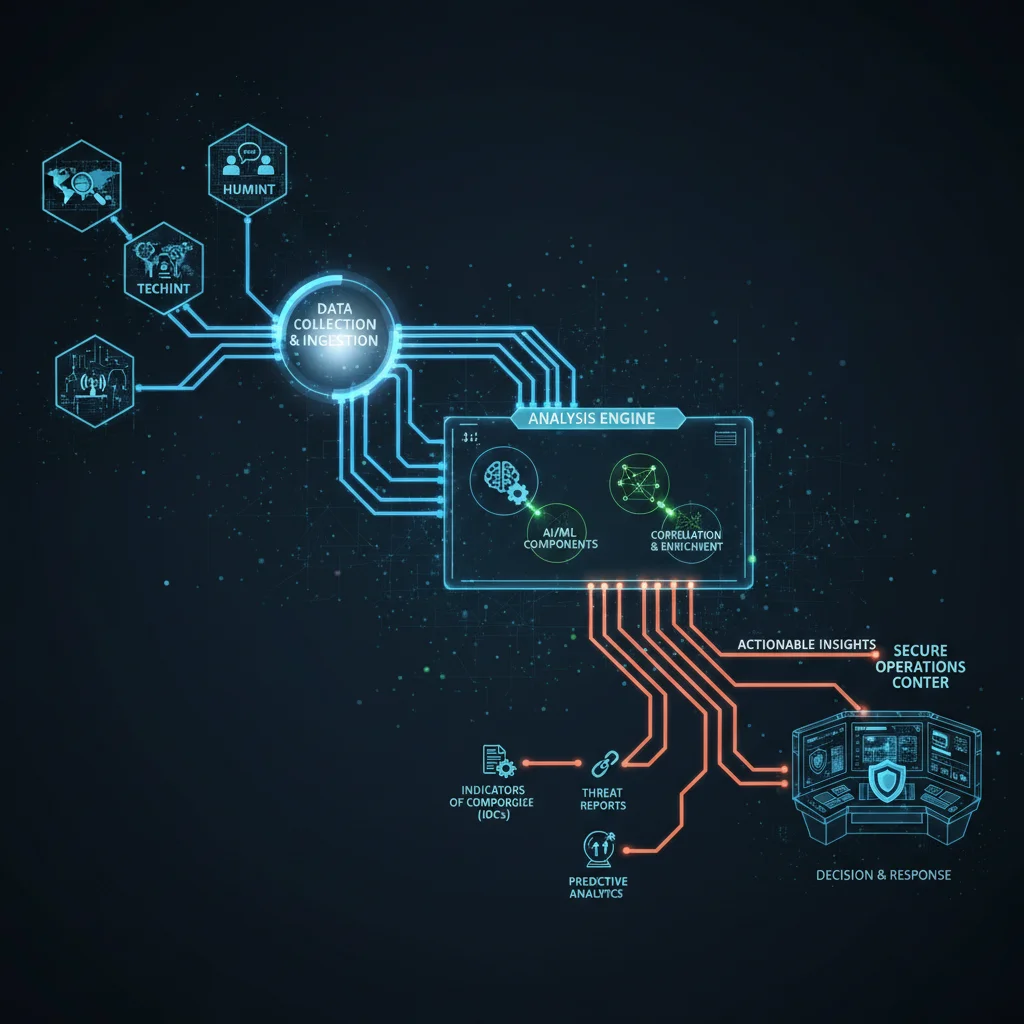
A truly effective threat intelligence program for cyber warfare protection requires several components:
Anúncios
- Multi-Source Data Aggregation: Businesses must draw intelligence from a diverse array of sources. This includes government advisories (CISA, FBI), industry-specific Information Sharing and Analysis Centers (ISACs/ISAOs), commercial threat intelligence platforms, dark web monitoring, open-source intelligence (OSINT), and even human intelligence (HUMINT) where feasible and ethical. The goal is to gain a 360-degree view of the threat landscape.
- Contextualization and Correlation: Raw threat data is often overwhelming. The key is to contextualize it within the business’s specific operating environment. What threats are most relevant to your industry, your technology stack, your geographic locations, and your unique risk profile? AI and machine learning tools will be indispensable for correlating disparate data points, identifying patterns, and uncovering nascent attack campaigns.
- Adversary Profiling: Understanding who your potential adversaries are – their motivations, tactics, techniques, and procedures (TTPs) – is paramount. Is it a state-sponsored group known for supply chain attacks? A financially motivated ransomware gang? Predictive intelligence involves building detailed adversary profiles to anticipate their next moves and tailor defenses accordingly.
- Proactive Vulnerability Management: Threat intelligence should directly inform vulnerability management. By understanding emerging attack vectors and exploited vulnerabilities, businesses can prioritize patching, configuration changes, and other defensive actions before they become targets. This includes actively scanning for zero-day exploits and understanding how they might be weaponized.
- Automated Indicator of Compromise (IOC) Feeding: Integrations should allow for the automatic ingestion of IOCs (e.g., malicious IP addresses, domain names, file hashes) into security tools like SIEMs, EDRs, firewalls, and intrusion prevention systems. This enables real-time blocking and detection based on the latest threat intelligence.
Leveraging AI for Predictive Analytics
The sheer volume and velocity of threat data make manual analysis impossible. AI and machine learning are no longer optional but fundamental for predictive threat intelligence. These technologies can:
- Identify Anomalous Behavior: AI can establish baselines of normal network and user behavior, rapidly flagging deviations that might indicate a compromise or an impending attack.
- Predict Attack Trajectories: By analyzing historical data and current threat trends, AI models can forecast potential attack vectors and methodologies, allowing businesses to fortify specific areas proactively.
- Automate Threat Hunting: AI-powered tools can autonomously search for subtle indicators of compromise that might otherwise go unnoticed by human analysts, significantly reducing dwell time for attackers.
Integrating predictive threat intelligence means moving from a reactive “if we get attacked” mindset to a proactive “when and how we might be attacked, and how we’ll stop it” approach. This strategy is foundational for effective cyber warfare protection.
Strategy 2: Building Cyber Resilience and Adaptive Defenses
Even with the most sophisticated threat intelligence, a breach is always a possibility in the relentless landscape of 2026 cyber warfare. Therefore, the second critical strategy for U.S. businesses is to build robust cyber resilience and adaptive defenses. This means not only preventing attacks but also ensuring the ability to quickly recover, minimize damage, and maintain critical operations in the face of a successful intrusion.
Beyond Prevention: Focusing on Detection, Response, and Recovery
Cyber resilience shifts the focus from an impossible goal of 100% prevention to an achievable goal of rapid detection, containment, eradication, and recovery. Key components include:
- Zero Trust Architecture (ZTA): Adopt a “never trust, always verify” approach. ZTA assumes that every user, device, and application, whether inside or outside the network perimeter, is a potential threat. This involves strict authentication, authorization, and continuous verification of access, segmenting networks, and micro-segmentation of critical assets. For U.S. businesses, this dramatically limits the lateral movement of adversaries once they gain initial access.
- Continuous Monitoring and Advanced Detection: Implement advanced detection technologies such as Extended Detection and Response (XDR) or Security Information and Event Management (SIEM) systems with User and Entity Behavior Analytics (UEBA). These tools provide comprehensive visibility across endpoints, networks, cloud environments, and applications, enabling the rapid detection of subtle indicators of compromise that often precede major attacks.
- Incident Response Playbooks and Drills: A well-defined and regularly tested incident response plan is non-negotiable. This includes clear roles and responsibilities, communication protocols (internal and external), forensic capabilities, and recovery procedures. Regular tabletop exercises and live drills are essential to ensure the plan is effective and personnel are prepared under pressure.
- Immutable Backups and Disaster Recovery: In an era where ransomware can encrypt or destroy all data, immutable backups are vital. These backups cannot be altered or deleted, even by administrative accounts, providing a last line of defense. A comprehensive disaster recovery plan, tested frequently, ensures that business-critical data and systems can be restored quickly.
- Supply Chain Security and Resilience: Extend your resilience efforts to your supply chain. This involves rigorous vetting of vendors’ cybersecurity postures, contractual obligations for security, and continuous monitoring of third-party risks. Develop contingency plans for supply chain disruptions caused by cyberattacks.
- Endpoint Detection and Response (EDR) and Managed Detection and Response (MDR): Deploy EDR solutions across all endpoints to provide real-time monitoring and response capabilities. For businesses lacking in-house expertise, MDR services offer 24/7 monitoring, threat hunting, and incident response from specialized third-party providers, significantly enhancing their cyber warfare protection posture.
Adaptive Security Controls and Automation
Adaptive defenses mean that security controls are not static but evolve in response to the threat landscape and internal changes. Automation plays a crucial role:
- Security Orchestration, Automation, and Response (SOAR): SOAR platforms integrate various security tools and automate repetitive tasks, such as alert triage, threat enrichment, and initial response actions. This speeds up detection and response, freeing human analysts to focus on more complex strategic tasks.
- Automated Configuration Management: Ensure that all systems, devices, and applications are securely configured from the outset and that these configurations are consistently maintained. Automation helps prevent configuration drift and ensures compliance with security policies.
By building cyber resilience, U.S. businesses acknowledge that perfection is unattainable, but rapid recovery and minimal impact are. This strategy underpins the ability to withstand and recover from the inevitable incursions in the 2026 cyber warfare environment.
Strategy 3: Strategic Partnerships and Collaborative Defense
No single U.S. business, regardless of size or resources, can stand alone against the sophisticated threats of 2026 global cyber warfare. The third essential strategy is the cultivation of strategic partnerships and engagement in collaborative defense initiatives. This collective approach amplifies defensive capabilities, shares vital intelligence, and creates a stronger overall security posture for the entire ecosystem.
Leveraging Government and Industry Collaboration
Collaboration with government agencies and industry peers is not just a best practice; it’s a necessity for robust cyber warfare protection:
- Engagement with CISA and Other Federal Agencies: The Cybersecurity and Infrastructure Security Agency (CISA) is a primary resource for U.S. businesses. Actively participate in CISA’s programs, subscribe to their alerts, and contribute to their joint defense initiatives. Agencies like the FBI and NSA also offer valuable intelligence and support. Building direct lines of communication can be invaluable during a crisis.
- Information Sharing and Analysis Centers (ISACs/ISAOs): Joining industry-specific ISACs or ISAOs provides access to highly relevant threat intelligence, best practices, and peer support. These organizations facilitate the sharing of anonymized attack data, helping members understand sector-specific threats and develop collective defenses. This is particularly crucial for critical infrastructure sectors.
- Public-Private Partnerships: Actively seek out and engage in public-private partnerships focused on cybersecurity. These collaborations help bridge the gap between government intelligence capabilities and private sector operational realities, leading to more effective threat mitigation strategies.
- Academic and Research Institutions: Partner with universities and cybersecurity research institutions. These collaborations can provide access to cutting-edge research, talent, and innovative solutions that might not yet be commercially available. They can also help in developing future cybersecurity professionals.

Strengthening Supply Chain and Vendor Security Through Collaboration
As highlighted earlier, the supply chain is a prime target. Collaborative defense extends to ensuring the security of your entire ecosystem:
- Vendor Security Programs: Implement robust vendor security assessment programs that go beyond initial questionnaires. This includes regular audits, penetration testing requirements, and continuous monitoring of vendor security postures. Collaborate with vendors to help them improve their security, viewing them as partners in defense rather than just service providers.
- Shared Security Standards: Work with industry groups to develop and adopt shared security standards and certifications for supply chain partners. This raises the baseline security for everyone involved and simplifies the assessment process.
- Cyber Insurance Partnerships: Engage with cyber insurance providers not just for financial protection but also for their insights into risk management and incident response best practices. Many insurers now offer proactive security services and can be valuable partners in enhancing resilience.
Internal Collaboration and Culture of Security
While external partnerships are vital, internal collaboration is equally critical. A strong security posture relies on every employee acting as a line of defense:
- Cross-Functional Security Teams: Break down silos between IT, legal, HR, and executive leadership. Cybersecurity is a business risk, not just an IT problem, and requires a unified, cross-functional approach.
- Continuous Security Awareness Training: Regular, engaging, and relevant security awareness training is essential. Employees are often the first line of defense and the most common target for social engineering and phishing attacks. Training should be ongoing and adaptable to emerging threats, making everyone a stakeholder in cyber warfare protection.
- Open Communication Channels: Foster an environment where employees feel comfortable reporting suspicious activities without fear of reprisal. Encourage a culture of vigilance and proactive reporting.
By actively engaging in strategic partnerships and fostering a collaborative defense mindset, U.S. businesses can leverage collective intelligence and resources, significantly enhancing their cyber warfare protection capabilities against the complex threats of 2026.
The Imperative of Executive Leadership in Cyber Warfare Protection
While these three strategies provide a robust framework, their successful implementation hinges on strong executive leadership and commitment. Cybersecurity can no longer be relegated solely to the IT department; it must be a boardroom priority. CEOs, boards of directors, and senior management must:
- Allocate Sufficient Resources: Recognize that cybersecurity investments are not merely costs but essential investments in business continuity, reputation, and competitive advantage. Adequate budgets for technology, talent, and training are paramount.
- Champion a Culture of Security: Lead by example and embed security into the organizational DNA. This includes understanding their own roles in security, adhering to policies, and promoting best practices throughout the company.
- Understand and Mitigate Cyber Risk: Boards should regularly review cyber risk assessments, understand the company’s threat posture, and ensure that appropriate mitigation strategies are in place. They should challenge assumptions and demand clear metrics on security effectiveness.
- Integrate Cybersecurity into Business Strategy: Cybersecurity should be a core consideration in all business decisions, from new product development to market expansion and mergers/acquisitions.
Without this top-down commitment, even the most technically sound strategies for cyber warfare protection will struggle to achieve their full potential. The strategic importance of data protection in the 2026 landscape demands nothing less.
Conclusion: A Proactive Stance for 2026 and Beyond
The 2026 global cyber warfare landscape presents an unprecedented challenge for U.S. businesses. The confluence of sophisticated state-sponsored actors, weaponized AI, pervasive supply chain vulnerabilities, and geopolitical tensions creates an environment where data protection is not just a compliance issue, but a matter of organizational survival and national security. The strategies outlined – proactive and predictive threat intelligence integration, building cyber resilience with adaptive defenses, and fostering strategic partnerships for collaborative defense – are not merely recommendations; they are critical imperatives.
By adopting these three key strategies, U.S. businesses can move beyond a reactive posture to one of proactive defense, anticipating threats, absorbing impacts, and recovering swiftly. This requires a fundamental shift in mindset, continuous investment, and a recognition that cybersecurity is a shared responsibility across the entire organization and its ecosystem. The time to act is now. By embracing these insider insights and implementing a comprehensive, adaptive approach to cyber warfare protection, U.S. businesses can safeguard their invaluable data, maintain operational integrity, and contribute to a more secure digital future in the face of escalating global cyber threats.
The future of business in 2026 is inextricably linked to the strength of its digital defenses. Those U.S. businesses that prioritize and strategically implement these cyber warfare protection strategies will be best positioned to navigate the stormy waters ahead, emerging stronger and more secure.
