AI Cybersecurity Threats 2026: Protect Your Business
Anúncios
The Top 5 AI-Powered Cybersecurity Threats for U.S. Businesses in 2026 and How to Mitigate Them
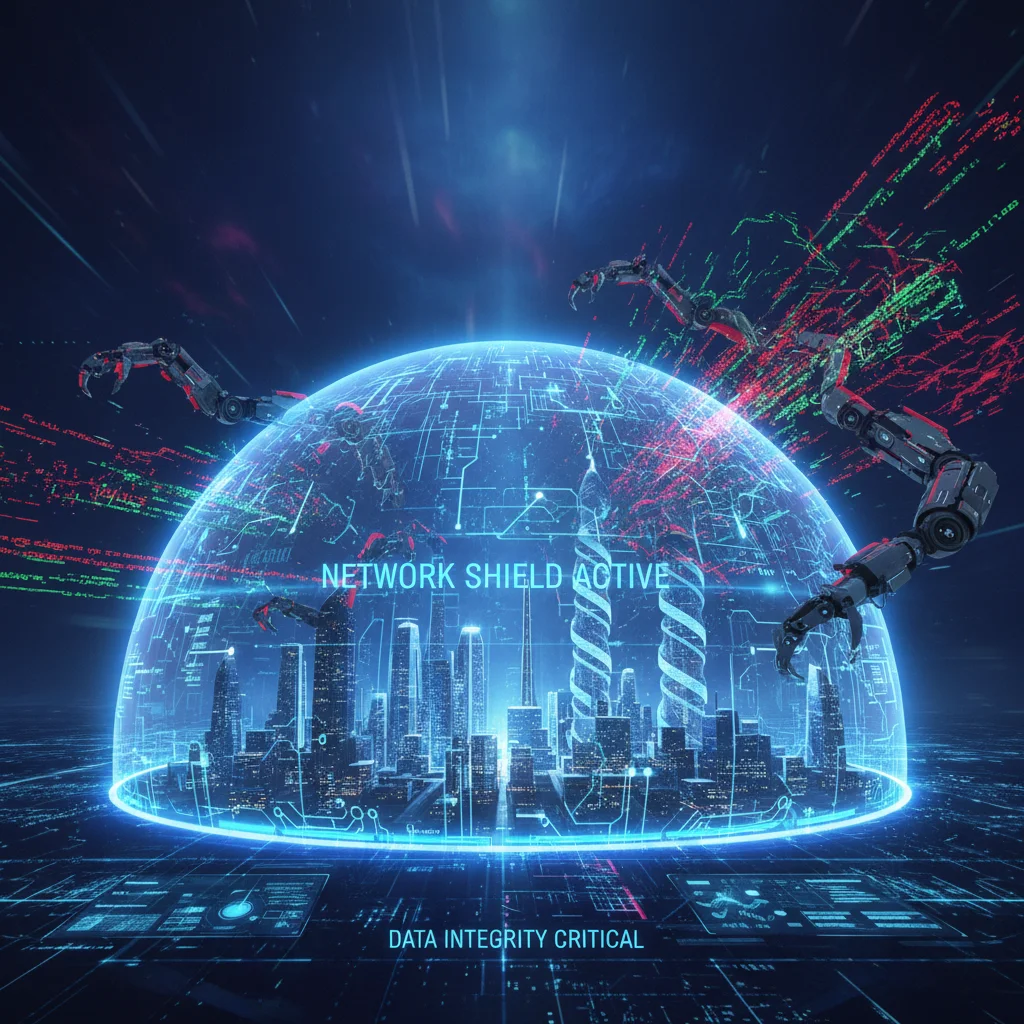
The digital landscape is evolving at an unprecedented pace, driven largely by the transformative power of Artificial Intelligence (AI). While AI offers immense opportunities for innovation, efficiency, and growth, it also introduces a new frontier of sophisticated cyber threats. For U.S. businesses, understanding and preparing for these emerging dangers is not just a best practice; it’s a critical imperative for survival in the coming years. As we look towards 2026, the sophistication and scale of AI-powered cybersecurity threats are set to escalate dramatically. This comprehensive guide will delve into the top five AI cybersecurity threats that U.S. businesses must be prepared to face and, more importantly, provide actionable strategies for effective mitigation.
The Accelerating Threat Landscape: Why AI Changes Everything
For decades, cybersecurity has been a cat-and-mouse game between defenders and attackers. However, the introduction of AI into this dynamic is not merely an incremental change; it’s a paradigm shift. AI empowers cybercriminals with capabilities previously unimaginable, enabling them to automate, scale, and personalize attacks with frightening precision. Machine learning algorithms can identify vulnerabilities faster, craft more convincing phishing attempts, and adapt their malicious code in real-time to evade detection. This means traditional, reactive security measures are becoming increasingly inadequate. Businesses must shift towards a proactive, AI-informed defense strategy to counter these advanced AI cybersecurity threats.
The stakes are incredibly high. A successful cyberattack can lead to devastating financial losses, irreparable reputational damage, regulatory penalties, and even business closure. Data breaches expose sensitive customer information, intellectual property theft cripples competitive advantages, and ransomware attacks can halt operations for extended periods. As AI becomes more accessible and powerful, the barrier to entry for sophisticated cybercrime lowers, making it easier for a wider range of malicious actors to leverage these tools. Therefore, understanding these AI cybersecurity threats is the first step toward building a resilient defense.
Anúncios
Top 5 AI-Powered Cybersecurity Threats for U.S. Businesses in 2026
1. Advanced AI-Driven Phishing and Social Engineering Attacks
Phishing attacks have long been a primary vector for cybercriminals, but AI is supercharging their effectiveness. In 2026, U.S. businesses will face AI cybersecurity threats in the form of highly personalized and dynamic phishing campaigns. Generative AI models can craft incredibly convincing emails, messages, and even voice impersonations that mimic trusted individuals or entities. These attacks will move beyond simple spelling errors and generic greetings, leveraging vast amounts of publicly available data to create tailored narratives that exploit individual psychological vulnerabilities.
How AI Enhances Phishing:
- Hyper-Personalization: AI can analyze social media, public records, and previous interactions to create emails that appear to come from known contacts, using specific jargon, project details, or even personal anecdotes.
- Dynamic Content Generation: AI can adapt phishing content in real-time based on user interaction, making the scam more believable as the conversation progresses.
- Deepfakes and Voice Mimicry: AI-generated deepfake videos and voice clones can convincingly impersonate executives or critical personnel, leading to fraudulent financial transfers or divulgence of sensitive information.
- Automated Reconnaissance: AI can rapidly scan vast datasets to identify potential targets, their roles, interests, and even their emotional states, enabling attackers to craft the most effective lures.
Mitigation Strategies:
- Advanced Email Security Gateways (ESG) with AI Detection: Implement ESGs that use AI and machine learning to detect anomalies in email headers, sender behavior, and content, even for sophisticated phishing attempts.
- Continuous Security Awareness Training: Regularly train employees to recognize evolving phishing tactics, including deepfakes and social engineering. Conduct simulated phishing exercises to test their vigilance.
- Multi-Factor Authentication (MFA) Everywhere: Mandate MFA for all accounts, especially for critical systems and financial transactions, to prevent unauthorized access even if credentials are compromised.
- Robust Verification Protocols: Establish strict protocols for verifying unusual requests (e.g., wire transfers, urgent data sharing) through alternative, trusted channels (e.g., a phone call to a known number).
2. AI-Accelerated Zero-Day Exploits and Malware Development
The race to discover and exploit vulnerabilities is intensifying with AI. Cybercriminals will leverage AI to rapidly identify zero-day vulnerabilities in software and hardware, developing highly evasive and polymorphic malware. These AI cybersecurity threats will be characterized by their ability to learn and adapt, making them incredibly difficult for traditional antivirus and intrusion detection systems to catch.
How AI Enhances Malware:
- Automated Vulnerability Discovery: AI can scan millions of lines of code and network configurations to pinpoint weaknesses faster than human researchers.
- Polymorphic Malware: AI can generate malware that constantly changes its code signature, making it nearly impossible for signature-based detection systems to identify.
- Adaptive Evasion: AI-powered malware can learn from its environment, detecting sandboxes and security tools, and then adapt its behavior to bypass them.
- Autonomous Attack Chains: AI can orchestrate multi-stage attacks, moving laterally within a network, escalating privileges, and exfiltrating data with minimal human intervention.
Mitigation Strategies:
- AI-Powered Endpoint Detection and Response (EDR) / Extended Detection and Response (XDR): Deploy EDR/XDR solutions that use AI to monitor endpoint behavior, detect anomalous activities, and respond to threats in real-time, regardless of signature.
- Proactive Patch Management: Maintain a rigorous patch management schedule for all software and operating systems to close known vulnerabilities quickly.
- Threat Intelligence and Hunting: Subscribe to advanced threat intelligence feeds, including those focused on AI cybersecurity threats, and implement proactive threat hunting to uncover hidden threats.
- Network Segmentation: Segment networks to limit the lateral movement of malware, even if a part of the network is compromised.
3. AI-Enhanced Ransomware 2.0
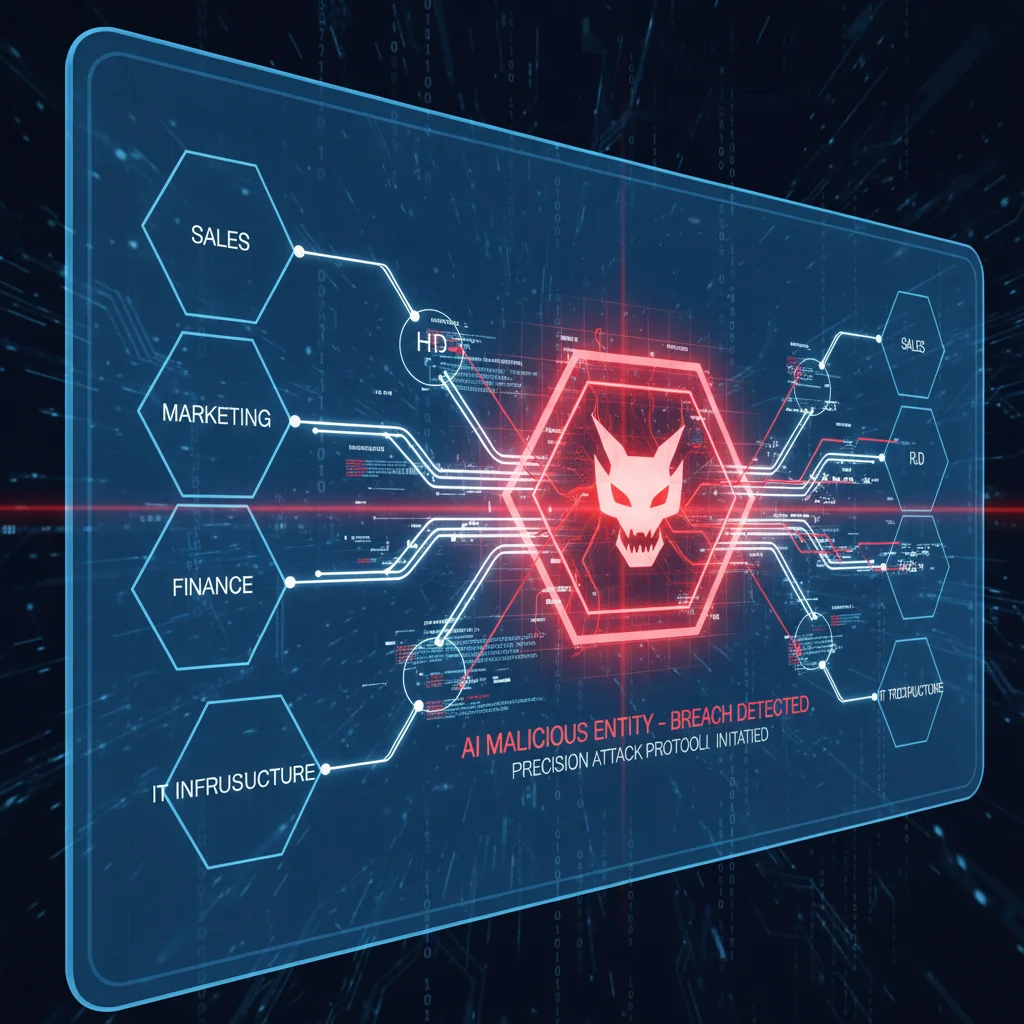
Ransomware has already proven to be one of the most destructive AI cybersecurity threats, but AI is set to make it even more potent. In 2026, we can expect AI-enhanced ransomware to be more targeted, more evasive, and more effective at extorting payments. These new variants will use AI to identify the most valuable data, encrypt it more efficiently, and even negotiate ransom demands based on the perceived value of the victim’s data and their ability to pay.
Anúncios
How AI Enhances Ransomware:
- Intelligent Target Selection: AI can analyze a victim’s network to identify critical systems and high-value data stores, maximizing impact.
- Adaptive Encryption: AI can optimize encryption techniques to be faster and more difficult to decrypt without the key.
- Automated Negotiation: AI chatbots can handle ransom negotiations, adjusting demands based on victim responses and financial data, increasing the likelihood of payment.
- Double Extortion Evolution: AI can automate the exfiltration and public shaming of data, adding pressure for victims to pay.
Mitigation Strategies:
- Immutable Backups: Implement a robust backup strategy with immutable backups stored off-site and offline, ensuring data recovery even if primary systems are compromised.
- Zero Trust Architecture: Adopt a Zero Trust model, verifying every user and device before granting access, regardless of their location within the network.
- Behavioral Analytics: Utilize AI-driven behavioral analytics to detect unusual file access patterns or encryption activities that signal a ransomware attack in progress.
- Incident Response Plan: Develop and regularly test a comprehensive incident response plan specifically for ransomware attacks, including communication protocols and recovery procedures.
4. AI-Powered Supply Chain Attacks
The interconnected nature of modern businesses means that a vulnerability in one vendor can cascade through an entire supply chain. AI cybersecurity threats will exacerbate this by enabling attackers to identify and exploit weaknesses within complex supply chains with greater efficiency. Attackers will use AI to map out dependencies, discover vulnerabilities in third-party software or hardware, and inject malicious code at various points in the development or deployment process.
How AI Enhances Supply Chain Attacks:
- Automated Dependency Mapping: AI can quickly analyze software components, libraries, and vendor relationships to identify critical dependencies.
- Vulnerability Chaining: AI can discover and combine multiple low-level vulnerabilities across different components to create a high-impact attack vector.
- Malicious Code Injection: AI can generate and inject sophisticated malicious code into software updates or open-source libraries, making it difficult to detect.
- Targeted Vendor Exploitation: AI can identify the weakest links in a supply chain, focusing attacks on vendors with less robust security postures.
Mitigation Strategies:
- Supply Chain Risk Management: Conduct thorough due diligence on all third-party vendors and suppliers, assessing their cybersecurity practices and requiring adherence to security standards.
- Software Bill of Materials (SBOM): Demand SBOMs from software vendors to gain transparency into the components used in their products and identify potential vulnerabilities.
- Continuous Vulnerability Scanning and Penetration Testing: Regularly scan your own systems and conduct penetration tests, including those focused on supply chain dependencies.
- Code Integrity Checks: Implement automated tools for code integrity checks and software attestation to verify the authenticity and security of software updates.
5. Adversarial AI Attacks Against Security Systems
Perhaps one of the most insidious AI cybersecurity threats is the use of AI to undermine AI-powered security systems themselves. Adversarial AI involves manipulating input data to trick machine learning models, leading them to misclassify malicious activities as benign or vice versa. This can effectively blind security systems, allowing attacks to proceed undetected.
How Adversarial AI Works:
- Evading AI Detection: Attackers use AI to craft malicious inputs (e.g., slightly altered malware samples, perturbed network traffic) that are specifically designed to be misclassified by an AI-powered intrusion detection system.
- Data Poisoning: Malicious actors can inject corrupted or biased data into an AI model’s training dataset, causing the model to learn incorrect patterns and make faulty decisions in the future.
- Model Inversion: Attackers can attempt to reconstruct sensitive training data from a deployed AI model, potentially exposing confidential information.
- Model Evasion: AI can systematically test different attack variations against a target AI defense to find weaknesses and bypass its detection capabilities.
Mitigation Strategies:
- Robust AI Model Training and Validation: Train AI security models on diverse and adversarial-aware datasets, and continuously validate their performance against new attack vectors.
- Explainable AI (XAI): Implement XAI techniques to understand why AI models make certain decisions, helping to identify potential adversarial manipulations.
- Ensemble Learning and Diversity: Use multiple, diverse AI models or an ensemble approach to improve resilience against adversarial attacks. If one model is fooled, others might still detect the threat.
- Continuous Monitoring and Retraining: Regularly monitor the performance of AI security models and retrain them with new data, including examples of adversarial attacks, to keep them robust.
- Human Oversight and Intervention: Maintain human oversight of AI-driven security decisions, allowing for manual review and intervention when anomalies or suspicious activities are flagged.
Building a Resilient Cybersecurity Posture Against AI Cybersecurity Threats
Mitigating these advanced AI cybersecurity threats requires a multi-layered, adaptive, and proactive approach. U.S. businesses in 2026 cannot afford to rely on outdated security paradigms. Here are overarching strategies to bolster your defense:
1. Embrace a Proactive, Intelligence-Driven Defense
Shift from reactive incident response to proactive threat intelligence and threat hunting. Leverage AI and machine learning internally to analyze vast amounts of data, identify patterns, and predict potential attacks before they materialize. Stay informed about the latest AI cybersecurity threats and attack methodologies through industry reports, security forums, and dedicated threat intelligence services.
2. Invest in AI-Powered Security Solutions
To combat AI cybersecurity threats, you need AI-powered defenses. This includes AI-driven EDR/XDR, next-generation firewalls, secure email gateways, and Security Information and Event Management (SIEM) systems that utilize machine learning for anomaly detection and behavioral analysis. These tools can process data at speeds and scales impossible for humans, identifying subtle indicators of compromise.
3. Foster a Culture of Cybersecurity Awareness
Employees remain the first and often weakest line of defense. Regular, engaging, and updated security awareness training is paramount. Educate your workforce on the latest AI cybersecurity threats, including sophisticated phishing, deepfakes, and social engineering tactics. Empower them to be vigilant and report suspicious activities without fear of reprisal.
4. Implement Robust Data Governance and Access Controls
Understand where your sensitive data resides and implement stringent access controls. A Zero Trust architecture, where no user or device is inherently trusted, is crucial. Regularly review and revoke unnecessary access privileges. Data encryption, both in transit and at rest, should be a standard practice.

5. Develop and Test a Comprehensive Incident Response Plan
Despite the best defenses, a breach is always a possibility. A well-defined and regularly tested incident response plan is vital. This plan should detail steps for detection, containment, eradication, recovery, and post-incident analysis. Include specific procedures for responding to AI cybersecurity threats, such as deepfake incidents or AI-driven ransomware.
6. Collaborate and Share Information
The cybersecurity community thrives on collaboration. Participate in industry information-sharing groups, share threat intelligence (where appropriate and secure), and learn from the experiences of others. This collective knowledge is invaluable in staying ahead of rapidly evolving AI cybersecurity threats.
The Future of Cybersecurity: Human-AI Collaboration
While AI poses significant AI cybersecurity threats, it also offers powerful tools for defense. The future of cybersecurity will be defined by effective human-AI collaboration. AI will handle the heavy lifting of data analysis, threat detection, and automated responses, freeing human analysts to focus on complex problem-solving, strategic planning, and adapting to novel attack vectors. Businesses that successfully integrate AI into their security operations, while maintaining strong human oversight, will be best positioned to defend against the AI cybersecurity threats of 2026 and beyond.
Conclusion
The year 2026 will mark a pivotal point in cybersecurity, with AI-powered threats reaching new levels of sophistication and impact. U.S. businesses must recognize that traditional security measures are no longer sufficient. By understanding the top five AI cybersecurity threats – advanced phishing, AI-accelerated zero-day exploits, AI-enhanced ransomware, AI-powered supply chain attacks, and adversarial AI against security systems – and implementing the recommended mitigation strategies, organizations can build a resilient defense. Proactive investment in AI-driven security solutions, continuous employee training, robust data governance, and a well-practiced incident response plan will be the cornerstones of protecting your digital assets in this new era of AI-driven cyber warfare. The time to act is now, to secure your business against the inevitable evolution of AI cybersecurity threats.
