Implementing 5G Private Networks in Industrial Parks: Boosting Connectivity by 40%

Anúncios
Practical Steps to Implement 5G Private Networks in U.S. Industrial Parks for 40% Improved Connectivity by 2026
In an era defined by rapid technological advancement, the industrial sector stands at the precipice of a monumental transformation. The promise of Industry 4.0, with its emphasis on automation, artificial intelligence, and the Internet of Things (IoT), hinges critically on robust, reliable, and secure connectivity. For U.S. industrial parks, the adoption of 5G private industrial networks is not merely an upgrade; it’s a strategic imperative to unlock unparalleled operational efficiencies, foster innovation, and maintain a competitive edge on the global stage. Our ambitious but achievable goal? To see a 40% improvement in connectivity across these vital hubs by 2026, driven primarily by the strategic deployment of 5G private networks.
The current landscape of connectivity in many U.S. industrial parks often relies on legacy Wi-Fi systems or public cellular networks, which, while functional, present inherent limitations. These include issues with latency, security vulnerabilities, coverage gaps, and the inability to guarantee quality of service (QoS) for mission-critical applications. These limitations hinder the full potential of advanced industrial applications, from real-time asset tracking and predictive maintenance to autonomous vehicles and augmented reality-assisted operations. This article delves into the practical steps necessary to overcome these challenges, guiding industrial park operators, facility managers, and technology decision-makers through the intricate process of planning, deploying, and optimizing 5G private industrial networks.
The journey towards enhanced connectivity begins with a clear understanding of the ‘why.’ Why 5G private networks? The answer lies in their unique characteristics: ultra-low latency, massive connectivity capacity, enhanced security, and the ability to tailor network parameters to specific industrial needs. Unlike public networks, a private 5G network dedicates spectrum and infrastructure to a specific entity, ensuring prioritized access and control over data. This level of control is paramount for industries where data privacy, operational continuity, and real-time decision-making are non-negotiable. By 2026, a 40% improvement in connectivity, translated into tangible metrics like reduced downtime, increased throughput, and safer working environments, will be a testament to the transformative power of this technology.
Understanding the “Why”: The Unmatched Benefits of 5G Private Networks for Industrial Parks
Before embarking on the technicalities of deployment, it’s crucial to fully grasp the compelling advantages that 5G private industrial networks bring to the table. These benefits are not just incremental improvements; they represent a paradigm shift in how industrial operations are conducted.
Anúncios
1. Unparalleled Performance: 5G offers significantly higher bandwidth and lower latency compared to previous generations of cellular technology and even advanced Wi-Fi. This translates to data transfer speeds of up to 10 Gbps and latencies as low as 1 millisecond. For industrial applications, this means:
- Real-time Control: Enables instantaneous communication between machines, critical for robotics, automated guided vehicles (AGVs), and remote-controlled machinery, reducing response times and improving precision.
- Massive Data Processing: Supports the collection and analysis of vast amounts of data from thousands of IoT sensors, facilitating predictive maintenance, quality control, and operational optimization.
- High-Definition Video Analytics: Allows for real-time streaming of high-resolution video for surveillance, quality inspection, and remote assistance, enhancing safety and efficiency.
2. Enhanced Security and Reliability: Public networks, by their very nature, are shared resources, making them susceptible to congestion and potential security breaches. Private 5G networks offer a dedicated, isolated infrastructure, providing:
- Data Sovereignty: All data remains within the industrial park’s control, addressing critical concerns around data privacy and compliance.
- Robust Network Isolation: Minimizes exposure to external threats and ensures consistent performance, even during peak usage hours or public network outages.
- Quality of Service (QoS) Guarantees: Allows for the prioritization of critical traffic, ensuring that essential applications always have the bandwidth and low latency they require.
3. Scalability and Flexibility: Industrial operations are dynamic, with fluctuating demands for connectivity. A 5G private industrial network is designed to be highly scalable and adaptable:
Anúncios
- Modular Deployment: Networks can be expanded or reconfigured as operational needs evolve, easily accommodating new machines, sensors, or production lines.
- Customized Coverage: Enables precise network planning to cover specific areas within the industrial park, including indoor and outdoor environments, without over-provisioning.
- Support for Diverse Devices: Capable of connecting a wide array of devices, from simple IoT sensors to complex robotic systems and AR/VR equipment, all within a unified network architecture.
4. Cost Efficiency in the Long Run: While initial investments may seem significant, the long-term cost benefits of private 5G are substantial:
- Reduced Operational Costs: Improved automation and efficiency lead to lower labor costs, reduced energy consumption, and optimized resource allocation.
- Minimized Downtime: Proactive maintenance and real-time fault detection capabilities significantly reduce costly production stoppages.
- Innovation Enablement: The robust connectivity foundation allows for the deployment of new, advanced applications that drive further innovation and competitive advantage, ultimately leading to new revenue streams or significant cost savings.
The cumulative effect of these benefits positions 5G private industrial networks as a cornerstone for digital transformation in U.S. industrial parks, paving the way for the targeted 40% improvement in connectivity by 2026. This improvement is not just about faster speeds, but about the profound impact on productivity, safety, and innovation.
Phase 1: Strategic Planning and Assessment for Your 5G Private Industrial Network
The successful implementation of a 5G private industrial network begins long before any equipment is ordered or installed. A thorough and strategic planning phase is paramount to ensure the network meets current needs and is future-proofed for evolving demands. This phase requires a collaborative effort involving IT, operations, security, and executive leadership.
Step 1.1: Define Business Objectives and Use Cases
The first and most critical step is to clearly articulate what the 5G private network is expected to achieve. What are the current operational pain points? Which new applications or processes are envisioned? Examples of common industrial use cases include:
- Automated Guided Vehicles (AGVs) and Autonomous Mobile Robots (AMRs): Requiring ultra-low latency for navigation and collision avoidance.
- Predictive Maintenance: Real-time data collection from sensors on machinery to anticipate failures.
- Augmented Reality (AR) / Virtual Reality (VR) for Training and Remote Assistance: Demanding high bandwidth and low latency for immersive experiences.
- High-Definition Video Surveillance and Analytics: For security, quality control, and operational monitoring.
- Real-time Asset Tracking and Inventory Management: Leveraging IoT sensors for precise location and status updates.
- Digital Twin Creation and Management: Integrating data from physical assets into a virtual model for simulation and optimization.
Each use case will have specific requirements for bandwidth, latency, reliability, and security. Documenting these will form the foundation for network design.
Step 1.2: Conduct a Comprehensive Site Survey and Spectrum Analysis
Understanding the physical environment of the industrial park is crucial. This involves:
- Physical Layout Assessment: Mapping out buildings, open spaces, machinery, potential obstructions (e.g., metal structures, thick walls), and power availability.
- Existing Infrastructure Review: Identifying current network infrastructure (Wi-Fi, wired Ethernet), power sources, and backhaul options.
- RF Environment Analysis: Measuring existing radio frequency (RF) interference from other wireless systems (e.g., Wi-Fi, public cellular, industrial equipment) to identify optimal spectrum allocation and minimize interference.
- Spectrum Availability: Investigating available spectrum options in the U.S., such as CBRS (Citizens Broadband Radio Service) for shared spectrum or licensed spectrum if a carrier partnership is involved. This is a critical decision point for 5G private industrial deployments.
Step 1.3: Develop a Detailed Network Design and Architecture
Based on the business objectives and site survey, the network architecture can be designed. This includes:
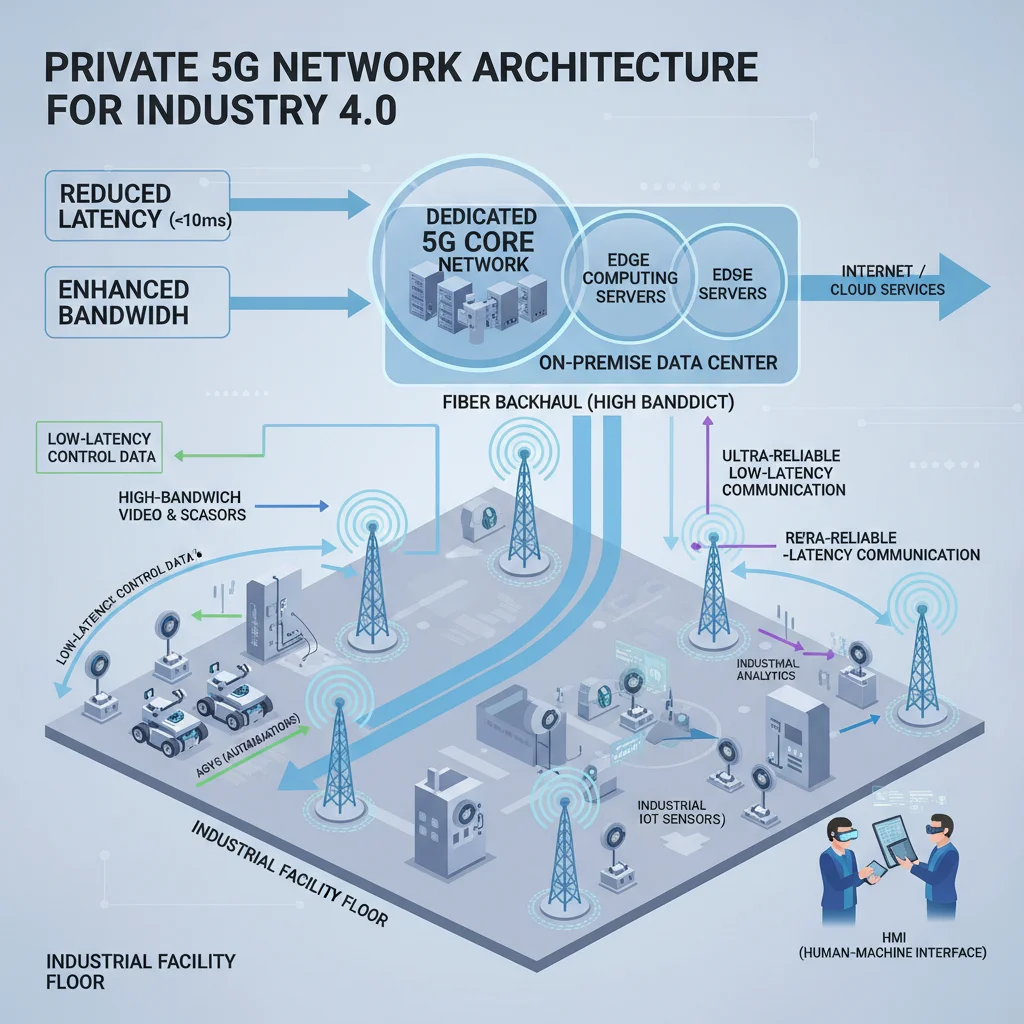
- Core Network Placement: Deciding between an on-premise core (for maximum data control and low latency) or a cloud-based core (for scalability and reduced CapEx). Hybrid approaches are also possible.
- Radio Access Network (RAN) Design: Determining the number, type, and placement of gNodeB (5G base stations) or small cells to ensure optimal coverage and capacity. Considerations include indoor vs. outdoor deployment, power requirements, and backhaul connectivity for each cell.
- Edge Computing Integration: Identifying where edge servers should be placed to process data closer to the source, further reducing latency for critical applications.
- Security Architecture: Designing robust security protocols, including authentication, encryption, and access control mechanisms tailored for industrial environments.
- Network Slicing Considerations: Exploring the possibility of network slicing to create dedicated virtual networks for different applications with varying QoS requirements.
Step 1.4: Partner Selection and Vendor Evaluation
Implementing a 5G private industrial network is a complex undertaking, often requiring external expertise. Key partners include:
- Technology Vendors: Selecting hardware (gNodeBs, core network equipment, edge servers) and software providers. Evaluate vendors based on their track record, product maturity, interoperability, and support.
- System Integrators: Companies specializing in deploying and managing complex network solutions. They can provide end-to-end services from design to ongoing maintenance.
- Spectrum Providers/Partners: If using licensed spectrum, a partnership with a mobile network operator (MNO) might be necessary. For CBRS, understanding the role of Spectrum Access System (SAS) providers is essential.
Due diligence in partner selection is crucial for the long-term success and sustainability of the network.
Step 1.5: Budgeting and Financial Modeling
A detailed financial plan is essential. This should include:
- Capital Expenditure (CapEx): Costs associated with hardware, software licenses, installation, and initial infrastructure development.
- Operational Expenditure (OpEx): Ongoing costs for maintenance, software updates, spectrum fees, power, and personnel.
- Return on Investment (ROI) Analysis: Quantifying the expected benefits in terms of increased productivity, reduced downtime, enhanced safety, and new revenue opportunities to justify the investment.
A clear financial roadmap will secure executive buy-in and ensure the project remains viable.
Phase 2: Deployment and Integration of Your 5G Private Industrial Network
With a solid plan in place, the next phase involves the physical deployment and integration of the 5G private industrial network. This phase requires meticulous execution and coordination to minimize disruption to ongoing industrial operations.
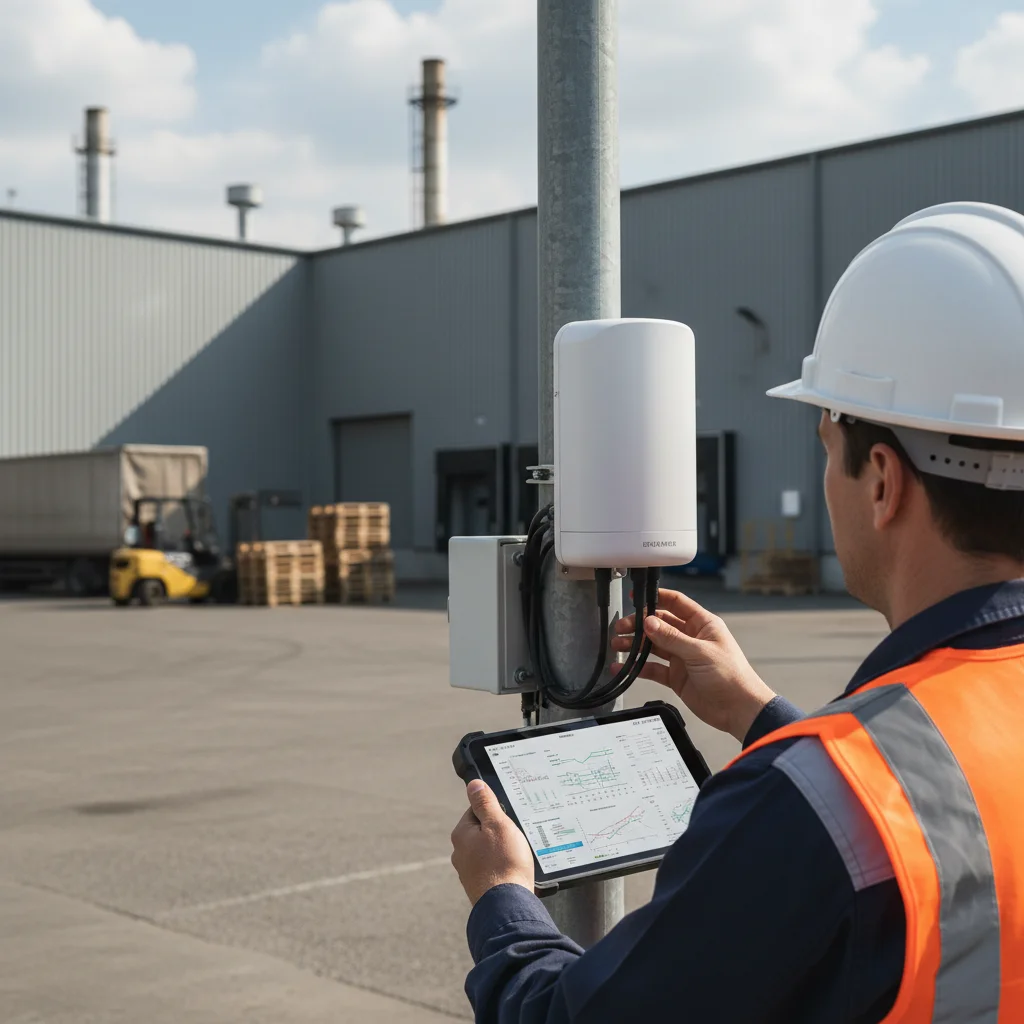
Step 2.1: Infrastructure Preparation and Installation
This step involves the physical setup of the network components:
- Site Preparation: Ensuring suitable locations for gNodeBs, core network equipment, and edge servers, including power, cooling, and physical security.
- Cabling and Fiber Optics: Installing the necessary fiber optic backhaul to connect gNodeBs to the core network and edge computing resources.
- Antenna and Small Cell Deployment: Strategically installing 5G antennas and small cells based on the network design to achieve optimal coverage and capacity across the industrial park. This may involve mounting on poles, building facades, or inside facilities.
- Core and Edge Server Setup: Installing and configuring the core network equipment and edge computing servers in secure, climate-controlled environments.
Step 2.2: Network Configuration and Software Integration
Once the hardware is in place, the network needs to be configured and integrated with existing systems:
- Core Network Configuration: Setting up the core network functions, including subscriber management, mobility management, and session management.
- RAN Configuration: Configuring gNodeBs, including spectrum allocation, power settings, and handover parameters.
- IP Addressing and Routing: Establishing a robust IP addressing scheme and routing protocols within the private network.
- Security Policy Implementation: Deploying firewalls, intrusion detection/prevention systems (IDPS), and implementing authentication and authorization policies.
- Integration with Existing IT/OT Systems: Ensuring seamless communication between the new 5G network and existing Operational Technology (OT) systems (e.g., SCADA, MES, PLCs) and IT infrastructure (e.g., enterprise resource planning – ERP, cloud services). This often involves APIs and middleware.
- Device Onboarding: Registering and configuring all connected devices, such as IoT sensors, AGVs, and handheld devices, to the 5G private industrial network.
Step 2.3: Testing and Optimization
Rigorous testing is essential to validate the network’s performance and ensure it meets the defined business objectives:
- Coverage and Signal Strength Testing: Verifying that signal strength and coverage are consistent across the entire industrial park, including challenging indoor environments.
- Throughput and Latency Testing: Measuring actual data speeds and latency to ensure they meet the requirements of critical applications.
- Interference Testing: Identifying and mitigating any sources of interference that could degrade network performance.
- Application Performance Testing: Testing specific industrial applications (e.g., AGV navigation, video streaming, sensor data collection) over the 5G private network to ensure they function as expected.
- Security Penetration Testing: Conducting ethical hacking to identify and address any vulnerabilities in the network’s security posture.
- Optimization: Based on testing results, fine-tuning network parameters, adjusting antenna angles, or adding small cells to optimize performance.
Step 2.4: Pilot Deployment and Phased Rollout
For large industrial parks, a phased rollout is often the most prudent approach:
- Pilot Project: Deploying the 5G private industrial network in a specific, contained area or for a limited set of use cases to gather real-world data and lessons learned.
- Feedback and Iteration: Collecting feedback from users and operations personnel, and using this information to refine the network design and deployment strategy for subsequent phases.
- Gradual Expansion: Gradually expanding the network across the entire industrial park, ensuring stability and performance at each stage.
This iterative approach minimizes risk and allows for continuous improvement, contributing significantly to achieving the 40% connectivity improvement target by 2026.
Phase 3: Operation, Maintenance, and Future-Proofing for Sustained 40% Improved Connectivity
The deployment of a 5G private industrial network is not the end of the journey; it’s the beginning of a continuous process of operation, maintenance, and strategic evolution. To sustain and even surpass the 40% connectivity improvement by 2026, ongoing management and adaptation are crucial.
Step 3.1: Ongoing Monitoring and Performance Management
A robust monitoring system is essential to ensure the network operates at peak efficiency:
- Network Performance Monitoring (NPM): Continuously tracking key performance indicators (KPIs) such as throughput, latency, packet loss, and signal quality across the entire network.
- Fault Management: Implementing systems to detect, diagnose, and resolve network issues promptly, minimizing downtime.
- Capacity Management: Monitoring network usage and capacity trends to anticipate future demands and plan for upgrades or expansions proactively.
- Security Monitoring: Continuously monitoring for security threats, anomalies, and unauthorized access attempts.
- SLA Adherence: Ensuring that the network consistently meets agreed-upon Service Level Agreements (SLAs) for critical applications.
Tools for network visualization, real-time dashboards, and automated alerts are invaluable in this regard.
Step 3.2: Maintenance and Software Updates
Like any complex IT infrastructure, a 5G private industrial network requires regular maintenance and updates:
- Preventive Maintenance: Scheduled checks and servicing of hardware components to ensure their longevity and reliability.
- Software Updates and Patches: Applying regular software updates to the core network, RAN, and security systems to benefit from new features, performance enhancements, and critical security patches.
- Configuration Backups: Regularly backing up network configurations to facilitate rapid recovery in case of system failures.
Establishing a clear maintenance schedule and responsibilities, whether internally or through a managed service provider, is vital.
Step 3.3: Personnel Training and Skill Development
The successful operation of a 5G private industrial network requires skilled personnel:
- Technical Training: Providing in-depth training for IT and OT staff on 5G network architecture, operation, troubleshooting, and security best practices.
- Cross-Functional Collaboration: Fostering collaboration between IT and OT teams, as 5G bridges the gap between traditional IT and industrial control systems.
- Certification Programs: Encouraging staff to pursue relevant industry certifications to enhance their expertise.
Investing in human capital is as important as investing in technology for long-term success.
Step 3.4: Continuous Optimization and Evolution
The industrial landscape and technological capabilities are constantly evolving. A truly future-proof 5G private industrial network must be designed for continuous optimization and evolution:
- New Use Case Integration: As new industrial applications emerge, the network should be adaptable to support them, potentially requiring minor upgrades or reconfigurations.
- Technology Upgrades: Planning for future technology advancements, such as new 5G releases (e.g., 5G-Advanced) or integration with emerging technologies like AI/ML at the edge.
- Feedback Loops: Establishing mechanisms for regular feedback from users and operational teams to identify areas for improvement and new opportunities.
- Benchmarking: Regularly benchmarking network performance against industry standards and best practices to ensure continuous improvement.
This iterative approach to optimization ensures that the 5G private industrial network remains a strategic asset, constantly delivering value and helping the industrial park achieve and exceed its connectivity goals.
Overcoming Challenges in 5G Private Industrial Network Deployment
While the benefits of 5G private industrial networks are compelling, their deployment is not without challenges. Addressing these proactively is key to ensuring a smooth and successful implementation:
- Upfront Investment: The initial capital expenditure for hardware, software, and deployment can be substantial. Thorough ROI analysis and exploring financing options (e.g., as-a-service models) can help mitigate this.
- Spectrum Acquisition and Management: Navigating the complexities of spectrum availability, especially for CBRS, requires expertise. Partnering with experienced integrators or MNOs can simplify this process.
- Skills Gap: The specialized knowledge required for 5G network design, deployment, and operation can be a challenge for internal IT/OT teams. Investing in training or leveraging external expertise is critical.
- Integration Complexity: Seamlessly integrating the 5G private network with existing legacy IT and OT systems can be complex. A phased approach and careful planning of APIs and middleware are essential.
- Security Concerns: While private 5G offers enhanced security, it also introduces new attack vectors. A comprehensive cybersecurity strategy, including threat modeling and continuous monitoring, is paramount.
- Interference Management: Industrial environments are often rich in electromagnetic interference. Careful RF planning and ongoing monitoring are needed to ensure optimal performance.
- Vendor Lock-in: Relying on a single vendor for all components can limit flexibility. Exploring open RAN architectures and multi-vendor solutions can provide more options.
By anticipating these challenges and developing proactive strategies to address them, U.S. industrial parks can significantly de-risk their 5G private industrial network initiatives and stay on track to achieve their connectivity improvement goals.
The Future is Connected: Driving Innovation in U.S. Industrial Parks
The deployment of 5G private industrial networks in U.S. industrial parks is more than just a technological upgrade; it’s a fundamental enabler for the next wave of industrial innovation. By targeting a 40% improvement in connectivity by 2026, these parks are positioning themselves at the forefront of the global manufacturing and logistics landscape. This enhanced connectivity will not only optimize existing operations but also unlock entirely new possibilities, fostering a culture of continuous improvement and digital transformation.
Imagine industrial parks where:
- Autonomous vehicles seamlessly navigate complex environments, optimizing logistics and material handling.
- Robots collaborate with human workers in real-time, enhancing safety and precision in manufacturing processes.
- Predictive analytics, powered by ubiquitous sensor data, eliminates unplanned downtime, maximizing productivity.
- Workers benefit from AR/VR applications for intuitive training, remote expert assistance, and immersive quality inspections.
- The entire ecosystem operates as a “smart industrial park,” where energy management, waste reduction, and security are autonomously optimized.
These are not distant dreams but tangible outcomes made possible by the robust, secure, and low-latency foundation of 5G private networks. The practical steps outlined in this article – from meticulous planning and strategic deployment to continuous operation and adaptation – provide a clear roadmap for industrial park operators to embark on this transformative journey. The time for action is now; investing in 5G private industrial networks is investing in the future competitiveness and resilience of U.S. industry. The 40% connectivity improvement by 2026 is not just a metric; it’s a gateway to an era of unprecedented industrial efficiency and innovation.
