Pet-Centric Home Design 2026: Boost Feline & Canine Well-Being
Anúncios
In an increasingly pet-loving world, our homes are no longer just human sanctuaries. They are evolving into multi-species dwellings where the comfort, safety, and happiness of our furry companions are paramount. As we look towards 2026, the concept of pet-centric home design is not just a trend; it’s a fundamental shift in how we approach our living spaces. This comprehensive guide delves into how you can transform your home into an ultimate haven for your feline and canine friends, boosting their well-being by an impressive 25% through thoughtful, innovative, and stylish design choices.
The bond between humans and their pets has never been stronger. Dogs and cats are integral members of our families, and their needs are increasingly influencing our architectural and interior design decisions. From dedicated feeding stations to integrated play areas and smart home technologies, the future of home design is undeniably pet-focused. This article will explore the key pillars of creating a truly pet-centric environment, ensuring both aesthetic appeal for humans and unparalleled comfort for pets.
Understanding the Core Principles of Pet-Centric Home Design
Creating a pet-centric home design means going beyond simply placing a dog bed in the corner. It involves a holistic approach that considers every aspect of your pet’s life within your home. The core principles revolve around safety, comfort, stimulation, hygiene, and integration. By addressing these areas, you can foster an environment that not only accommodates your pets but actively enhances their physical and mental health.
Anúncios
Safety First: A Foundation for Pet Well-Being
Safety is the cornerstone of any pet-friendly home. This includes everything from preventing accidental ingestion of harmful substances to ensuring secure outdoor access. In 2026, smart home technologies play a significant role in enhancing pet safety. Consider smart pet doors that only open for your pet via microchip, preventing unwanted wildlife from entering. Child-proof latches on cabinets containing cleaning supplies or medications are a must. Furthermore, securing heavy furniture to walls prevents tipping hazards, especially for active cats and larger dogs.
Electrical cords should be neatly bundled and out of reach, or better yet, concealed within walls or furniture. Non-toxic plants are essential; many common houseplants can be harmful to pets. Researching pet-safe alternatives for your indoor greenery is a simple yet crucial step. When selecting materials for your home, opt for non-slip flooring in high-traffic areas to prevent injuries, particularly for older pets or those with mobility issues.
Comfort and Rest: Creating Personal Havens
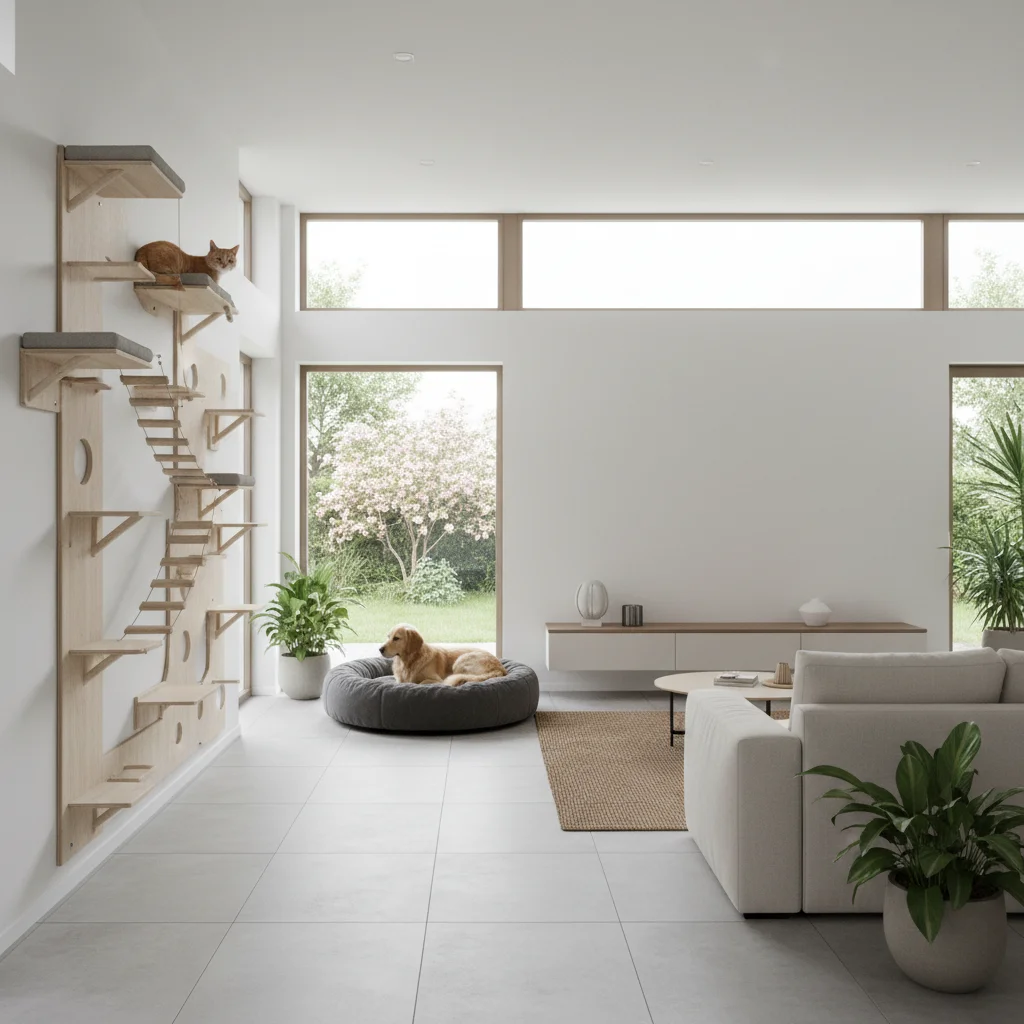
Just like humans, pets need their own dedicated spaces for rest and relaxation. A truly pet-centric home design incorporates multiple comfortable resting spots throughout the house. For dogs, this might mean a plush, orthopedic dog bed in the living room, a cooler mat in a sunny spot, and a cozy crate in a quiet corner. For cats, vertical spaces are key: cat trees, wall-mounted shelves, and window perches offer elevated vantage points for observing their territory and feeling secure. These spaces should be easily accessible and offer a sense of privacy and security.
Anúncios
Temperature control is also vital for pet comfort. Smart thermostats that learn your pet’s preferred temperature range or can be adjusted remotely can ensure they stay comfortable whether you’re home or not. Consider heated beds for older or arthritic pets, and cooling mats for breeds prone to overheating. The goal is to provide a variety of options so your pet can choose the most comfortable spot based on their current needs and the ambient conditions.
Stimulation and Play: Engaging Minds and Bodies
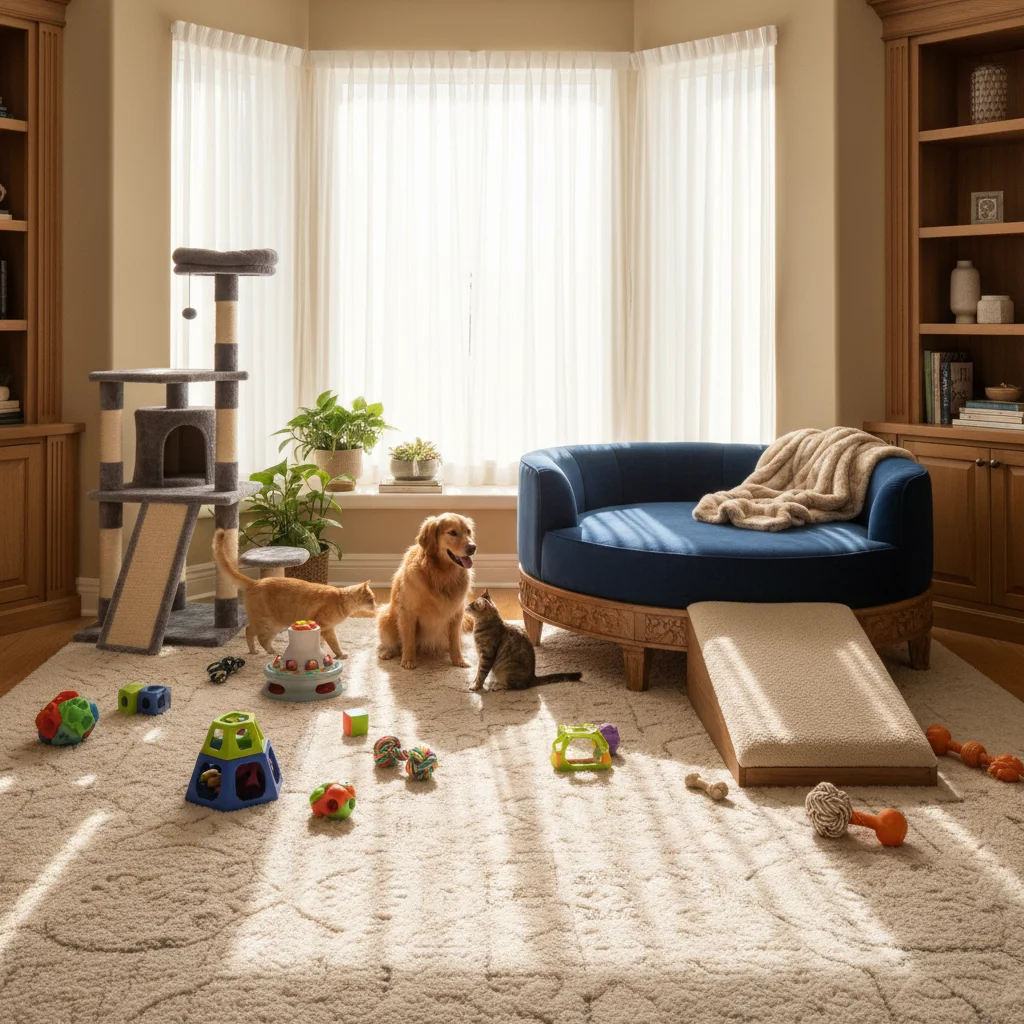
A stimulating environment is crucial for preventing boredom, destructive behaviors, and promoting overall pet well-being. Pet-centric home design integrates play and enrichment into the very fabric of your home. For cats, this means dedicated scratching posts and pads in various textures and orientations (vertical and horizontal), climbing structures, and interactive toys. Built-in cat runs or ‘catios’ (outdoor enclosures) provide safe outdoor access and sensory stimulation.
For dogs, designated play zones, durable chew toys, and puzzle feeders are essential. Consider a dedicated ‘mudroom’ or utility space for active dogs, complete with a wash station and storage for leashes and outdoor gear. Integrating smart toys that can be controlled via an app or dispense treats remotely can keep your dog engaged even when you’re away. The design should encourage natural behaviors, allowing pets to explore, hunt (with toys), and exercise their minds and bodies.
Innovative Design Elements for a Pet-Centric Lifestyle
Beyond the basic principles, 2026 brings an array of innovative design elements that elevate pet-centric home design to new heights. These solutions are not only functional but also seamlessly integrate into modern aesthetics.
Integrated Feeding and Watering Stations
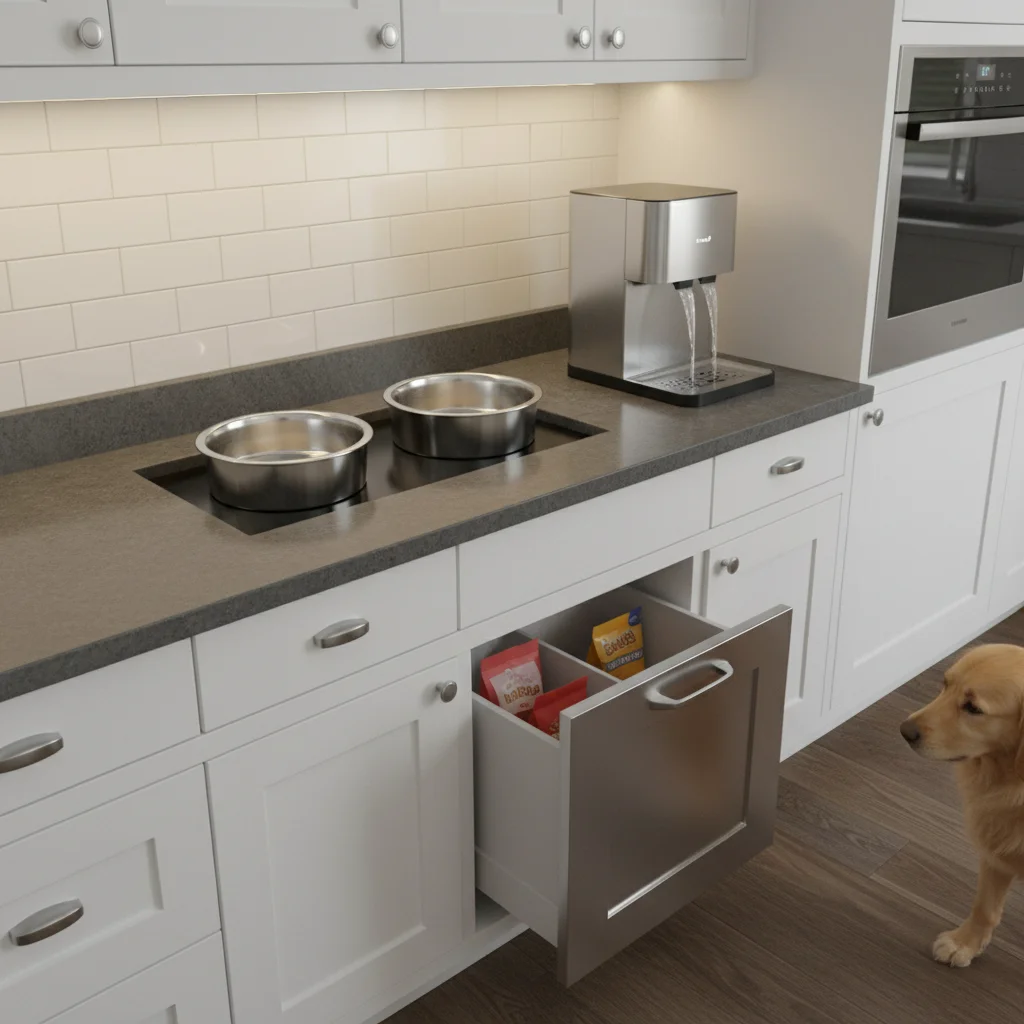
Gone are the days of unsightly bowls cluttering your kitchen floor. Modern pet-centric homes feature integrated feeding and watering stations. These can be built into kitchen islands, cabinetry, or dedicated pet nooks. Raised bowls are ergonomic for larger dogs and older pets, reducing strain on their necks and joints. Automatic feeders and water fountains ensure a constant supply of food and fresh water, promoting better hydration and consistent feeding schedules. Some advanced systems even track consumption and can alert you to changes in your pet’s eating habits.
Durable and Pet-Friendly Materials
Material selection is critical in a pet-centric home design. Focus on durability, ease of cleaning, and non-toxicity. For flooring, options like luxury vinyl plank (LVP), porcelain tile, or engineered hardwood with a durable finish are excellent choices. These resist scratches, stains, and are easy to wipe clean. Avoid porous materials like unsealed natural stone or certain types of carpet that can trap odors and pet hair.
When it comes to upholstery, look for performance fabrics that are stain-resistant, scratch-resistant, and easy to clean. Microfiber, synthetic suedes, and tightly woven fabrics are good options. Consider removable, washable slipcovers for furniture that your pets frequently use. For walls, opt for washable paints with a satin or semi-gloss finish, as they are more resistant to scuffs and easier to clean than matte finishes.
Seamless Indoor-Outdoor Access
For pets that enjoy the outdoors, seamless indoor-outdoor access is a game-changer. Smart pet doors, as mentioned, offer controlled access. However, consider dedicated pet patios or enclosed ‘catios’ that provide safe outdoor exploration. These spaces can be designed with pet-friendly landscaping (non-toxic plants, soft ground covers), water features, and shaded areas. Large sliding glass doors or French doors can connect these pet zones to your main living space, allowing for easy flow and supervision.
Dedicated Pet Zones and Mudrooms
A well-designed mudroom or utility space can function as a dedicated pet zone. This area can include a built-in pet shower or wash station, complete with a handheld sprayer and a non-slip basin, making bath time much easier. Storage solutions for leashes, toys, grooming supplies, and pet food keep clutter at bay. This space can also serve as a transition area, helping to contain dirt and debris before your pets enter the main living areas.
Smart Home Technology: Enhancing Pet Well-Being in 2026
Technology is revolutionizing how we care for our pets, making a pet-centric home design more advanced and convenient than ever before. Smart home devices offer solutions for safety, entertainment, and monitoring, contributing significantly to a 25% boost in pet well-being.
Monitoring and Communication Devices
Pet cameras with two-way audio allow you to check in on your pets, talk to them, and even dispense treats remotely. This can reduce separation anxiety for both you and your pet. Wearable pet trackers monitor activity levels, sleep patterns, and even GPS location, providing invaluable insights into your pet’s health and whereabouts. These devices can alert you to potential health issues or if your pet strays too far from a designated geofence.
Automated Entertainment and Enrichment
Smart toys and automated laser pointers can keep cats entertained for hours. For dogs, automatic ball launchers or puzzle feeders with integrated timers can provide mental stimulation throughout the day. These devices are particularly useful for pets who spend time alone, ensuring they remain engaged and active.
Environmental Control
Beyond smart thermostats, smart lighting can be programmed to simulate natural daylight cycles, which can be beneficial for pets’ circadian rhythms. Automated blinds or curtains can adjust to provide shade or sunlight as needed, ensuring your pet’s comfort throughout the day. Air purifiers with HEPA filters are essential for maintaining good air quality, especially for homes with multiple pets, reducing allergens and odors.
Aesthetic Integration: Blending Pet Needs with Human Style
A common misconception is that a pet-friendly home must sacrifice style. This couldn’t be further from the truth. Modern pet-centric home design seamlessly integrates pet features into the overall aesthetic, enhancing both form and function.
Furniture Designed for Pets and People
Manufacturers are increasingly designing furniture with both human and pet needs in mind. This includes coffee tables with built-in pet beds underneath, end tables with integrated cat scratching surfaces, or sofas with hidden pull-out pet ramps. These pieces are not only functional but also stylish, blending effortlessly into contemporary interiors. Look for furniture with elevated legs, allowing pets to comfortably rest underneath without being directly on the floor.
Vertical Spaces and Cat Superhighways
For cat owners, utilizing vertical space is paramount. Wall-mounted shelves, cat walkways (often called ‘cat superhighways’), and integrated climbing structures can transform a blank wall into an exciting playground. These elements can be designed to match your home’s decor, using complementary materials and colors. They provide cats with a sense of territory, security, and exercise, all while keeping floor space clear.
Discreet Storage Solutions
Pet supplies can quickly accumulate, leading to clutter. Pet-centric home design incorporates discreet storage solutions. Built-in cabinets for pet food, treat jars integrated into kitchen drawers, and stylish baskets for toys help maintain a tidy and organized home. Consider a dedicated closet or pantry area for larger pet items like crates when not in use, or bulk food supplies.
Health and Hygiene: Prioritizing Cleanliness and Well-Being
Maintaining a clean and hygienic environment is crucial for the health of both pets and humans. Pet-centric home design incorporates features that simplify cleaning and minimize allergens and odors.
Advanced Filtration Systems
Beyond air purifiers, consider whole-home air filtration systems that specifically target pet dander and allergens. These systems significantly improve indoor air quality, which is beneficial for both allergy sufferers and pets themselves. Regular vacuuming with a HEPA-filter vacuum cleaner is also essential.
Easy-to-Clean Surfaces and Materials
As mentioned earlier, selecting easy-to-clean flooring and upholstery is vital. But also extend this to other surfaces. Countertops made from non-porous materials (quartz, granite, solid surface) are easier to disinfect after pet contact. Washable wall paints, as discussed, are also a major asset. Consider waterproof liners for pet beds and washable covers to ensure they stay fresh.
Strategic Placement of Litter Boxes and Waste Bins
Litter boxes should be placed in well-ventilated, discreet locations. Enclosed litter box furniture, often designed to look like regular cabinets or end tables, can help contain odors and provide privacy for cats. For dog waste, strategically placed, lidded waste bins (both indoors and outdoors) are essential for convenient and hygienic disposal.
The Future of Pet-Centric Living: 2026 and Beyond
As we move further into 2026, pet-centric home design will continue to evolve, driven by technological advancements and a deeper understanding of animal behavior and needs. We can anticipate even more integrated solutions, personalized pet environments, and sustainable practices.
Personalized Pet Environments
Imagine homes that adapt to your pet’s individual preferences. AI-driven systems could learn your pet’s routines, favorite resting spots, and play styles, then automatically adjust lighting, temperature, and even dispense specific toys. This level of personalization will ensure maximum comfort and stimulation for each unique animal.
Sustainable Pet Products and Design
The movement towards sustainability will also influence pet-centric design. Expect to see more eco-friendly pet products, from beds made with recycled materials to biodegradable litter and toys. Home construction will increasingly incorporate sustainable, non-toxic materials that are safe for both pets and the planet. Rainwater harvesting for pet washing stations and solar-powered smart pet devices will become more common.
Community Pet Spaces
Beyond individual homes, the concept of pet-centric design is extending to communities. Apartment buildings and housing developments are incorporating dedicated pet parks, grooming stations, and even pet-friendly co-working spaces. This communal approach recognizes the social needs of pets and their owners.
Implementing Pet-Centric Design in Your Home
Ready to transform your home into a pet paradise? Here’s a quick guide to getting started with pet-centric home design:
- Assess Your Pets’ Needs: Observe your pets. Where do they like to sleep? What are their play patterns? Do they have anxieties or specific physical needs?
- Prioritize Safety: Conduct a ‘pet-proofing’ audit of your home. Identify and eliminate potential hazards.
- Start Small: You don’t need to overhaul your entire home at once. Begin with small changes like a new pet bed in a prime location or a wall-mounted cat shelf.
- Invest in Quality: Choose durable, easy-to-clean materials and well-made pet products. They will last longer and provide better value.
- Integrate, Don’t Isolate: Aim to integrate pet features seamlessly into your existing decor, rather than making them stand out as separate elements.
- Embrace Technology: Explore smart home devices that can enhance your pet’s safety, comfort, and entertainment.
- Consult Professionals: If undertaking major renovations, consider working with an interior designer who specializes in pet-friendly spaces.
The Tangible Benefits: A 25% Boost in Pet Well-Being
The investment in pet-centric home design yields significant returns in the form of enhanced pet well-being. A home designed with their needs in mind leads to:
- Reduced Stress and Anxiety: Dedicated safe spaces, predictable routines facilitated by smart tech, and ample opportunities for mental and physical stimulation can significantly lower stress levels in pets.
- Improved Physical Health: Ergonomic feeding stations, non-slip flooring, and opportunities for exercise contribute to better physical health, reducing the risk of injuries and promoting healthy digestion.
- Enhanced Mental Stimulation: Interactive toys, climbing structures, and varied environments keep pets engaged, preventing boredom and destructive behaviors.
- Stronger Human-Animal Bond: When pets are comfortable and happy in their environment, their bond with their human companions naturally deepens.
- Better Hygiene and Health for All: Easy-to-clean surfaces and advanced filtration systems contribute to a healthier home environment for both pets and their owners.
By consciously designing our homes to cater to the unique requirements of our cats and dogs, we are not just creating aesthetically pleasing spaces; we are actively contributing to their longevity, happiness, and overall quality of life. The 25% boost in pet well-being is not just a number; it represents a more fulfilling and harmonious life for our beloved animal family members.
Conclusion: A Harmonious Future for Homes and Pets
The evolution of the home to embrace a truly pet-centric home design is an exciting development. As pet owners, we have the opportunity to create environments that not only reflect our personal style but also prioritize the intricate needs of our animal companions. From thoughtful material choices and integrated furniture to cutting-edge smart home technologies, the possibilities are endless.
Embracing these design principles for 2026 means fostering a household where cats can confidently patrol their vertical territories, dogs can comfortably lounge by a sunny window, and all pets can thrive in a safe, stimulating, and loving environment. The result is a healthier, happier pet, a more serene home, and an even stronger bond between you and your furry family member. Invest in pet-centric design, and watch your pets flourish.
