NATO’s Future in 2026: Member Contributions and US Leadership
Anúncios
The Future of NATO in 2026: A Comparison and Analysis of Member State Contributions and U.S. Leadership
The North Atlantic Treaty Organization (NATO) stands as the cornerstone of transatlantic security, a formidable alliance forged in the aftermath of World War II to safeguard peace and stability. As we cast our gaze towards 2026, the Alliance finds itself at a critical juncture, navigating a complex geopolitical landscape marked by resurgent state rivalries, hybrid threats, and technological disruption. This comprehensive analysis will delve into the projected future of NATO in 2026, meticulously examining the evolving dynamics of member state contributions, the persistent debate surrounding defense spending, and the indispensable yet often scrutinized role of U.S. leadership. Understanding these facets is crucial for comprehending the resilience and strategic direction of the Alliance in the coming years.
The foundational principle of collective defense, enshrined in Article 5 of the Washington Treaty, remains the bedrock of NATO. However, the operationalization of this principle hinges on the willingness and capability of each member state to contribute effectively. The journey to 2026 will undoubtedly be shaped by how individual nations respond to evolving threats, fulfill their commitments, and adapt to new strategic realities. This article aims to provide a forward-looking perspective, identifying key trends, potential challenges, and opportunities that will define NATO’s trajectory.
The Evolving Geopolitical Landscape Shaping NATO in 2026
The global security environment is in a constant state of flux, presenting NATO with a multifaceted array of challenges that will undoubtedly influence its strategic posture in 2026. The resurgence of great power competition, particularly with Russia, continues to be a primary concern. Russia’s aggressive actions in Eastern Europe, its ongoing military modernization, and its use of hybrid warfare tactics necessitate a robust and unified response from the Alliance. The annexation of Crimea in 2014 and the full-scale invasion of Ukraine in 2022 have fundamentally altered the European security architecture, pushing NATO to reinforce its eastern flank and re-evaluate its deterrence capabilities.
Anúncios
Beyond Russia, the rise of China as a global power presents a different, yet equally significant, set of challenges. While not a direct military threat to the Euro-Atlantic area in the same vein as Russia, China’s growing economic influence, technological advancements, and assertive foreign policy have implications for global stability and, by extension, for NATO’s long-term strategic considerations. Issues such as cybersecurity, critical infrastructure protection, and the security of supply chains are increasingly intertwined with China’s global reach, requiring NATO to broaden its strategic horizons.
Furthermore, the threat of terrorism, both state-sponsored and by non-state actors, remains a persistent concern. The Sahel region, the Middle East, and parts of Africa continue to be breeding grounds for extremist groups, whose activities can have spillover effects on European security. NATO’s role in counter-terrorism efforts, often in partnership with other international organizations, will likely continue to be a vital component of its mission in 2026.
Hybrid threats, encompassing cyberattacks, disinformation campaigns, and economic coercion, have become increasingly sophisticated and pervasive. These threats blur the lines between peace and war, posing significant challenges to traditional defense doctrines. NATO’s ability to develop robust resilience measures and counter hybrid aggression will be paramount to its effectiveness in 2026. The Alliance has made significant strides in this area, establishing centers of excellence and enhancing information sharing, but the evolving nature of these threats demands continuous adaptation and innovation.
Anúncios
Technological advancements, including artificial intelligence, quantum computing, and hypersonic weapons, are rapidly transforming the nature of warfare. NATO members are engaged in a race to maintain their technological edge, investing in research and development to ensure their forces are equipped to meet future challenges. The interoperability of these new technologies across different member states will be a crucial factor in maintaining NATO’s cohesion and operational effectiveness. The Alliance’s ability to foster innovation and integrate cutting-edge capabilities will be a defining characteristic of its success in the years leading up to and beyond 2026.
Member State Contributions: The 2% Defense Spending Target
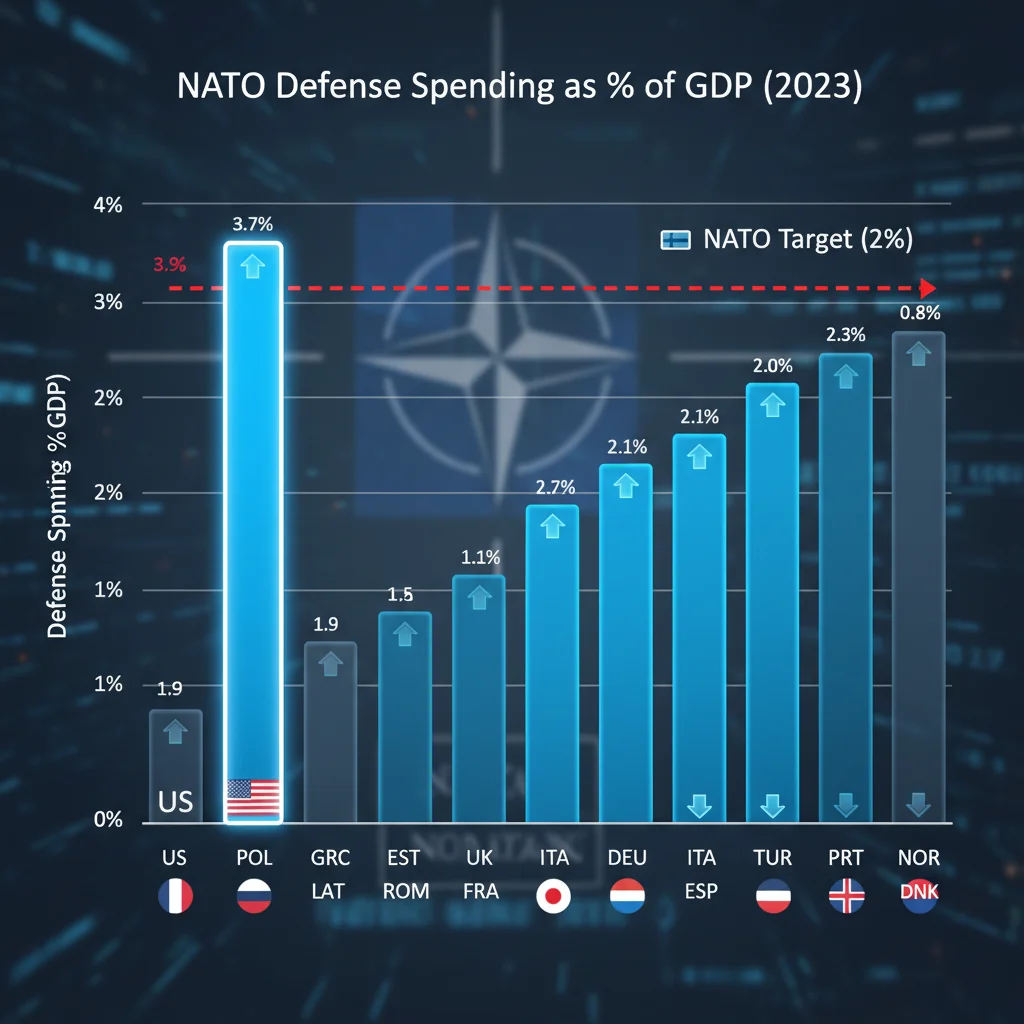
One of the most persistent and critical discussions within NATO revolves around member state contributions, particularly the commitment to spend at least 2% of their Gross Domestic Product (GDP) on defense. This target, reaffirmed at the 2014 Wales Summit, was intended to ensure a more equitable burden-sharing among allies and to bolster the Alliance’s collective defense capabilities. As we approach 2026, the progress towards this target, and the implications of its attainment or non-attainment, will be a defining feature of NATO’s strength and cohesion.
Historically, a significant number of European allies have fallen short of the 2% benchmark, leading to concerns about the sustainability of the Alliance and a disproportionate reliance on U.S. military capabilities. However, recent geopolitical events, most notably Russia’s aggression against Ukraine, have served as a powerful catalyst for increased defense spending across Europe. Many nations, previously hesitant, have announced substantial increases in their defense budgets and outlined clear paths to reaching or even exceeding the 2% target by 2026 or shortly thereafter.
Progress and Projections for 2026
Several member states have already met or surpassed the 2% target, including the United States, Greece, Poland, the Baltic states (Estonia, Latvia, Lithuania), and the United Kingdom. Others, such as Germany, France, and Canada, have made significant commitments to increase their defense spending in the coming years. Germany, for instance, has pledged a €100 billion special fund for its armed forces and aims to consistently meet the 2% target. This shift represents a fundamental recalibration of defense priorities within Europe, moving away from a post-Cold War peace dividend mindset towards a more robust and realistic assessment of security needs.
By 2026, it is projected that a larger proportion of NATO members will either be at or very close to the 2% threshold. This collective effort will not only enhance the Alliance’s military capabilities but also strengthen its political cohesion, demonstrating a shared commitment to collective defense. The increased spending will allow for modernization of equipment, investment in new technologies, and a greater capacity for joint operations and exercises. However, simply meeting the 2% target is not enough; the effectiveness of this spending, its allocation towards critical capabilities, and its contribution to interoperability will also be crucial.
Challenges to Sustained Contributions
Despite the current momentum, challenges to sustained defense spending remain. Economic downturns, domestic political pressures, and competing social priorities could potentially derail or slow down progress. Furthermore, the definition of ‘defense spending’ itself can sometimes be a point of contention, with debates over what expenditures truly contribute to collective defense capabilities. Transparency and accountability in how these funds are utilized will be essential to maintaining public and political support for increased defense budgets.
Another aspect of member state contributions extends beyond financial outlays to include specialized capabilities, troop deployments, and strategic geographic positioning. Nations like Turkey, with its strategic location at the crossroads of Europe and Asia, contribute significantly to NATO’s southern flank. Countries with advanced cyber capabilities or specialized forces for counter-terrorism or hybrid warfare also bring invaluable assets to the Alliance. The effectiveness of NATO in 2026 will thus depend not only on aggregate spending but also on the strategic coordination and integration of these diverse national contributions.
The Indispensable Role of U.S. Leadership in NATO’s Future 2026
The United States has historically been the primary architect and guarantor of NATO’s security, providing the bulk of military capabilities, intelligence, and strategic leadership. As we look towards the future of NATO in 2026, the nature and extent of U.S. leadership will continue to be a dominant factor shaping the Alliance’s effectiveness and strategic direction. While there have been periods of questioning and calls for greater European autonomy, the U.S. commitment remains fundamental to NATO’s credibility and deterrent posture.
Continuity and Evolution of U.S. Engagement
U.S. leadership in NATO is multifaceted, encompassing military contributions, diplomatic initiatives, and financial support. The U.S. maintains a substantial military presence in Europe, providing critical infrastructure, logistics, and rapid response capabilities. Its technological superiority, particularly in areas like air power, intelligence, surveillance, and reconnaissance (ISR), and strategic deterrence, forms the backbone of NATO’s collective defense.
By 2026, U.S. leadership is expected to continue emphasizing burden-sharing, urging European allies to meet their 2% defense spending commitments. This push is not merely about financial contributions but also about fostering a more capable and self-reliant European pillar within NATO. A stronger European defense capability would allow the U.S. to potentially rebalance its global military commitments while still maintaining its pivotal role in transatlantic security.
However, the nature of U.S. political leadership can fluctuate depending on domestic political dynamics. While bipartisan support for NATO generally remains strong, rhetoric from certain political factions can sometimes create uncertainty among allies. Maintaining consistent and clear communication from Washington will be crucial to reassuring allies and ensuring a unified front against common threats. The ability of the U.S. to articulate a clear vision for NATO in 2026, encompassing both traditional defense and emerging challenges, will be vital.
Challenges and Opportunities for U.S. Leadership
One of the primary challenges for U.S. leadership is balancing its global strategic interests with its commitments to NATO. The rise of China and the Indo-Pacific theater increasingly demand U.S. attention and resources, potentially leading to questions about the allocation of military assets. However, many strategists argue that a strong NATO is essential for global stability, allowing the U.S. to project power and influence more effectively across different regions.
Opportunities for U.S. leadership in 2026 include spearheading innovation within the Alliance, particularly in areas like cyber defense, artificial intelligence, and space capabilities. By sharing advanced technologies and expertise, the U.S. can help elevate the collective capabilities of NATO members. Furthermore, U.S. diplomatic leadership can be instrumental in fostering consensus among diverse allies on complex issues, ranging from responses to Russian aggression to climate change’s impact on security.
The U.S. role in intelligence sharing and strategic foresight also remains paramount. Providing allies with timely and accurate intelligence on evolving threats allows for better preparedness and coordinated responses. In essence, while European allies are stepping up their contributions, U.S. leadership will likely remain the indispensable catalyst for NATO’s continued strength and adaptability in 2026.
Interoperability and Collective Readiness for NATO Future 2026
Beyond individual member state contributions and U.S. leadership, the true measure of NATO’s effectiveness in 2026 will lie in its ability to operate as a cohesive and interoperable force. Interoperability refers to the capacity of different national forces to train, exercise, and operate together seamlessly, using common procedures, equipment, and communication systems. Collective readiness, on the other hand, refers to the Alliance’s ability to rapidly deploy and sustain forces in response to any threat.
Enhancing Interoperability
Achieving high levels of interoperability is a complex undertaking, given the diverse military doctrines, equipment, and languages of NATO’s 30+ member states. However, NATO has invested heavily in this area through standardized training programs, joint exercises, and common technical standards. By 2026, these efforts will need to be intensified, particularly in light of the rapid pace of technological change.
Key areas for enhanced interoperability include:
- Command and Control Systems: Ensuring that national command structures can seamlessly integrate into NATO’s overall command and control network is vital for coordinated operations.
- Communication Systems: Secure and reliable communication links are the lifeblood of any modern military alliance. Investment in advanced, encrypted communication technologies will be crucial.
- Logistics and Sustainment: The ability to move troops, equipment, and supplies across national borders efficiently is fundamental. This requires harmonized logistical procedures and robust supply chains.
- Training and Exercises: Regular, large-scale joint exercises are essential for testing and refining interoperability, identifying gaps, and building trust among allied forces.
- Standardization of Equipment: While complete standardization is unrealistic, promoting commonality in critical equipment (e.g., ammunition, fuel, spare parts) and ensuring compatibility where possible significantly enhances operational flexibility.
Achieving Collective Readiness
Collective readiness for NATO future 2026 implies the ability to respond to a crisis with speed and decisiveness. This involves maintaining high levels of alert for designated forces, pre-positioning equipment, and streamlining decision-making processes. The establishment of the Very High Readiness Joint Task Force (VJTF) and the NATO Response Force (NRF) are prime examples of the Alliance’s commitment to rapid response capabilities.
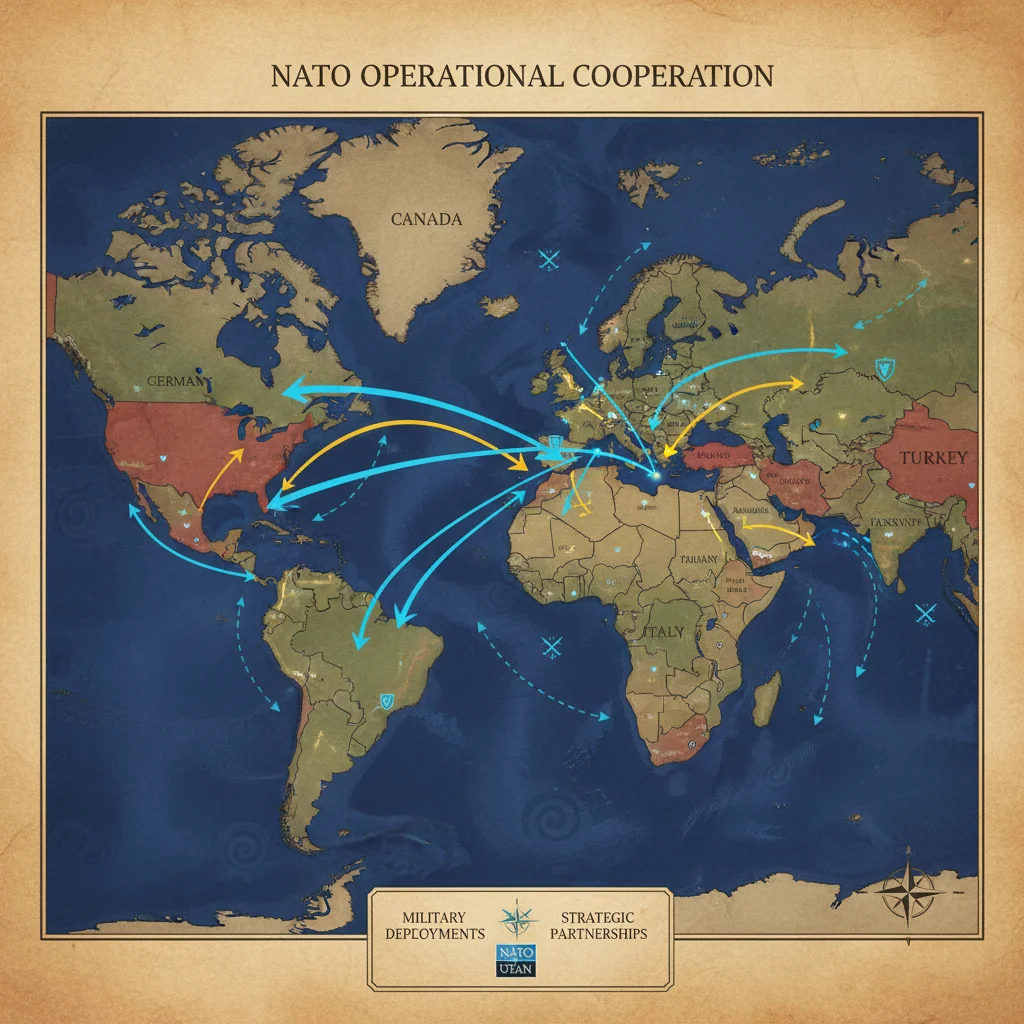
By 2026, NATO’s readiness posture will need to be continually adapted to the evolving threat landscape. This includes:
- Enhanced Forward Presence: Maintaining and potentially expanding multinational battlegroups on NATO’s eastern flank to deter aggression and provide a tripwire defense.
- Rapid Reinforcement Capabilities: The ability to quickly reinforce these forward elements with additional troops and equipment from other allied nations.
- Adaptation to Hybrid Threats: Developing specialized units and doctrines to counter cyberattacks, disinformation, and other forms of hybrid warfare, which often precede or accompany conventional aggression.
- Resilience of Critical Infrastructure: Protecting essential infrastructure, including energy grids, communication networks, and transportation hubs, from both physical and cyberattacks.
The collective effort to enhance interoperability and readiness will ensure that NATO remains a credible deterrent and a formidable defensive alliance in 2026, capable of responding effectively to any challenge to the security of its members.
Strategic Adaptations and Future Challenges for NATO in 2026
As NATO looks towards 2026, it must continue to adapt its strategic concepts and operational frameworks to address a dynamic global security environment. The Madrid Summit in 2022 saw the adoption of a new Strategic Concept, which explicitly identified Russia as the most significant and direct threat to Allied security and for the first time addressed China’s systemic challenges. This new framework will guide NATO’s strategic adaptations in the coming years.
Innovation in Defense and Deterrence
Innovation will be a key driver for NATO’s relevance in 2026. This includes investing in emerging and disruptive technologies (EDTs) such as artificial intelligence, autonomous systems, quantum technologies, and biotechnology. NATO has established initiatives like the Defence Innovation Accelerator for the North Atlantic (DIANA) and the NATO Innovation Fund to foster technological superiority and ensure allies can collectively leverage these advancements.
The concept of deterrence itself is evolving. While nuclear deterrence remains foundational, conventional deterrence must be robust enough to prevent aggression across the full spectrum of conflict. This requires maintaining a credible forward presence, rapid reinforcement capabilities, and the ability to impose significant costs on any potential aggressor. Furthermore, deterrence in the cyber and space domains is becoming increasingly critical, requiring sophisticated defensive and offensive capabilities.
Expanding Partnerships and Global Reach
While NATO is primarily focused on Euro-Atlantic security, its strategic interests extend globally. Partnerships with non-member states and international organizations will continue to be vital in 2026. This includes strengthening ties with partners in the Indo-Pacific region, such as Japan, South Korea, Australia, and New Zealand, to address shared security concerns, particularly regarding China’s assertive posture.
Collaboration with the European Union (EU) is also paramount. Despite some historical friction, the complementary roles of NATO and the EU in defense and security are increasingly recognized. By 2026, enhanced cooperation between the two organizations, particularly in areas like military mobility, cybersecurity, and resilience, will be crucial for a comprehensive European security architecture. The ongoing war in Ukraine has underscored the importance of this synergy.
Addressing Climate Change and Human Security
The impact of climate change on security is an increasingly recognized factor. Extreme weather events, resource scarcity, and mass migration can exacerbate existing tensions and create new security challenges. NATO has begun to integrate climate change considerations into its strategic planning, assessing its effects on military operations, infrastructure, and geopolitical stability. By 2026, efforts to mitigate and adapt to climate change will likely become a more prominent aspect of NATO’s broader security agenda.
Furthermore, human security issues, including pandemics, humanitarian crises, and the protection of civilians, will continue to be relevant to NATO’s missions. While not its primary role, the Alliance often plays a supporting role in disaster relief and humanitarian assistance, leveraging its logistical and organizational capabilities. The experience of the COVID-19 pandemic highlighted the importance of resilience and preparedness for non-military threats, which will remain a focus for NATO in 2026.
Conclusion: A Resilient and Adaptive Alliance for NATO Future 2026
The future of NATO in 2026 is poised for continued adaptation and strengthening in the face of an increasingly complex and unpredictable global security environment. The renewed commitment to defense spending by member states, spurred by geopolitical realities, is a positive indicator of the Alliance’s determination to uphold collective security. While the indispensable role of U.S. leadership remains central, the growing capabilities and contributions of European allies are fostering a more balanced and robust transatlantic partnership.
The emphasis on interoperability, collective readiness, and strategic innovation will ensure that NATO remains a credible deterrent and a formidable defensive force. Addressing emerging threats such as hybrid warfare, cyberattacks, and the geopolitical implications of technological advancements will require continuous vigilance and collaborative effort. Furthermore, expanding partnerships and considering broader security challenges like climate change will be crucial for maintaining NATO’s relevance in a rapidly changing world.
In 2026, NATO will likely stand as a more unified, better-equipped, and strategically agile alliance, capable of defending its members and upholding the values of democracy and freedom. Its ability to navigate the intricate geopolitical landscape, effectively manage member state contributions, and leverage U.S. leadership will ultimately determine its success in safeguarding peace and stability in the Euro-Atlantic area and beyond. The collective resolve and adaptive spirit of its member nations will be the ultimate guarantors of NATO’s enduring strength.
