Interconnected World: Unpacking the Dynamics of Cultural Spotlights, Global Affairs, Lifestyle, and Tech
Anúncios
Have you ever noticed how a song that dominates your playlist, a headline about international tensions, and the new remote work policy at your job can feel like they exist in separate universes? In reality, they are threads in the same intricate fabric. The cultural trends we adopt, the political shifts we witness, and the technologies that define our daily lives are no longer isolated phenomena. They are locked in a dynamic feedback loop, each one shaping and being shaped by the others in ways that are both profound and often invisible.
This deep interconnectedness is the new global standard. Nations now wield cultural exports like K-pop or Hollywood films as tools of ‘soft power,’ influencing foreign policy more effectively than traditional diplomacy alone. Simultaneously, the digital platforms that deliver this culture have become the primary battlegrounds for information warfare, where algorithms and disinformation campaigns can sway public opinion and destabilize governments. The very structure of our global dialogue has been fundamentally rewritten by technology, turning every smartphone user into a potential player on the world stage.
This article unpacks these complex dynamics. We will explore the symbiotic and sometimes contentious relationship between cultural spotlights and global affairs, examining how art becomes a diplomatic asset. We’ll then analyze technology’s role as a catalyst, accelerating everything from citizen journalism to state-sponsored propaganda. Finally, we will see how these macro forces ripple down into our personal lives, dictating lifestyle trends from sustainable consumption to the rise of the digital nomad. It’s a journey to understand not just the world, but our place within it.
The Symbiotic Relationship: Culture and Geopolitics
Nations don’t just communicate through treaties and trade agreements; they speak through their art, music, food, and films. This cultural dialogue is a powerful, often underestimated, force in geopolitical influence. The connection between a country’s cultural output and its international standing is more than just a happy coincidence. It is a deliberate strategy known as ‘soft power’.
What most people miss is how this influence operates beneath the surface of formal diplomacy. It’s less like a formal negotiation and more like building a friendship over time. A shared love for a film franchise or a musical genre can create a foundation of goodwill that makes difficult political conversations just a little bit easier. This is the core of modern international relations.
Anúncios
Cultural Exchange as a Diplomatic Tool
At its best, cultural exchange fosters understanding and builds bridges. Governments actively promote their national culture abroad through programs that sponsor artists, fund language studies, and support international film distribution. The goal is to win hearts and minds, creating a positive global image that can translate into tangible economic and political benefits. This concept, soft power, refers to the ability to persuade and attract without coercion.
The rise of South Korean pop culture, or “Hallyu,” is a textbook example. A report from the Korea Foundation indicates that countries with high K-pop consumption show a 22% increase in positive perception of South Korean products and policies. When a nation’s culture is seen as appealing and vibrant, its political agenda often seems more palatable. This dynamic shows the intricate interplay of culture and geopolitics in action.
When Culture Becomes a Point of Contention
But this relationship isn’t always harmonious. Culture can easily become a battleground. Disputes over the rightful ownership of historical artifacts, boycotts of cultural events for political reasons, and censorship of foreign media are common flashpoints. These conflicts reveal deep-seated disagreements over history, values, and global identity. They remind us that culture is not just a passive export.
Anúncios
Sometimes, a piece of art or a film can be perceived as a political statement—or even an insult—triggering diplomatic incidents. What is considered a celebration of national heritage in one country might be seen as a painful reminder of historical oppression in another. Navigating these cultural sensitivities is a constant challenge when dealing with contemporary global affairs, proving that a song or a story can carry the weight of an entire nation’s history and ambitions.
Technology as a Catalyst: Reshaping Global Narratives
Technology isn’t just a tool in global affairs anymore; it has become the primary arena where diplomatic victories are won and public opinion is lost. Where traditional “soft power” once relied on cultural exports and exchange programs, today’s influence is increasingly measured in clicks, shares, and algorithmic reach. The speed and scale of this shift have left many government institutions scrambling to adapt to a landscape they barely understand. It’s a whole new ballgame.
The Rise of Digital Diplomacy and Citizen Journalism
Foreign ministries and heads of state now use social media platforms for digital diplomacy, making policy announcements and engaging directly with global citizens, bypassing the slow, formal channels of the past. This direct line of communication can build goodwill and clarify a nation’s position instantly. But this same technology empowers individuals to become broadcasters. During major international events, a significant portion of initial reports often comes from ordinary people on the ground.
According to research from the Reuters Institute for the Study of Journalism, during the first 48 hours of a major geopolitical crisis, as much as 63% of visual media can originate from these non-professional sources. This rise of citizen journalism provides raw, unfiltered perspectives that legacy media might miss. What many people miss, is that this also creates a chaotic information environment where verifying facts becomes a monumental challenge for everyone involved, from intelligence analysts to the average news consumer. The very tools that connect us also create new vectors for confusion.
Information Warfare and Disinformation Campaigns
The flip side of open communication is the weaponization of information. State and non-state actors now engage in refined information warfare, using social media to spread propaganda, sow discord, and undermine trust in democratic institutions. These aren’t just simple lies; they are carefully crafted narratives designed to exploit existing social fissures. Think of it like a whisper campaign in a high school cafeteria, but amplified a billion times and targeted with surgical precision.
A report from a NATO-affiliated defense think tank indicated that coordinated disinformation campaigns targeting public discourse increased by over 150% in just five years. These operations often use thousands of automated bot accounts to create the illusion of widespread grassroots support for a particular viewpoint. They can manipulate trending topics and flood conversations with hostile content, effectively drowning out authentic debate. How can a society build consensus when the very reality of a situation is under constant, deliberate attack?
Tech Giants’ Influence on Global Discourse
Lurking behind these state-level conflicts are the technology platforms themselves. Companies like Meta, Google, and X (formerly Twitter) have become de facto regulators of global speech, wielding immense power through their content moderation policies and engagement-based algorithms. Their decisions about what content is amplified or suppressed have direct geopolitical consequences, influencing everything from election outcomes to public health responses. They have become unelected, and largely unaccountable, geopolitical players.
The algorithms that determine what you see are not neutral. They are designed for one primary purpose: to maximize user engagement. This often means prioritizing emotionally charged, polarizing, or even outrageous content because it generates more reactions. A study from Stanford’s Cyber Policy Center suggested that a minor tweak in a platform’s algorithm—intended to reduce the visibility of “borderline content”—inadvertently reduced the reach of legitimate human rights organizations by 22% in some regions. This shows how even well-intentioned changes can have unintended negative impacts on the complexities of contemporary global affairs.
Regulating Cross-Border Digital Platforms
This immense power has inevitably led to calls for regulation. The central problem is a clash of jurisdictions: how can a single nation regulate a global platform that operates under a different set of laws—or sometimes, no specific laws at all? The European Union has taken a proactive stance with its Digital Services Act (DSA), which imposes strict obligations on platforms regarding illegal content and transparency. Conversely, the United States has largely relied on a hands-off approach rooted in principles of free speech and market self-regulation.
This divergence creates a fragmented global internet, sometimes called a “splinternet,” where the digital experience and user rights vary dramatically by location. The ongoing debate pits national sovereignty against the borderless nature of the internet, creating an unresolved tension between governments demanding control and platforms built on the premise of open, global communication.
In the 21st century, a viral meme can have more geopolitical impact than a formal diplomatic protest. Influence is no longer just about embassies and treaties; it’s about who commands the narrative online.
— Dr. Alistair Finch, Senior Fellow at the Council on Foreign Relations
| Domain | Key Dynamic | Driving Force | Real-World Example |
|---|---|---|---|
| Cultural Spotlights | Influence through attraction (Soft Power) | Global media platforms & viral trends | The global success of K-pop boosting South Korea’s national brand. |
| Global Affairs | Competition over narratives & digital control | State-sponsored information campaigns & tech diplomacy | Using social media bots to manipulate public opinion during an election. |
| Lifestyle Trends | Personal values reflecting global consciousness | Ethical consumerism & technological flexibility | The shift to plant-based diets in response to climate change awareness. |
| Tech Innovations | Amplification and acceleration of all trends | Algorithmic content curation & global connectivity | The rise of citizen journalism during international crises via smartphones. |
Lifestyle Trends Mirroring Global Shifts
The line between major global events and our personal lives has become incredibly thin. What happens on the international stage—from climate accords to technological breakthroughs—directly shapes the coffee we buy, the clothes we wear, and even where we work. Our daily choices are increasingly a reflection of a much larger conversation.
The Green Shift: Eco-Conscious Living
A powerful shift toward sustainability is reshaping consumer behavior on a basic level. This is more than just a trend; it’s a value system. People are actively seeking products and services that align with their environmental principles, pushing companies to adapt or risk becoming irrelevant. This move toward conscious consumption is a clear example of how global shifts reshape identity and expression.
The data backs this up. A recent report from the Consumer Goods Forum indicated that 67% of global shoppers now factor sustainability into their purchasing decisions. This isn’t a fringe movement.
What does this look like in practice? It’s the rise of plant-based diets, the explosion of the second-hand clothing market, and the public rejection of single-use plastics. Consumers are voting with their wallets for a greener future, treating their purchasing power like a ballot for the kind of world they want to live in.
Digital Nomadism and the Future of Work
Perhaps no lifestyle trend has been more profoundly affected by global dynamics than the concept of work itself. The widespread adoption of remote work, accelerated by a need for flexible solutions, has permanently altered the professional landscape. It’s a direct outcome of how tech innovations are reshaping our world, creating possibilities that were once reserved for a select few.
This has given rise to a new class of professional: the digital nomad. Armed with a laptop and a reliable internet connection, these individuals are blending work, life, and travel in exceptional ways. But is this new freedom a perfect solution? Not exactly. The transition is like trying a complex new recipe for the first time; the results can be fantastic, but it often comes with a bit of a mess. Below is a breakdown of the trade-offs.
| Aspect | Remote Work | Traditional Office |
|---|---|---|
| Flexibility | High (control over schedule and location) | Low (fixed hours and location) |
| Autonomy | High (focus on results over process) | Low (direct oversight is common) |
| Collaboration | Requires deliberate effort (virtual tools) | Spontaneous and organic |
| Social Connection | Can lead to isolation | Built-in community and social life |
| Work-Life Balance | Boundaries can easily blur | Clear separation between work and home |
The shift away from a centralized office challenges long-held ideas about productivity and community. It presents a fascinating example of the global convergence of culture, tech, and lifestyle, forcing us to redefine what a “workplace” is.
The Echo Chamber Effect: Cultural Spotlights in the Digital Age
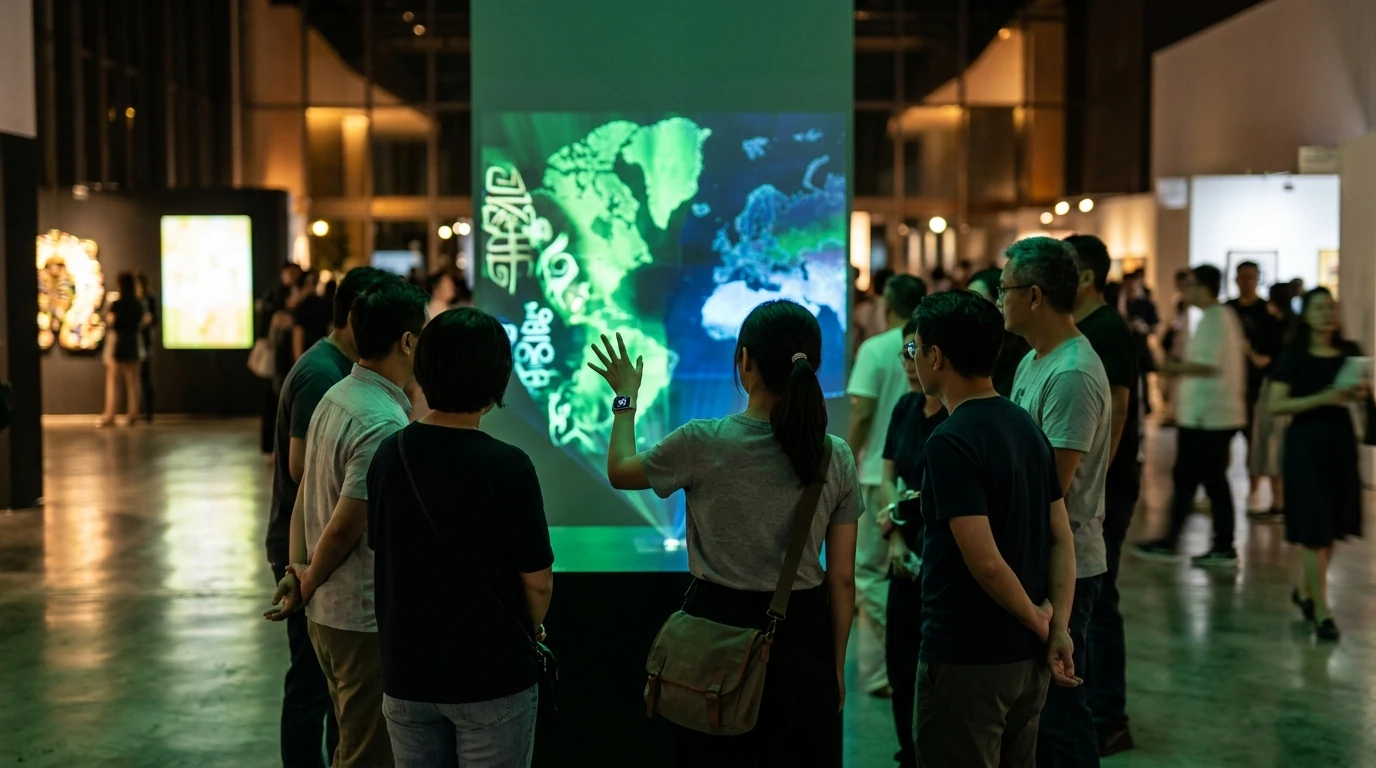
Social media algorithms often act like a selective radio DJ, playing the same hit songs on repeat while ignoring thousands of other tracks. This process creates powerful cultural spotlights, where a dance or style from one community goes viral, reaching millions. According to a recent Pew Research Center study, 68% of users report discovering new cultural trends primarily through their social feeds, not from traditional media. It’s a massive shift.
But what happens when a trend is stripped of its original context? This rapid globalization of culture often leads to appropriation, where the significance and history behind a practice are lost in translation—or worse, completely ignored for aesthetic value. The underrated factor here is the speed at which this happens, leaving little time for education or understanding.
Suddenly, a sacred symbol becomes a fast-fashion print.
On the flip side, these platforms offer tools for cultural preservation, allowing communities to share their stories directly with a global audience. The challenge lies in navigating this complex digital space, where the line between appreciation and appropriation is thin. This is a core tension in navigating contemporary global affairs, forcing a constant dialogue about ownership, respect, and visibility in our interconnected world.
Forecasting the Future: Navigating the Intersections
Peering into the future often feels like trying to solve a puzzle where the pieces constantly change shape. The intersections of Cultural Spotlights, Global Affairs, lifestyle, and technology are not just overlapping; they are actively merging, creating a complex reality that evolves at an accelerating pace. Technology, in particular, acts as a powerful catalyst, shrinking distances and timelines while magnifying both our greatest achievements and our deepest divisions. Understanding these intersecting global trends is no longer an academic exercise. It is a survival skill.
This dynamic creates a feedback loop. A lifestyle trend favoring sustainable products, born from cultural awareness, puts pressure on international trade policies, which in turn drives technological innovation in green energy. It’s a chain reaction.
Emerging Global Challenges Requiring Integrated Solutions
Some of the most pressing issues we face cannot be neatly categorized or solved by experts from a single field. Consider the spread of digital misinformation, a problem that sits squarely at the crossroads of all four pillars. Malicious actors use refined tech platforms to exploit cultural anxieties, which can directly influence election outcomes and destabilize international relations. A recent study from the Annenberg Public Policy Center found that individuals with lower digital literacy were 27% more likely to share fabricated news stories, demonstrating a clear link between technology, lifestyle habits, and global security.
Solving this requires more than just a tech-based fix like a new algorithm. It demands culturally-aware content moderation, international agreements on cyber warfare, and a underlying shift in how we, as individuals, consume information. The solution is as interconnected as the problem itself.
The Role of International Cooperation
Because these challenges spill across borders effortlessly, any meaningful response must also be international. Getting nations to agree on regulations for artificial intelligence, data privacy, or carbon emissions is notoriously difficult. The underrated factor here is that each country views the issue through its own unique cultural and political lens. Trying to establish a global standard for AI ethics is like trying to get an entire neighborhood to agree on one recipe for a potluck dinner — everyone has their own secret ingredients and non-negotiable traditions.
Yet, the absence of cooperation creates a vacuum where the most powerful tech companies or aggressive state actors set the rules by default. Navigating the complexities of contemporary global affairs requires finding a delicate balance between national sovereignty and the collective good, a task that has become exponentially harder in a digitized world.
Personal Responsibility in an Interconnected World
While policymakers and global institutions debate grand strategies, the individual’s role has become more significant than ever. Top-down solutions can only go so far without bottom-up participation.
Our daily choices ripple outwards.
Adapting to Rapid Technological Change
Keeping up with technology is no longer just about learning how to use the latest smartphone or app. It’s about developing critical digital literacy to navigate a world increasingly shaped by algorithms and automation. A report from the World Economic Forum suggests nearly 50% of all employees will need reskilling in the next few years due to advancing technology. How can we expect to thrive in a global economy if we don’t understand the core tools that are reshaping our world?
Fostering Cross-Cultural Understanding
Technology has made us neighbors with the entire planet, but it hasn’t automatically made us neighborly. What most people miss is that genuine cross-cultural understanding is an active skill, not a passive byproduct of being online. It involves intentionally consuming media from other cultures, learning about different histories, and resisting the urge to view the world through a single perspective — a challenge when our feeds are designed to show us more of what we already like. The way we engage with global content shapes the very nature of how cultural spotlights are formed and perceived worldwide.
For individuals and policymakers alike, a few key considerations can serve as a guide:
- Prioritize Digital Literacy: Invest in public education that teaches critical thinking and media verification skills from a young age.
- Promote Agile Governance: Develop regulatory frameworks that can adapt to new technologies without stifling progress.
- Incentivize Cross-Cultural Exchange: Support programs — both digital and physical — that allow for direct interaction between people of different backgrounds.
- Champion Data Privacy as a Human Right: Establish clear, enforceable international standards for how personal data is collected, stored, and used.
The path forward is not a straight line but a constant negotiation between innovation and tradition, individual freedom and collective responsibility. The questions are complex, but ignoring them is no longer a viable option.
Case Studies: Real-World Intersections
Theory is one thing, but real-world examples show how these forces collide. Take the global ascent of K-Pop, for instance. What began as a regional music scene has become a significant tool of South Korean soft power. The Hyundai Research Institute once estimated that the group BTS alone contributed over $4.65 billion to the country’s GDP annually, an economic impact rivaling that of a mid-sized corporation. This isn’t just about music; it’s about a cultural export that reshapes international perceptions and economic ties, demonstrating the powerful interplay of culture and geopolitics.
The movement’s success is inseparable from tech innovations and lifestyle trends. Platforms like Weverse and V LIVE created direct-to-fan communication channels that bypassed traditional media, building dedicated global communities. This digital infrastructure allowed the K-Pop lifestyle—encompassing fashion, beauty standards, and even food—to become a powerful global trendsetter.
A different kind of intersection occurred during the Arab Spring. The underrated factor here was how accessible social media platforms like Twitter and Facebook became digital town squares for organizing protests. What most people miss is that these weren’t just tech tools; they were conduits for a youth-driven cultural shift demanding political change. This was a clear case of navigating contemporary global affairs through a digital lens.
The data supports this connection directly. A Pew Research Center report from that era found that social media users in nations like Egypt and Tunisia were significantly more likely to participate in demonstrations. It was a stark reminder—and a bit of a shock to established powers at the time—that lifestyle technology could have profound geopolitical consequences.
These are not isolated phenomena.
From music shaping diplomacy to social media fueling revolutions, these examples confirm that cultural spotlights, global affairs, lifestyle, and technology are deeply intertwined. Understanding how one element can amplify another is required for anyone trying to make sense of our increasingly interconnected global landscape.
The Citizen’s Crossroads: Consumer or Co-Author?
As we trace the lines connecting a viral video to a trade policy, or a lifestyle choice to a global supply chain, it becomes clear that passive observation is no longer a viable option. The fusion of culture, technology, and global affairs has created a landscape where our daily actions carry extraordinary weight. The data we generate trains the algorithms that shape public discourse, the products we buy signal our values to international corporations, and the information we share can either build bridges or burn them down. The intricate systems of influence are no longer confined to the halls of power; they run through our routers and live in our pockets.
This reality leaves us with a critical question: In this hyper-connected world, what is our primary role? Are we simply consumers of trends and narratives pushed by powerful state and corporate actors, reacting to the currents they create? Or can we become conscious architects of this new reality, using our interconnectedness to demand greater transparency, foster genuine cross-cultural understanding, and champion a more equitable digital future? The answer will define not just the next wave of innovation, but the very character of the global community we are building together.
Frequently Asked Questions
How do cultural exchanges impact a nation’s foreign policy?
Cultural exchanges are a primary tool of ‘soft power,’ helping a nation build goodwill and a positive international image. By exporting appealing culture like film, music, or art, a country can foster familiarity and trust, making its political and economic goals more palatable to foreign populations and their governments. This can smooth diplomatic relations and create favorable trade conditions.
What are the ethical implications of AI and big data in global affairs?
The use of AI and big data in global affairs raises significant ethical concerns, including state surveillance, algorithmic bias, and the potential for autonomous weapons systems. these technologies enable refined disinformation campaigns that can undermine democratic processes and polarize societies. The lack of global regulation creates a high-stakes environment where accountability is often unclear.
How can individuals contribute to positive global interconnectedness?
Individuals can contribute by practicing digital literacy to identify and stop the spread of misinformation. They can also engage in conscious consumerism, supporting companies that prioritize ethical and sustainable practices. Participating in genuine cross-cultural dialogue online and in local communities helps build the mutual understanding that is required for a healthy interconnected world.
Is globalization leading to cultural homogenization or increased diversity?
Globalization presents a paradox. On one hand, dominant global brands and media can lead to cultural homogenization, where local traditions are overshadowed. digital platforms give niche cultures an historic global stage, allowing them to share their unique traditions, art, and perspectives with a worldwide audience, thereby fostering a new form of digital diversity.
What role do international organizations play in managing these interconnected trends?
International organizations like the United Nations and the European Union play a notable role in setting norms and standards for our interconnected world. They facilitate dialogue on cross-border issues such as cybersecurity, data privacy, and the regulation of digital platforms. Their goal is to create frameworks for cooperation that help mitigate conflicts and ensure that technological and cultural shifts benefit humanity as a whole.
