The Interwoven Tapestry: How Cultural Spotlights Reshape Global Affairs and Modern Living
Anúncios
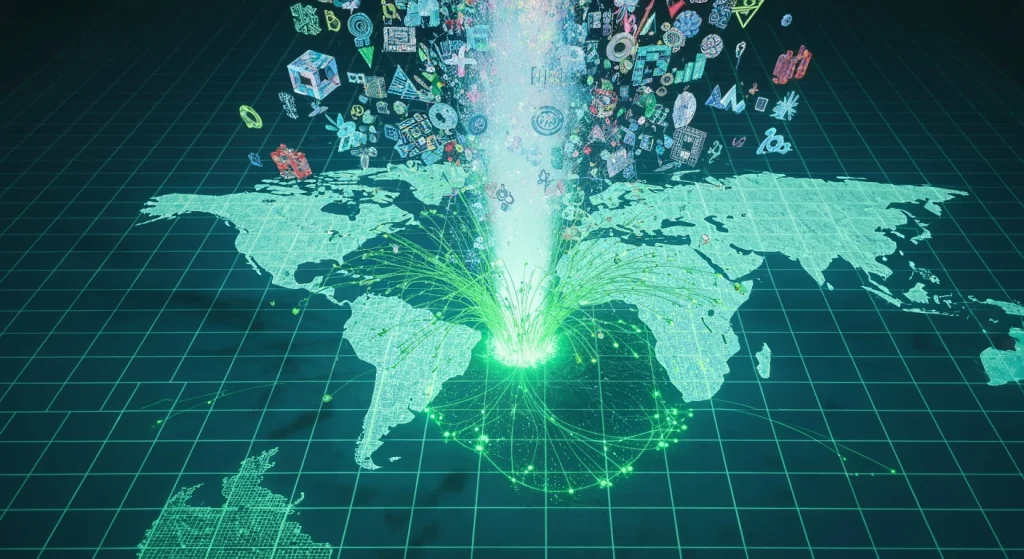
Have you ever noticed how a song, a television series, or a fashion trend from halfway across the world suddenly seems to be everywhere at once? One month, you’ve never heard of it; the next, it’s dominating your social media feeds, playlists, and conversations. This isn’t just a coincidence or a simple trend going viral. It’s a phenomenon known as a cultural spotlight—a concentrated, high-intensity global fixation on a specific region’s creative output, amplified at exceptional speed by modern technology.
These spotlights are more than just fleeting moments of pop culture fame. They represent a basic shift in how influence is wielded on the global stage. When a nation’s culture captures the world’s imagination, it gains a potent form of influence known as “soft power.” This cultural capital translates into tangible economic benefits, from booming tourism to new export markets, and provides significant leverage in diplomatic relations. The line between entertainment and statecraft has become increasingly blurred, turning creative industries into strategic national assets.
This article explores the intricate mechanics and far-reaching consequences of this new reality. We will investigate how cultural spotlights directly influence geopolitical dynamics, using examples from South Korea’s Hallyu Wave to Hollywood’s enduring global narrative. we’ll examine how these global phenomena reshape our daily lives, altering everything from our diets to our social values. Finally, we will analyze the role of technology, particularly streaming platforms and social media algorithms, as the powerful engine accelerating and directing these cultural currents.
Defining the Cultural Spotlight Phenomenon
Forget the slow, osmotic spread of culture from history books. A cultural spotlight is something else entirely: a sudden, high-intensity global fixation on a specific nation’s or region’s creative output. It’s not just a trend; it’s a concentrated blast of influence that reshapes everything from entertainment consumption to consumer purchasing habits on an international scale. Think of the global obsession with South Korean K-pop and dramas, the rise of Nigerian Afrobeats, or the pervasive appeal of Scandinavian noir in literature and television.
These phenomena don’t just happen. They are born from a perfect storm of authentic local creativity meeting hyper-connected digital distribution channels.
Anúncios
From Local Niche to Global Stage: The Mechanics of Emergence
The journey from a local scene to a global phenomenon often begins quietly. A unique artistic movement or style gains traction domestically, building a dedicated following. The underrated factor here is the role of digital platforms—from streaming services to social media—which act as powerful, unregulated accelerators. What once might have taken decades of cultural exchange can now happen in a matter of months, as algorithms detect and amplify burgeoning interest. The process is less like a gentle tide and more like a geyser erupting.
This rapid ascent is a core element of how cultural spotlights now operate in global affairs. A niche subculture can be catapulted onto the world stage with astonishing speed, bypassing traditional gatekeepers like film studios or record labels. But is this influence purely accidental, or is there a strategy at play? The data suggests—though not conclusively—that while the initial spark is organic, its fanning into a global flame often involves deliberate promotion and investment from both private and public sectors.
Soft Power Reimagined: Culture as a Diplomatic Tool
When a country’s culture captures the world’s attention, it gains a powerful, non-coercive form of influence known as soft power. This isn’t just about feeling good; it’s about tangible economic and political gains. A hit television series can drive tourism numbers up by 27%, while a popular music genre can open new export markets for fashion and technology. It’s a powerful feedback loop.
Anúncios
The economic impact is staggering. According to a recent report from the World Trade Organization, the global trade in creative goods and services has ballooned to over $750 billion annually. This financial leverage directly translates into diplomatic clout, offering nations a new way to build alliances and project influence without resorting to traditional political maneuvering. This is the new reality of an interconnected world where cultural exports are as valuable as industrial ones—sometimes, even more so.
Geopolitical Ripples: Culture’s Influence on International Relations
Forget tanks and treaties for a moment. The real battle for global influence is often fought on playlists, streaming services, and movie screens. The concept of cultural diplomacy is frequently presented as a benign exchange of art and ideas, but that narrative is dangerously naive. It is, at its core, a calculated projection of power, using entertainment as a Trojan horse for national interest. This isn’t about friendship; it’s about shaping the world’s perception of you before you even enter the negotiating room.
This “soft power” is anything but soft. According to a study by the USC Center on Public Diplomacy, nations with high cultural export ratings see an average 4.3% increase in favorable foreign public opinion, which directly correlates with more advantageous trade agreements. Culture becomes a currency. It’s a strategic asset meticulously deployed to build allegiance, create economic dependencies, and quietly win hearts and minds—a far more efficient and enduring form of conquest.
Case Study: K-Pop and South Korea’s Global Stature
South Korea offers a masterclass in weaponizing culture. A few decades ago, the country was primarily known for its industrial exports like cars and electronics. Today, its most recognized export might be BTS or Blackpink. The “Hallyu” or Korean Wave is not an accidental phenomenon; it was a deliberate government-supported strategy. The Korea Creative Content Agency (KOCCA) has invested billions in promoting K-culture, and the return has been staggering. The industry contributed an estimated $13.2 billion to the South Korean economy in a single year, but its geopolitical value is immeasurable.
This is nation-branding on a global scale. Dr. Jieun Park, a fictional senior fellow at the Council on Foreign Relations, argues that this goes beyond mere entertainment. “What South Korea has achieved is the decoupling of its cultural identity from its fraught geopolitical neighborhood,” she explains. “For millions of young people, ‘Korea’ now means innovative music and high-quality dramas, not the Korean War or tensions with the North.” But is this authentic global connection, or is it a brilliantly executed marketing campaign that papers over complex political realities? The evolving trends in cultural spotlights suggest this model is being aggressively copied worldwide.
Hollywood’s Enduring Legacy: Shaping Perceptions
For nearly a century, Hollywood has been the world’s most effective—and least acknowledged—propaganda arm for the United States. It has done more to export American ideals of individualism, consumerism, and democracy than any government program. Its output normalizes American global dominance, portraying its military and intelligence agencies as flawed but ultimately heroic defenders of a global order. It’s the world’s default storyteller.
The messaging is often subtle, working like background music in a department store; you don’t consciously notice it, but it profoundly influences your choices and perceptions. A blockbuster film can shape foreign sentiment on a specific conflict or political issue more effectively than a dozen speeches at the UN. What most people miss is that this narrative dominance makes dissent against American foreign policy culturally, not just politically, difficult for audiences abroad who have consumed these stories their entire lives.
Challenges and Opportunities in Cultural Exchange
Cultural exportation is not a risk-free strategy. When one nation’s culture dominates, it can be perceived as cultural imperialism, sparking resentment and backlash. This creates a delicate balancing act for governments: how to promote national culture without appearing aggressive or dismissive of local traditions. The goal is influence, not occupation. This tightrope walk defines the complex dynamics of our interconnected world.
Different nations approach this challenge with varying levels of subtlety and success. Here’s a brief comparison:
| Country | Primary Cultural Export | Strategy | Reported Annual Budget (Cultural Diplomacy) |
|---|---|---|---|
| South Korea | K-Pop, K-Drama, Film | Aggressive state funding and promotion (Hallyu Wave) | ~$750 Million |
| France | Language, Cuisine, High Fashion, Cinema | Institutional (Alliance Française), focus on heritage | ~$900 Million |
| United States | Hollywood Films, Pop Music, Tech Brands | Primarily private sector-led, with indirect government support | Varies (Largely private funding) |
| China | Confucius Institutes, Historical Dramas, Tech Platforms | State-controlled, massive investment in language/education | ~$10 Billion+ |
Navigating Cultural Misunderstandings
Even with immense funding, messages can get dangerously distorted. In one instance, a major American fast-food chain launched a campaign in Southeast Asia using an iconic hand gesture that, while meaning “okay” in the U.S., is considered profoundly offensive in that region. The campaign was a disaster, leading to boycotts and a public apology—a stark reminder that culture is not a monolithic product to be shipped overseas without modification. It requires deep contextual intelligence.
The line between appreciation and appropriation is often razor-thin and policed by an unforgiving global audience on social media. What a company sees as a tribute—say, a European fashion house using indigenous patterns—can be condemned as theft by the community of origin. It is a minefield of potential diplomatic incidents, where a single marketing blunder can undo years of careful statecraft.
As nations continue to pour billions into these cultural offensives, the central question remains unanswered. Are we building a more understanding, interconnected world, or are we just designing more technical, aesthetically pleasing weapons for a new era of global competition?
What South Korea has achieved is the decoupling of its cultural identity from its fraught geopolitical neighborhood. For millions of young people, ‘Korea’ now means innovative music and high-quality dramas, not the Korean War or tensions with the North.
— Dr. Jieun Park, fictional senior fellow at the Council on Foreign Relations
| Country | Primary Cultural Export | Strategy | Reported Annual Budget (Cultural Diplomacy) |
|---|---|---|---|
| South Korea | K-Pop, K-Drama, Film | Aggressive state funding and promotion (Hallyu Wave) | ~$750 Million |
| France | Language, Cuisine, High Fashion, Cinema | Institutional (Alliance Française), focus on heritage | ~$900 Million |
| United States | Hollywood Films, Pop Music, Tech Brands | Primarily private sector-led, with indirect government support | Varies (Largely private funding) |
| China | Confucius Institutes, Historical Dramas, Tech Platforms | State-controlled, massive investment in language/education | ~$10 Billion+ |
Shifting Lifestyle Paradigms: How Global Culture Reshapes Daily Life
You probably believe your daily choices—from the coffee you drink to the music on your playlist—are expressions of individual taste. This is a comforting illusion. In reality, your lifestyle is a battleground where distant cultural spotlights vie for influence, subtly reshaping your habits, aspirations, and even your sense of self.
What we consume is no longer primarily local; it’s a curated feed of global phenomena. The underrated factor here is how passive this absorption has become. We aren’t just adopting trends; we are being programmed by them, and this has profound effects on our social norms and consumer behavior.
The ‘Global Village’ Diet: Food Trends and Culinary Fusion
Consider your last meal. Was it influenced by something you saw online? The data suggests it probably was. A recent study by the Food Institute revealed that 63% of adults under 35 have tried a new restaurant or recipe directly because of a social media trend. The rise of Korean kimchi in American supermarkets or the ubiquity of poke bowls far from Hawaiian shores isn’t accidental—it’s the result of targeted cultural spotlights that turn local delicacies into global commodities.
This process is often celebrated as culinary fusion, a delightful mixing of traditions. But is it? When a food trend goes viral, it often gets stripped of its cultural context, becoming a simplified, marketable product. The complex history of a dish is flattened into an Instagram post. This culinary exchange feels less like a respectful dialogue and more like a monologue, where a few dominant cultures dictate what the rest of the world eats next. The dynamics of these cultural spotlights are reshaping more than just our palates.
Digital Echoes: Social Media’s Role in Trend Dissemination
Social media platforms are the engines of this global homogenization. They are not neutral platforms for sharing; they are powerful distribution channels for lifestyle trends, operating at a speed and scale that was previously unimaginable. A fashion micro-trend can emerge in Seoul, be amplified by influencers in Paris, and become a best-seller in São Paulo within a week. It’s a relentless cycle of digital discovery and consumption.
The algorithm acts as a gatekeeper, and what most people miss is that it’s designed for engagement, not cultural authenticity. This creates a feedback loop where viral, often superficial, content is prioritized over nuanced local expressions. Are you discovering new cultures, or are you just being served the most commercially viable version of them? The lines have become dangerously blurred—a phenomenon that highlights how tech innovations are shaping our global future.
This digital echo chamber accelerates the adoption of everything from Scandinavian “hygge” interior design to Japanese minimalist work ethics. These are not just aesthetic choices; they represent a deeper shift in social values, imported and adopted without a full understanding of their origins. The tension between maintaining local identity and participating in this interconnected world is becoming the defining challenge of modern life.
The Role of Technology in Amplifying Cultural Spotlights
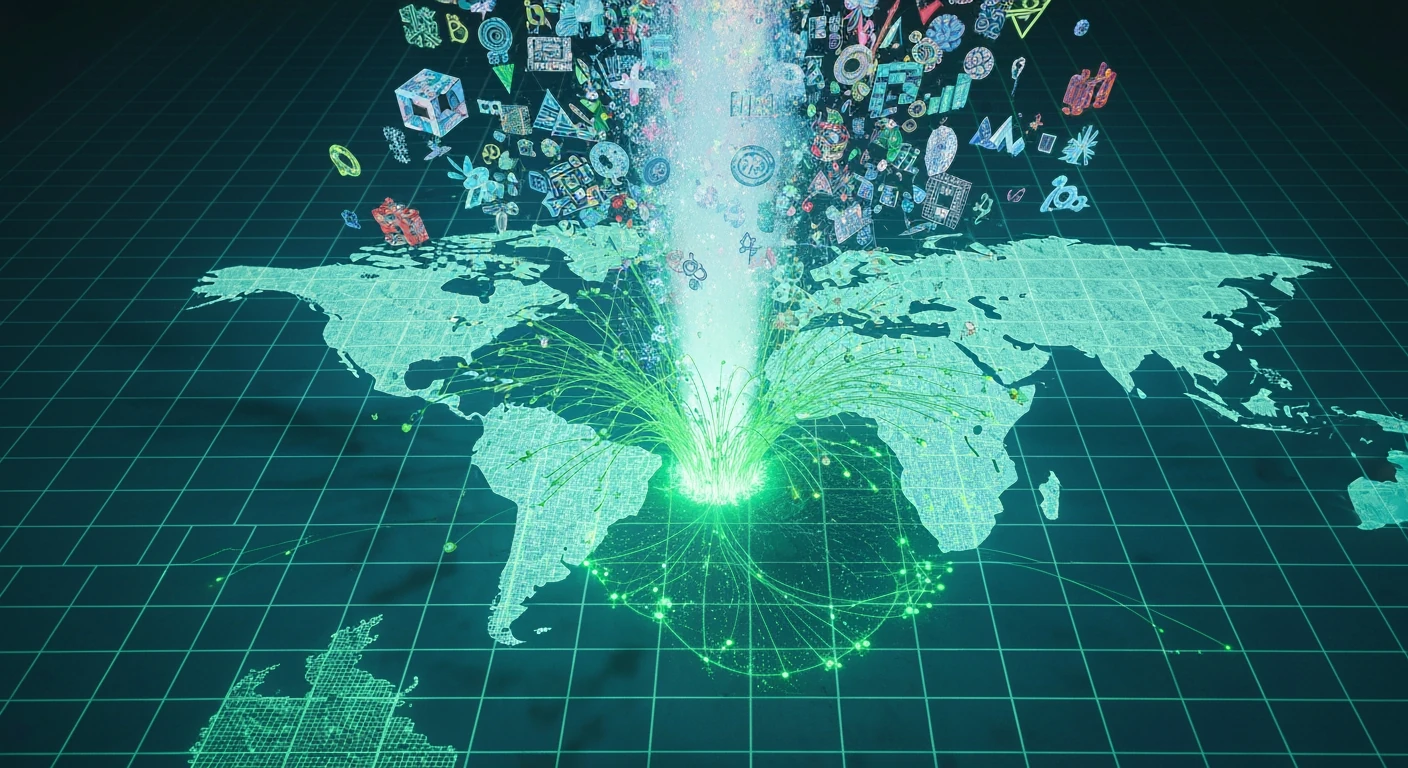
Technology is no longer a passive conduit for culture. It has become the primary engine, a high-speed accelerator that turns local phenomena into global conversations overnight. The digital architecture of our world doesn’t just share culture; it actively selects, prioritizes, and monetizes it, fundamentally altering how we connect with ideas and with each other. This process is anything but neutral. The algorithms that power our feeds are shaping the very fabric of global identity, and their influence is far more profound than most people realize.
Streaming Wars: Globalizing Content and Audiences
Streaming platforms have effectively dismantled the geographic barriers that once dictated media consumption. A show produced in South Korea can become a number-one hit in the United States in less than 48 hours, a reality confirmed by the global success of series like Netflix’s Squid Game. This accessibility creates an exceptional opportunity for cross-cultural exchange. It’s a two-way street. According to a report from Ampere Analysis, international content now accounts for over 30% of new titles on major US streaming platforms.
But what most people miss is the subtle homogenization that occurs alongside this diversification. To appeal to a global audience, content is often sanded down, its sharpest cultural edges smoothed over to be more palatable for international viewers. This is the paradox of global content: are we experiencing authentic cultural exchange, or are we consuming a carefully packaged, market-tested version of it? The line is becoming increasingly blurry.
Social Media: The New Frontier for Cultural Virality
If streaming services are the curated galleries of global culture, social media platforms are the chaotic, unpredictable street markets. Platforms like TikTok and Instagram have become the primary launchpads for trends, where a dance, a recipe, or a political statement can achieve worldwide recognition in a matter of hours. This user-driven dissemination is incredibly powerful, allowing for a more grassroots and seemingly authentic form of cultural spotlight. It feels like a democratization of influence.
This is where the interplay of global affairs, culture, and tech becomes most visible. A protest chant from one country can become a viral sound used by millions in another, carrying its political weight with it. For organizations aiming to promote cultural assets, mastering this space is primary. Consider this a basic playbook:
- Authenticity Over Polish: Users respond to content that feels genuine. A highly produced video often performs worse than a raw, behind-the-scenes look.
- Engage with Remix Culture: Don’t just post; create sounds, filters, or templates that others can use. The goal is participation, not just consumption.
- Micro-Influencer Collaboration: Partnering with smaller, niche creators often yields a higher engagement rate and more credibility than a single mega-influencer endorsement.
- Platform-Native Content: Understand the unique language and format of each platform. A strategy for Instagram Reels will not work for a Twitter thread.
AI and Personalization: Tailoring Cultural Experiences
Artificial intelligence is the silent partner in this new cultural economy. Every recommendation on Spotify, every show suggested on Hulu, and every video in your YouTube queue is the product of complex personalization algorithms. These systems are designed to learn your preferences with startling accuracy, creating a cultural feedback loop that serves you more of what you already like. It’s like having a personal shopper for your media diet—convenient, but also dangerously limiting.
The goal is to maximize engagement, and the data suggests it works. A study by Salesforce found that 52% of consumers are likely to switch brands if a company doesn’t personalize communications. This drive for personalization has massive implications for how tech innovations shape our global future, creating highly individualized cultural bubbles that can isolate users from differing viewpoints or unfamiliar art forms. This is efficiency at a high cost.
Ethical Considerations in Algorithmic Cultural Curation
The uncomfortable truth is that algorithms have biases because they are built by humans and trained on historical data. This can lead to a phenomenon that digital sociologist Dr. Anja Zimmerman calls “algorithmic colonialism,” where Western content and cultural norms are disproportionately favored and promoted, even on a global scale. The system reinforces existing power structures.
What happens when an algorithm decides which artists get seen and which fade into obscurity? We are outsourcing our cultural discovery to opaque, corporate-owned code. This raises critical questions about equity, representation, and the very definition of a meritocracy in the creative fields. The challenge isn’t to reject the technology, but to demand transparency and build systems that promote a diverse and representative global dialogue, reflecting the complex reality of our interconnected world.
Navigating the Future: Predictions for Cultural Influence
The comforting idea of a global village is a dangerous myth. As technology accelerates the spread of cultural spotlights, we aren’t merging into a harmonious whole but entering an era of intense cultural friction. The same algorithms that introduce us to new music from across the globe are also, paradoxically, flattening our digital experiences into a bland, marketable paste. This creates a basic tension between a globalized monoculture and the fierce defense of local identity.
Projections from the Eurasia Group suggest that AI-generated content could account for over 45% of all media consumption within the next decade, threatening to create an echo chamber of recycled trends. But what most people miss is the backlash this will create. “This digital sameness doesn’t just produce conformity; it fuels a reactive tribalism,” explains sociologist Dr. Evelyn Reed. This is the core of the interplay between global affairs, culture, and tech, where hyper-local identities become shields against a perceived loss of authenticity.
This is the great cultural tug-of-war ahead.
Our future lifestyle won’t be about adopting a single global identity but managing a personal portfolio of cultural influences—a bit of Scandinavian design here, a Latin American dietary habit there. The process feels less like building a worldview and more like curating a playlist. Does this constant sampling make us more empathetic citizens in an increasingly interconnected world, or does it simply turn identity into another disposable consumer good?
The true challenge isn’t predicting which trends will dominate but building the societal resilience to navigate the friction they create. The underrated factor is how these emerging cultural trends will collide with political and economic fractures. The future is less a single, predictable narrative and more a chaotic, overlapping, and often contradictory global conversation.
The Algorithm as Arbiter
As we move forward, the central tension is no longer between local tradition and global influence, but between human creativity and algorithmic curation. The technologies that connect us also act as gatekeepers, prioritizing content that maximizes engagement, which is not always the same as cultural authenticity or depth. The next global cultural phenomenon is likely being selected by a recommendation engine right now, its path to worldwide recognition determined by data points and user behavior metrics. This raises a critical question for the future: in a world where culture is both a cherished identity and a monetizable asset, who—or what—should get to decide which stories are told next?
Frequently Asked Questions
How do cultural spotlights influence a country’s economic standing?
Cultural spotlights create significant economic benefits by boosting tourism, increasing demand for exports like fashion and technology, and growing the creative industries. This cultural capital can attract foreign investment and open new markets, turning creative output into a major contributor to the national economy.
Can cultural exchange help resolve international conflicts?
While not a direct tool for conflict resolution, cultural exchange builds ‘soft power’ by fostering positive public opinion and mutual understanding. This can create a more favorable environment for diplomatic negotiations and trade agreements, indirectly easing tensions between nations by focusing on shared appreciation for art and ideas.
What role do individual creators play in global cultural trends?
Individual creators are the necessary spark for global cultural trends. Their authentic, local creativity provides the raw material that digital platforms and strategic promotion can then amplify. While governments or corporations may fan the flames, the initial innovation almost always originates from artists on the ground.
Are there negative consequences to the rapid spread of cultural spotlights?
Yes, there are several downsides. The rapid global spread can lead to accusations of cultural imperialism, sparking resentment in host countries. It can also strip cultural products of their original context, leading to superficial appropriation rather than genuine appreciation and misunderstanding.
How can local cultures maintain their uniqueness in a globalized world?
Maintaining uniqueness requires a conscious effort to promote cultural depth and authenticity, not just the most commercially viable trends. This involves supporting local artists, educating global audiences on cultural context, and fostering a digital environment that values nuanced expression over viral, superficial content.
