CRISPR Biotech Opportunities: Seize Time-Sensitive Investments in the U.S.
Anúncios
CRISPR Biotech Opportunities: Seize Time-Sensitive Investments in the U.S.
Navigating the rapidly evolving landscape of gene editing for strategic gains
The U.S. biotech sector is a dynamic arena, consistently pushing the boundaries of scientific innovation. Within this vibrant landscape, CRISPR (Clustered Regularly Interspaced Short Palindromic Repeats) technology stands out as a revolutionary force, reshaping the future of medicine and offering unprecedented opportunities for investors, researchers, and patients alike. The next six months are poised to be particularly crucial, presenting a confluence of time-sensitive developments that could redefine the trajectory of many companies and therapeutic areas. Understanding these CRISPR biotech opportunities is paramount for anyone looking to capitalize on this transformative technology.
CRISPR, a gene-editing tool derived from a bacterial defense system, allows for precise modifications to DNA sequences. This capability has opened doors to treating genetic diseases that were once considered incurable, from rare disorders to more common conditions like cancer and infectious diseases. The U.S. has been at the forefront of this revolution, with significant investment in research and development, a robust regulatory framework, and a thriving ecosystem of biotech startups and established pharmaceutical giants. The pace of innovation is accelerating, and the coming months promise a series of clinical trial readouts, regulatory decisions, and strategic partnerships that will undoubtedly create significant shifts in market value and scientific understanding.
Anúncios
This article delves into the critical factors driving the current landscape of CRISPR biotech opportunities in the U.S. We will explore the scientific advancements, the regulatory environment, key players, and the investment implications that are expected to unfold over the next half-year. Our aim is to provide a comprehensive guide for navigating this exciting yet complex field, highlighting the time-sensitive nature of many of these developments and offering insights into where the most significant potential lies.
The Scientific Frontier: Unpacking Recent Breakthroughs in CRISPR Technology
The core of any biotech opportunity lies in its scientific foundation. CRISPR technology has seen remarkable evolution beyond its initial applications. While the foundational CRISPR-Cas9 system remains powerful, newer iterations like prime editing and base editing are offering even greater precision and fewer off-target effects. These advancements significantly expand the range of treatable conditions and reduce potential risks, making gene-editing therapies more viable for widespread clinical use. In the next six months, we anticipate further data releases from early-stage trials utilizing these advanced platforms.
One of the most exciting areas within CRISPR biotech opportunities is the development of in vivo gene editing. Traditionally, gene editing has been performed ex vivo, meaning cells are removed from the body, edited, and then re-infused. In vivo editing, where the gene-editing machinery is delivered directly into the patient, offers a more streamlined and potentially more effective treatment for systemic diseases. Companies focusing on optimized delivery mechanisms, such as adeno-associated viruses (AAVs) or lipid nanoparticles (LNPs), are on the cusp of demonstrating significant progress. Expect to see crucial updates on the safety and efficacy of these in vivo approaches in the near future, which could dramatically impact valuations.
Anúncios
Furthermore, the application of CRISPR in oncology is rapidly gaining traction. Beyond direct gene correction, CRISPR is being used to engineer T-cells for enhanced cancer immunotherapy (e.g., CAR-T cell therapies) and to identify novel drug targets. The ability to precisely modify immune cells to better recognize and destroy cancer cells represents a paradigm shift in cancer treatment. Clinical trials in this space are progressing rapidly, and interim data readouts in the coming months could highlight specific companies as leaders in this burgeoning sub-field of CRISPR biotech opportunities.
Another frontier is the use of CRISPR for developing novel diagnostics and therapeutics for infectious diseases. The rapid response required for pandemics has underscored the need for quick and accurate diagnostic tools, and CRISPR-based systems like SHERLOCK and DETECTR are showing immense promise. While perhaps not as direct an investment opportunity as therapeutic development, advancements here contribute to the broader ecosystem and validate the versatility of CRISPR technology. Keep an eye on partnerships between diagnostic developers and larger pharmaceutical companies, which could signal significant commercialization efforts.
Navigating the Regulatory Landscape: FDA’s Role in CRISPR Innovation
The U.S. Food and Drug Administration (FDA) plays a pivotal role in shaping the commercial viability of CRISPR biotech opportunities. The agency has been proactive in establishing regulatory pathways for gene and cell therapies, recognizing their transformative potential while also ensuring patient safety. The expedited review processes, such as Fast Track, Breakthrough Therapy, Regenerative Medicine Advanced Therapy (RMAT), and Priority Review designations, are crucial for companies racing to bring their therapies to market.
In the next six months, several CRISPR-based therapies are expected to reach critical regulatory milestones. These include submissions for Investigational New Drug (IND) applications, which allow clinical trials to begin, and potentially even Biologics License Applications (BLA) for therapies nearing market approval. The FDA’s guidance documents and advisory committee meetings provide invaluable insights into their evolving stance on gene editing. A positive signal from the FDA, such as the approval of a landmark CRISPR therapy, could significantly de-risk the entire sector and spur further investment across various CRISPR biotech opportunities.
Key considerations for the FDA include the long-term safety of gene-edited cells, the potential for off-target edits, and the immunogenicity of delivery vectors. Companies that can demonstrate robust safety profiles and effective mitigation strategies for these concerns will be well-positioned. Furthermore, the FDA is grappling with the ethical implications of germline editing (editing genes in embryos or reproductive cells), which is currently not permitted for clinical use. While this doesn’t directly impact current therapeutic CRISPR biotech opportunities for somatic cell editing, the broader regulatory and ethical discussions contribute to the overall climate for gene-editing innovation.
Investors should pay close attention to FDA communications, advisory panel recommendations, and the progress of therapies through the various stages of clinical development. A successful Phase 2 or Phase 3 trial readout followed by a BLA submission can be a major catalyst for a company’s stock price and validate its technology platform. Conversely, unexpected safety concerns or regulatory hurdles can lead to significant setbacks. The transparency of the U.S. regulatory system, coupled with its rigorous standards, offers both challenges and assurances for those investing in this cutting-edge field.
Key Players and Emerging Companies: Who to Watch in the Next Six Months
The landscape of CRISPR biotech opportunities is populated by a mix of established pharmaceutical giants and innovative startups. Understanding who the key players are and where emerging companies are making significant strides is essential for strategic decision-making. Over the next six months, several companies are particularly poised for impactful announcements or developments.
Leading the charge are companies like Vertex Pharmaceuticals and CRISPR Therapeutics, whose co-developed exa-cel (formerly CTX001) for sickle cell disease and beta-thalassemia is a frontrunner for potential FDA approval. A positive decision would not only be a monumental achievement for these companies but also a validation of CRISPR technology as a therapeutic modality, opening the floodgates for other therapies. Their progress serves as a bellwether for the entire gene-editing space.
Editas Medicine, another pioneer, is advancing its in vivo gene-editing programs, particularly for inherited retinal diseases. Updates on their clinical trials, including safety and efficacy data, will be critical. Intellia Therapeutics is also making significant headway with its in vivo CRISPR programs, notably for transthyretin amyloidosis, where they have shown impressive clinical data. These companies represent the cutting edge of in vivo delivery, a crucial area for expanding the reach of gene editing.
Beyond these well-known entities, a host of smaller, innovative companies are exploring niche applications or novel CRISPR variants. For example, companies developing base editing or prime editing technologies, such as Beam Therapeutics and Prime Medicine, respectively, are generating significant excitement. Their platforms promise even greater precision and broader applicability, potentially addressing limitations of traditional Cas9. Early clinical data or strategic partnerships involving these next-generation technologies could be major catalysts.
Furthermore, strategic collaborations between biotech innovators and larger pharmaceutical companies are a significant indicator of future success. These partnerships often provide much-needed funding, manufacturing capabilities, and commercialization expertise. Keep an eye on announcements of new collaborations or expansions of existing ones, as they often signal confidence in a particular technology or pipeline candidate. The U.S. market, with its deep capital pools and experienced biotech workforce, is a fertile ground for such alliances, driving forward CRISPR biotech opportunities.
Investment Implications: Capitalizing on Time-Sensitive Opportunities
Investing in biotech, particularly in a rapidly evolving field like CRISPR, requires a nuanced understanding of scientific progress, regulatory pathways, and market dynamics. The time-sensitive nature of CRISPR biotech opportunities over the next six months means that investors need to be agile and well-informed.
One of the primary investment drivers will be clinical trial readouts. Positive data from Phase 1, 2, or 3 trials can lead to substantial stock price appreciation, while negative results can have the opposite effect. Investors should track the clinical trial calendars of key CRISPR companies and understand the endpoints being evaluated. The magnitude of the clinical benefit and the safety profile are paramount. For instance, a therapy demonstrating curative potential for a severe genetic disease will likely command a premium valuation.
Regulatory decisions from the FDA are another major catalyst. An FDA approval for a CRISPR therapy would not only validate the specific drug but also provide a significant boost to the entire sector, signaling a clear path to market for other gene-editing treatments. Conversely, a rejection or significant delay could create headwinds. The U.S. regulatory environment, while stringent, is generally considered favorable for innovative therapies, offering various expedited pathways.
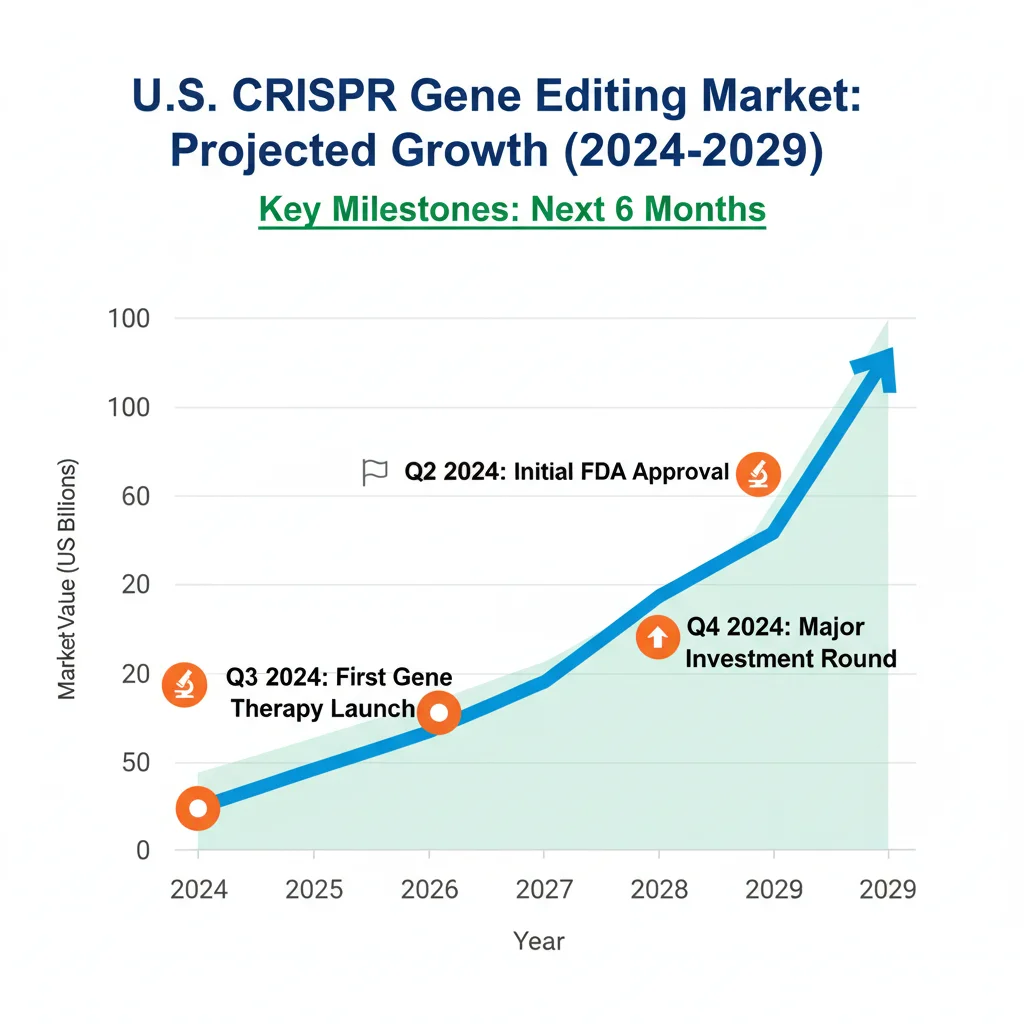
Beyond direct stock investments, venture capital and private equity firms are heavily invested in early-stage CRISPR companies. While less accessible to individual investors, tracking these private funding rounds can offer insights into which technologies and teams are attracting significant capital and could become public companies in the future. The U.S. venture capital ecosystem is particularly robust in the biotech space, providing ample funding for promising CRISPR biotech opportunities.
Furthermore, intellectual property (IP) remains a critical factor. Companies with strong patent portfolios protecting their CRISPR technology, delivery methods, and therapeutic applications are better positioned for long-term success. Ongoing patent disputes or licensing agreements can significantly impact a company’s competitive landscape and financial outlook. Understanding the IP landscape is crucial for assessing the durability of any CRISPR-related investment.
Market size and competitive landscape also play a role. While CRISPR offers solutions for many rare diseases, the long-term potential lies in addressing more prevalent conditions. Companies targeting larger patient populations with their gene-editing therapies could command higher valuations, assuming successful clinical development and market access. The U.S. healthcare market, with its substantial spending on specialty drugs, provides a lucrative environment for successful gene therapies.
Challenges and Risks in the CRISPR Biotech Space
While the prospects for CRISPR biotech opportunities are immense, it’s crucial to acknowledge the inherent challenges and risks. Biotech investing is notoriously volatile, and gene editing, being a cutting-edge field, comes with its own unique set of uncertainties.
One primary risk is clinical trial failure. Despite promising preclinical data, many experimental therapies fail in human trials due to lack of efficacy or unexpected safety concerns. This is a common hurdle across all drug development, but the novelty of gene editing can amplify these risks. Off-target edits, while increasingly mitigated by advanced CRISPR systems, remain a concern that could lead to unforeseen side effects.
Manufacturing and scalability are also significant challenges. Producing high-quality, consistent gene-editing therapies at a commercial scale is complex and expensive. Companies that can demonstrate robust manufacturing processes and supply chain capabilities will have a competitive advantage. The cost of these therapies is another major point of contention; while potentially curative, the initial price tags are likely to be very high, raising questions about reimbursement and patient access. The U.S. healthcare system, with its complex payer landscape, will be instrumental in determining the market penetration of these therapies.
Ethical considerations, particularly around germline editing, continue to pose a societal and regulatory debate. While current clinical applications focus on somatic cells, any missteps or controversial developments in the broader field could cast a shadow over all gene-editing research and potentially lead to stricter regulations. Public perception and acceptance will also play a role in the long-term success of these technologies.
Finally, intense competition is a constant in the biotech sector. As the field of gene editing matures, more players are entering, leading to a crowded market. Companies need to differentiate their technology, target unique indications, or demonstrate superior efficacy/safety to stand out. The next six months will likely see companies jockeying for position, with strategic partnerships and mergers and acquisitions potentially reshaping the competitive landscape for these CRISPR biotech opportunities.
The Future Beyond Six Months: Long-Term Outlook for CRISPR
While this article focuses on the time-sensitive CRISPR biotech opportunities in the U.S. over the next six months, it’s important to consider the long-term trajectory of this revolutionary technology. The advancements we see in the near term are foundational for a future where gene editing could become a cornerstone of personalized medicine.
Looking further out, CRISPR and its derivatives are expected to expand beyond monogenic diseases to address more complex conditions like neurodegenerative disorders (e.g., Alzheimer’s, Parkinson’s), autoimmune diseases, and even aging-related conditions. The development of ‘gene-editing factories’ within the body, where cells are continuously modified to produce therapeutic proteins or correct genetic defects, represents a highly ambitious yet potentially transformative goal.
The convergence of CRISPR with artificial intelligence (AI) and machine learning (ML) is another exciting long-term trend. AI can accelerate the discovery of new guide RNAs, optimize delivery systems, and predict off-target effects with greater accuracy, further streamlining the drug development process. Companies that effectively integrate these technologies will likely emerge as future leaders in the gene-editing space, continuously unlocking new CRISPR biotech opportunities.

Furthermore, the U.S. continues to be a hub for biotech innovation, attracting top talent and significant investment. The robust academic research infrastructure, coupled with a supportive regulatory environment (albeit with necessary stringency), ensures that the country will remain at the forefront of gene-editing advancements. International collaborations and global market expansion will also play a role, but the foundational breakthroughs and early commercialization efforts are largely concentrated within the U.S. ecosystem.
The long-term vision is a world where genetic diseases are not just managed but cured, and where the human genome can be precisely edited to prevent or treat a wide array of ailments. The next six months are critical steps on this journey, offering a window into the near-future impact and potential of these groundbreaking technologies and the associated CRISPR biotech opportunities.
Conclusion: Seizing the Moment in CRISPR Biotech
The U.S. biotech sector is on the cusp of a significant transformation, driven by the relentless progress of CRISPR gene-editing technology. The next six months represent a critical period, replete with time-sensitive CRISPR biotech opportunities that could yield substantial returns for informed stakeholders. From groundbreaking scientific advancements in in vivo editing and next-generation CRISPR tools to pivotal FDA regulatory decisions and strategic corporate partnerships, the pace of change is accelerating.
Investors, researchers, and healthcare professionals must remain vigilant, analyzing clinical trial data, understanding the nuances of the regulatory landscape, and identifying the key players and emerging innovators who are shaping this future. While challenges and risks are inherent in such a nascent and complex field, the potential rewards – both financial and humanitarian – are immense.
The ability to precisely edit the blueprint of life offers hope for millions suffering from genetic diseases and opens new avenues for treating intractable conditions like cancer. By focusing on the critical developments unfolding in the immediate future, we can better position ourselves to capitalize on these unprecedented CRISPR biotech opportunities and contribute to a healthier, more technologically advanced world. The time to engage with this revolutionary technology is now, as the foundations for its widespread impact are being laid in the U.S. biotech landscape.
