Cloud Computing Shifts: U.S. Enterprise Impact This Quarter

Anúncios
The landscape of enterprise technology is in a constant state of flux, but few domains experience as rapid and profound a transformation as cloud computing. For U.S. enterprises, staying abreast of these changes isn’t merely advantageous; it’s a critical imperative for maintaining competitiveness, fostering innovation, and ensuring operational resilience. This quarter, several significant cloud computing shifts are reshaping how businesses operate, strategize, and invest in their digital futures. Understanding these pivotal trends is key to navigating the complexities of the modern digital economy.
From the burgeoning influence of artificial intelligence to the refined strategies governing hybrid environments and the ever-escalating demands for robust security, the cloud is no longer just an infrastructure choice – it’s the very foundation upon which future-proof enterprises are built. Our deep dive reveals the three biggest cloud computing shifts impacting U.S. enterprises this quarter, offering insights into their implications and how organizations can best adapt and thrive.
The Pervasive Integration of AI and Machine Learning into Cloud Services
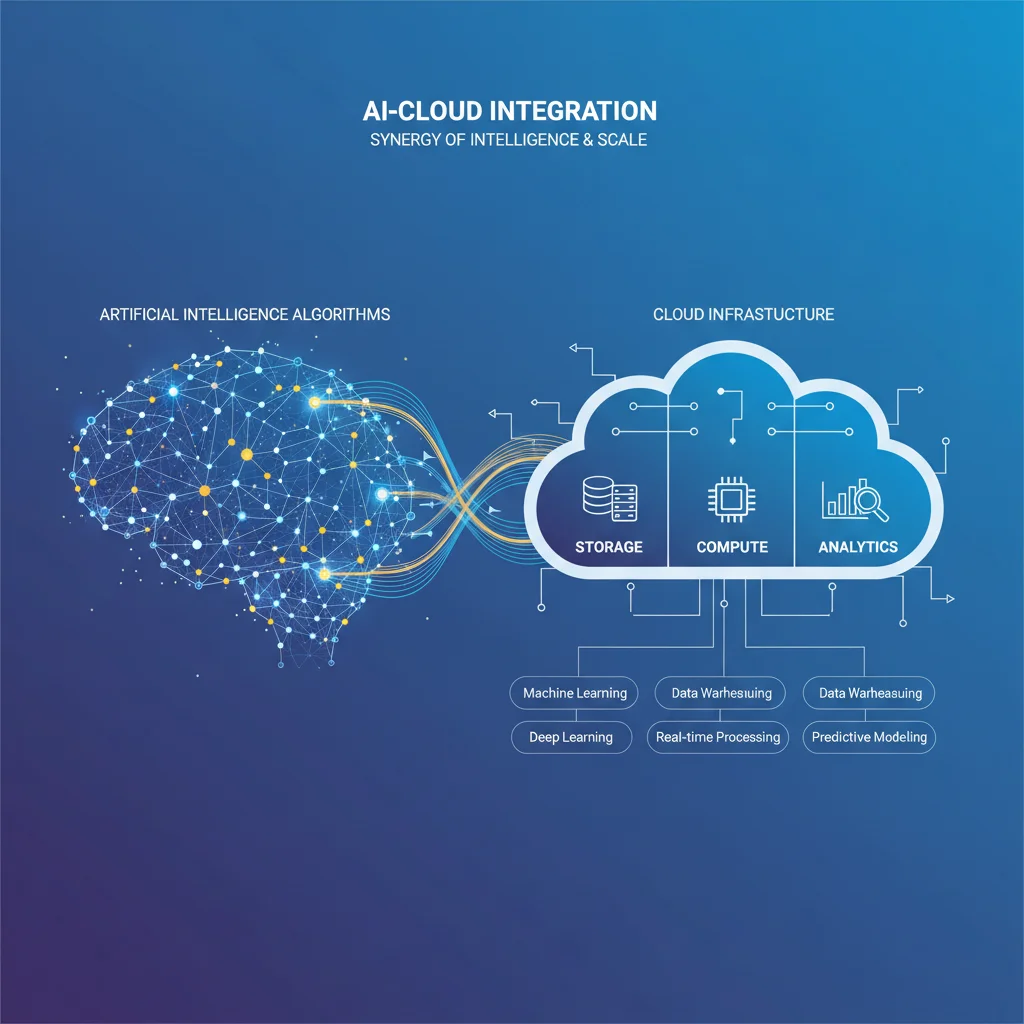
Perhaps the most transformative shift observed this quarter is the accelerated and pervasive integration of Artificial Intelligence (AI) and Machine Learning (ML) directly into core cloud computing services. What began as specialized, niche offerings has now matured into a fundamental layer of cloud platforms, profoundly altering how U.S. enterprises develop, deploy, and manage their applications and data. This isn’t just about accessing AI tools; it’s about AI becoming intertwined with every aspect of cloud operations.
Anúncios
AI-Native Cloud Development and Operations
Enterprises are increasingly moving towards ‘AI-native’ cloud development. This means that AI/ML capabilities are not afterthoughts but are baked into the design of new applications and services from the ground up. Cloud providers like AWS, Azure, and Google Cloud are relentlessly expanding their portfolios of managed AI services, ranging from natural language processing (NLP) and computer vision to predictive analytics and intelligent automation. This democratizes access to sophisticated AI, allowing businesses without massive in-house data science teams to leverage cutting-edge capabilities.
For U.S. enterprises, this translates into faster innovation cycles and the ability to embed intelligence into customer-facing applications, internal workflows, and decision-making processes. Imagine automating customer service interactions with advanced chatbots, personalizing user experiences at scale, or optimizing supply chains with predictive maintenance – all powered by cloud-native AI services. This shift is reducing the barrier to entry for AI adoption, making it accessible to a broader range of businesses, from startups to Fortune 500 companies.
Operationalizing AI at Scale
Beyond development, the operationalization of AI at scale is a significant focus. MLOps (Machine Learning Operations) – a set of practices that aims to deploy and maintain ML systems in production reliably and efficiently – is gaining immense traction. Cloud platforms are providing robust MLOps tools and frameworks that facilitate the entire AI lifecycle: data preparation, model training, deployment, monitoring, and retraining. This ensures that AI models remain accurate and performant over time, crucial for mission-critical applications.
Anúncios
For enterprises, this means moving beyond experimental AI projects to truly integrating AI into their core business processes. The ability to manage thousands of models, track their performance, and automatically retrain them with new data sets is a game-changer. This operational efficiency is vital for deriving continuous value from AI investments and ensuring that AI-driven insights are always current and relevant.
Intelligent Cloud Management and Optimization
Another facet of this shift is the application of AI to cloud management itself. Cloud providers are using AI to optimize resource allocation, predict usage patterns, and even identify potential security threats more effectively. AI-powered cost optimization tools can analyze spending patterns and recommend ways to reduce cloud expenditure, a constant challenge for many enterprises.
Furthermore, AI is being used in cloud observability platforms to provide deeper insights into application performance, identify anomalies, and proactively resolve issues before they impact users. This intelligent automation of cloud operations is freeing up IT teams from mundane tasks, allowing them to focus on strategic initiatives and innovation. The net effect is a more efficient, resilient, and cost-effective cloud infrastructure.
The Evolution of Hybrid and Multi-Cloud Strategies
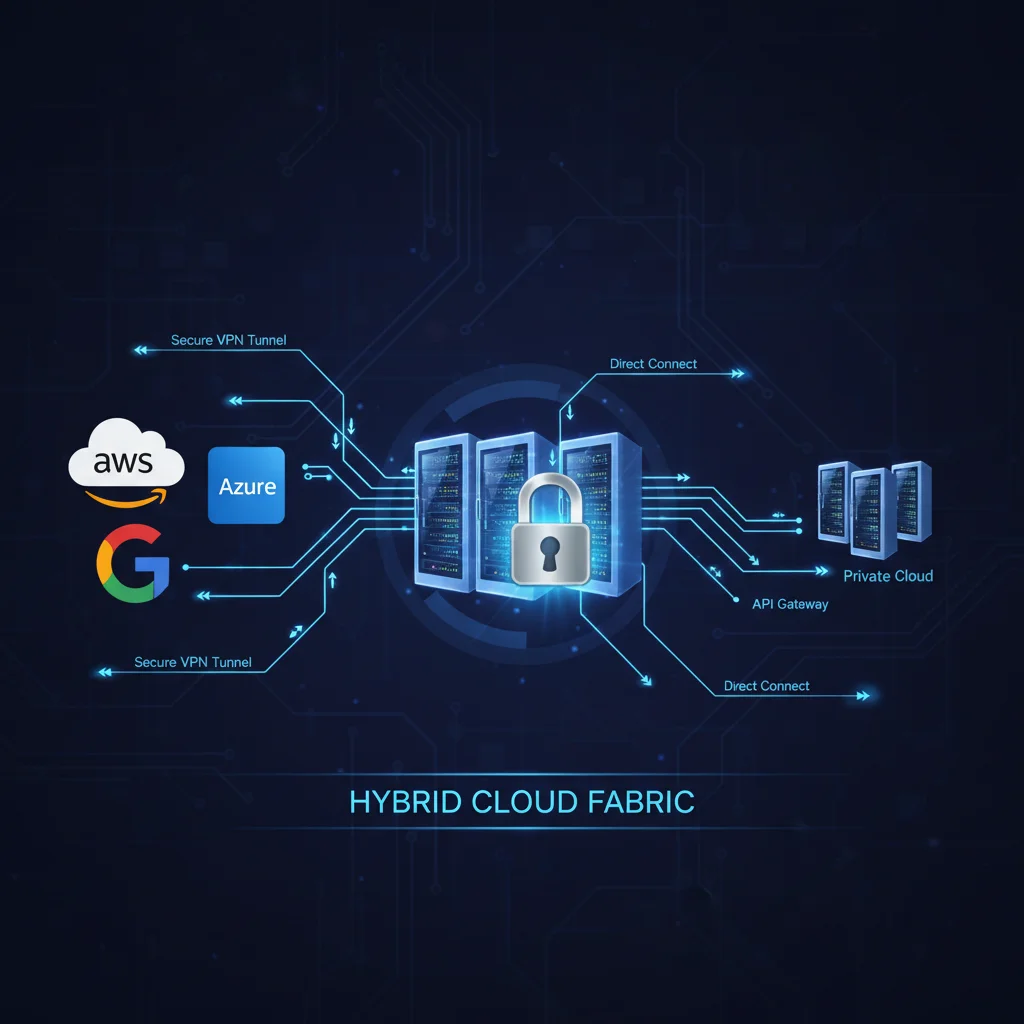
The concept of hybrid and multi-cloud has been around for some time, but this quarter marks a significant evolution in how U.S. enterprises are approaching these strategies. It’s no longer just about distributing workloads across different providers or environments; it’s about creating truly unified, interoperable, and governed ecosystems that maximize flexibility, optimize costs, and enhance resilience.
Strategic Workload Placement and Optimization
Enterprises are becoming far more sophisticated in their workload placement decisions. Instead of simply lifting and shifting applications, they are meticulously evaluating which workloads are best suited for public cloud, private cloud, or traditional on-premises infrastructure. Factors like data gravity, regulatory compliance, performance requirements, and cost efficiency are driving these decisions.
For example, highly sensitive data or applications with strict latency requirements might remain on-premises or in a private cloud, while scalable, burstable workloads or new development projects find their home in the public cloud. The goal is not just to use multiple clouds, but to use the right cloud for the right workload, thereby optimizing performance and cost. This strategic approach to workload placement is a key differentiator for successful hybrid and multi-cloud adopters.
Unified Management and Orchestration
A major challenge with multi-cloud environments has historically been the complexity of managing disparate infrastructures. This quarter, there’s a strong push towards unified management and orchestration platforms. Tools and services that provide a single pane of glass for monitoring, managing, and automating operations across multiple cloud providers and on-premises environments are gaining immense popularity.
These platforms often leverage open-source technologies like Kubernetes for container orchestration, allowing applications to be deployed and managed consistently regardless of the underlying infrastructure. This enables enterprises to avoid vendor lock-in, streamline operations, and ensure consistent policies and governance across their entire IT estate. The ability to seamlessly move workloads and data between clouds without significant re-architecture is becoming a reality, offering unprecedented agility.
Enhanced Data Mobility and Interoperability
Data is the lifeblood of modern enterprises, and its mobility and interoperability across hybrid and multi-cloud environments are paramount. This quarter, we’re seeing advancements in technologies that facilitate seamless data transfer, replication, and synchronization between different cloud platforms and on-premises data centers. This includes improved networking solutions, data integration platforms, and distributed database technologies.
The aim is to eliminate data silos and ensure that data is available where and when it’s needed, regardless of its physical location. This is crucial for analytics, AI/ML initiatives, and disaster recovery strategies. Enterprises are investing in robust data governance frameworks to ensure data consistency, security, and compliance across their complex cloud landscapes.
The Paramount Focus on Advanced Cloud Security and Compliance
As cloud adoption deepens and workloads become more critical, cloud security and compliance have transcended from a concern to an absolute paramount focus for U.S. enterprises. The sophistication of cyber threats is escalating, and regulatory landscapes are becoming more stringent, making robust cloud security an ongoing, dynamic challenge rather than a one-time implementation.
Zero Trust Architectures for Cloud Environments
The principle of ‘never trust, always verify’ embodied in Zero Trust architectures is rapidly becoming the gold standard for cloud security. Instead of relying on traditional perimeter-based security, Zero Trust assumes that no user, device, or application should be trusted by default, even if they are within the network. This requires rigorous authentication and authorization for every access request, regardless of its origin.
For cloud environments, this means implementing granular access controls, continuous monitoring of user and resource behavior, and micro-segmentation of networks. Cloud providers are enhancing their identity and access management (IAM) services, offering advanced features like conditional access and adaptive authentication. Enterprises are adopting these principles to protect their cloud assets from both external threats and insider risks, a critical step in securing distributed workforces and sensitive data.
Automated Cloud Security Posture Management (CSPM) and Cloud Workload Protection Platforms (CWPP)
The sheer scale and dynamic nature of cloud environments make manual security configuration and monitoring impractical. This quarter, there’s an increased reliance on automated tools for Cloud Security Posture Management (CSPM) and Cloud Workload Protection Platforms (CWPP).
CSPM tools continuously scan cloud configurations for misconfigurations, compliance violations, and security vulnerabilities, providing real-time alerts and recommendations for remediation. They help enterprises maintain a strong security posture by ensuring that resources are configured according to best practices and regulatory requirements. CWPPs, on the other hand, focus on protecting the actual workloads (e.g., virtual machines, containers, serverless functions) running in the cloud, offering capabilities like vulnerability management, runtime protection, and integrity monitoring.
The integration of these tools into CI/CD pipelines (DevSecOps) is also a significant trend, ensuring that security is built into the development process rather than being an afterthought. This proactive approach is essential for identifying and mitigating risks early in the application lifecycle.
Enhanced Data Encryption and Privacy Controls
Data encryption, both at rest and in transit, remains a cornerstone of cloud security. However, this quarter highlights a growing emphasis on advanced encryption techniques and more granular control over data privacy. Enterprises are demanding more sophisticated key management services, allowing them to retain greater control over their encryption keys, even when data resides in the public cloud.
Furthermore, cloud providers are introducing enhanced privacy controls and confidential computing capabilities, where data remains encrypted even during processing. This is particularly relevant for industries handling highly sensitive data, such as healthcare and finance, where regulatory compliance (e.g., HIPAA, GDPR, CCPA) is paramount. The ability to demonstrate robust data protection and privacy measures is not just a compliance requirement but a significant competitive advantage.
Impact and Future Outlook for U.S. Enterprises
These three cloud computing shifts are not isolated trends; they are deeply interconnected and collectively represent a maturation of the cloud paradigm. For U.S. enterprises, the implications are far-reaching, touching every aspect of their operations from strategic planning to day-to-day execution.
Driving Innovation and Competitive Advantage
The pervasive integration of AI is empowering enterprises to innovate at an unprecedented pace. By leveraging cloud-native AI services, businesses can develop smarter products, create more personalized customer experiences, and optimize internal processes, gaining a significant competitive edge. Those who fail to embrace AI in their cloud strategies risk falling behind.
Optimizing Costs and Resource Utilization
Better-defined hybrid and multi-cloud strategies, coupled with AI-driven cloud management, are leading to more optimized resource utilization and significant cost savings. Enterprises are moving away from monolithic, one-size-fits-all cloud deployments towards intelligent, dynamic architectures that match workloads to the most appropriate and cost-effective environment. This financial discipline is crucial in today’s economic climate.
Strengthening Resilience and Trust
The intensified focus on advanced cloud security and compliance is building greater trust in cloud platforms. As enterprises migrate more mission-critical applications and sensitive data to the cloud, the assurance of robust security and adherence to regulatory standards becomes non-negotiable. A strong security posture not only protects against financial and reputational damage but also fosters customer confidence and enables expansion into new markets.
Talent and Skill Development
These shifts also underscore the critical need for continuous talent development. Enterprises must invest in upskilling their IT teams in areas such as cloud-native AI development, MLOps, multi-cloud management, and advanced cloud security principles. The demand for cloud architects, security engineers, and AI specialists with cloud expertise is higher than ever, and organizations that prioritize talent will be better positioned to capitalize on these trends.
Navigating the Cloud’s Evolving Landscape
The current quarter’s cloud computing shifts present both challenges and immense opportunities for U.S. enterprises. Success in this evolving environment hinges on a proactive and strategic approach. Enterprises must:
- Embrace AI as a Core Capability: Integrate AI/ML into application development, operational workflows, and decision-making processes, leveraging cloud-native services to accelerate adoption.
- Refine Hybrid and Multi-Cloud Strategies: Develop clear, data-driven strategies for workload placement, focusing on unified management, enhanced interoperability, and robust data mobility across environments.
- Prioritize Advanced Security and Compliance: Implement Zero Trust principles, deploy automated CSPM and CWPP tools, and invest in advanced encryption and privacy controls to protect cloud assets.
- Invest in Continuous Learning: Foster a culture of continuous learning and skill development within IT teams to keep pace with rapid technological advancements.
The cloud is no longer just an infrastructure—it’s a dynamic ecosystem that demands continuous attention, strategic investment, and agile adaptation. By understanding and proactively responding to these major cloud computing shifts, U.S. enterprises can not only survive but truly thrive in the digital age, transforming challenges into pathways for innovation and sustained growth.
