Arctic Geopolitics 2026: US Strategic Interests & Resource Race
Anúncios
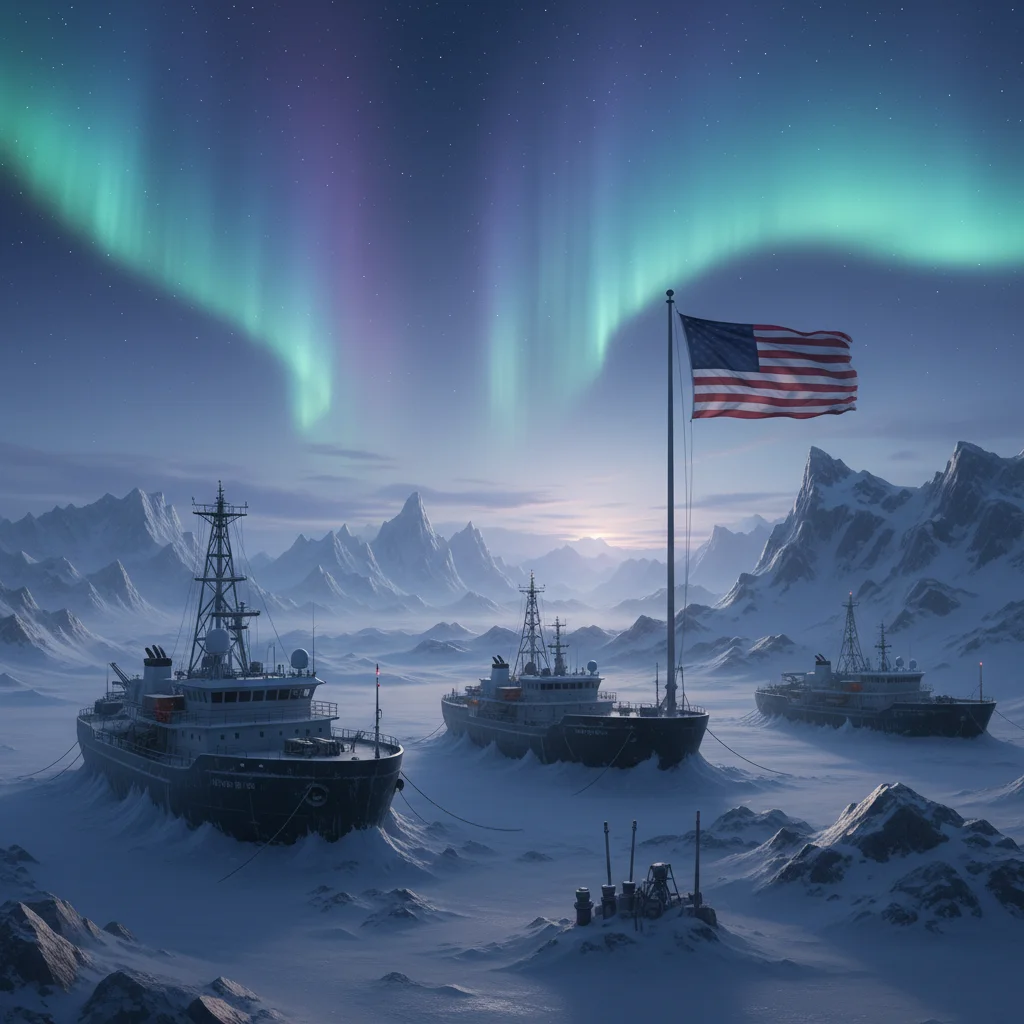
The Arctic, once a frozen frontier, is rapidly transforming into a pivotal arena for global geopolitics. As climate change accelerates the melting of its ice caps, new shipping routes emerge, and vast, untapped natural resources become increasingly accessible. By 2026, the strategic importance of the Arctic will have intensified dramatically, drawing the attention and ambition of numerous nations. This comprehensive analysis delves into the intricate web of Arctic Geopolitics 2026, focusing particularly on U.S. strategic interests, the escalating race for resources, and the complex interplay among the seven key nations vying for influence in this critical region.
The Unfolding Arctic Landscape: A New Global Frontier
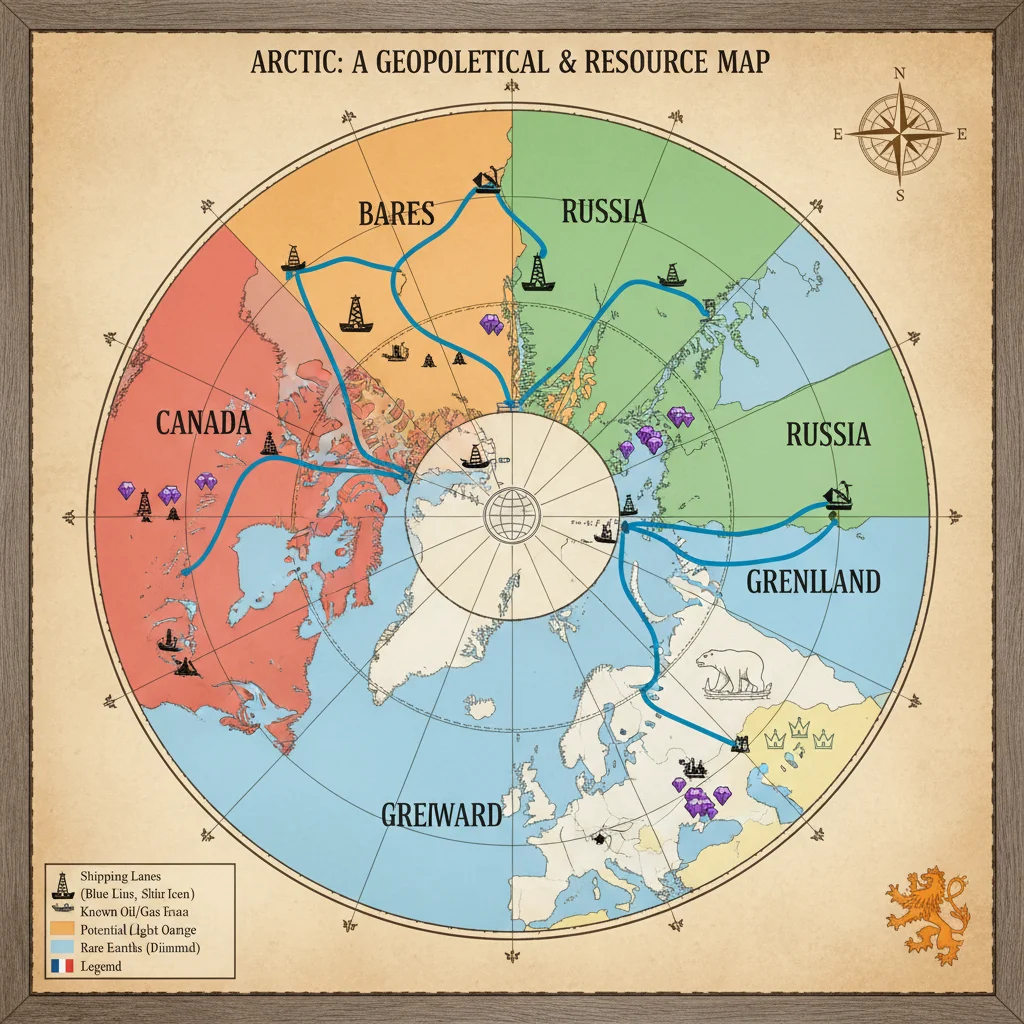
The Arctic’s allure stems from a confluence of factors, primarily driven by environmental shifts. The receding ice cover is not merely an ecological concern; it is a catalyst for profound geopolitical realignments. The potential for new, shorter shipping routes, such as the Northern Sea Route and the Northwest Passage, promises to revolutionize global trade, drastically cutting transit times between Asia and Europe. This prospect alone has ignited a fierce competition among maritime powers, eager to secure their stake in these emerging arteries of commerce. Furthermore, the Arctic is believed to hold an estimated 13% of the world’s undiscovered oil and 30% of its undiscovered natural gas, alongside significant deposits of rare earth minerals, vital for modern technology. This treasure trove of resources presents an irresistible draw for energy-hungry and technologically advanced nations.
Beyond economics, the Arctic’s strategic military value is also escalating. Its proximity to major global powers makes it a crucial domain for defense and security. Submarine operations, early warning systems, and strategic deterrence all find new significance in this changing environment. The melting ice opens up new operational areas, demanding updated military strategies and increased presence from Arctic and near-Arctic states. Understanding Arctic Geopolitics 2026 requires acknowledging these multifaceted drivers – economic, environmental, and military – that collectively elevate the region’s global standing.
Anúncios
U.S. Strategic Interests in the Arctic by 2026
For the United States, a nation with significant Arctic territory via Alaska, its strategic interests in the region are multifaceted and evolving. By 2026, these interests will likely be anchored by several key pillars: national security, economic prosperity, environmental stewardship, and the promotion of international cooperation based on rules and norms.
National Security and Defense
The U.S. views the Arctic as an increasingly vital domain for national security. This includes maintaining freedom of navigation, especially through international straits and passages. The potential for increased military activity by other nations, particularly Russia and China, necessitates a robust U.S. defense posture. This involves investments in icebreaking capabilities, enhanced surveillance and reconnaissance, and improved infrastructure in Alaska to support military operations. The ability to project power and maintain situational awareness across the Arctic will be paramount. The U.S. also aims to deter aggressive actions and ensure stability in a region that could otherwise become a flashpoint for international tensions. This means strengthening alliances and partnerships with other Arctic states to collectively address security challenges.
Economic Opportunities and Resource Access
Economically, the U.S. seeks to ensure fair and equitable access to Arctic resources, both for energy and critical minerals. While domestic drilling in Alaska remains a contentious issue, the broader U.S. interest lies in shaping the international legal framework governing resource extraction to prevent monopolies and ensure sustainable development. The opening of new shipping routes also presents opportunities for American commerce, requiring investments in ports, logistics, and search and rescue capabilities along these routes. The U.S. aims to position itself as a key player in the emerging Arctic economy, leveraging its technological expertise and partnerships.
Anúncios
Environmental Stewardship and Research
Despite the focus on resources and security, the U.S. also recognizes the profound environmental changes occurring in the Arctic. Climate change impacts in the Arctic have global ramifications, from sea-level rise to extreme weather events. Therefore, U.S. strategic interests include supporting scientific research to better understand these changes, implementing sustainable practices for any development, and working with international partners to mitigate environmental risks. This often involves a delicate balance between economic exploitation and ecological preservation, a challenge central to Arctic Geopolitics 2026.
Promoting Rules-Based International Order
Crucially, the U.S. emphasizes the importance of a rules-based international order in the Arctic. This means upholding international law, particularly the United Nations Convention on the Law of the Sea (UNCLOS), even though the U.S. has not ratified it. The goal is to ensure that territorial claims, resource exploitation, and navigation rights are resolved peacefully and according to established norms, rather than through unilateral actions or military coercion. This diplomatic approach is vital for preventing conflict and fostering long-term stability in the region.
The Seven Nations Vying for Arctic Dominance
While eight nations technically have Arctic territory (Canada, Denmark/Greenland, Finland, Iceland, Norway, Russia, Sweden, and the United States), the strategic competition by 2026 is often characterized by the active engagement and differing approaches of seven key players: the United States, Russia, Canada, Denmark (through Greenland), Norway, and increasingly, non-Arctic states like China and, to a lesser extent, the European Union as a collective entity. Finland, Iceland, and Sweden, while Arctic nations, often align with broader Western interests, though they maintain their own specific Arctic strategies.
Russia: The Dominant Arctic Power
Russia possesses the longest Arctic coastline and the largest population in the Arctic. Its strategy is highly militarized and economically driven, focusing on the development of the Northern Sea Route (NSR) as a national shipping lane and the exploitation of vast oil and gas reserves. Russia has been aggressively rebuilding its Soviet-era military infrastructure in the Arctic, including airfields, radar stations, and deep-water ports. Its fleet of nuclear-powered icebreakers is unmatched, giving it a significant advantage in controlling access and operations along the NSR. By 2026, Russia’s footprint in the Arctic will likely be even more robust, aiming to solidify its control over the NSR and leverage its energy resources for economic and geopolitical influence. This aggressive posture is a primary driver of the escalating Arctic Geopolitics 2026.
Canada: Sovereignty and Indigenous Rights
Canada’s Arctic strategy is heavily focused on asserting its sovereignty over the Northwest Passage, which it considers internal waters, a claim disputed by the U.S. and other maritime nations. Its approach combines military presence, scientific research, and strong emphasis on the rights and well-being of its Indigenous populations. Canada aims to develop its Arctic infrastructure, including ports and surveillance capabilities, but at a slower pace than Russia. By 2026, Canada will continue to advocate for a balanced approach, prioritizing environmental protection and sustainable development for its northern communities, while also enhancing its ability to monitor and control its vast Arctic territory.
Denmark (Greenland): A Strategic Crossroads
Denmark’s Arctic policy is largely channeled through Greenland, an autonomous territory with significant strategic importance. Greenland’s vast landmass and unique geographical position make it crucial for military bases and surveillance. The melting ice offers Greenland potential economic independence through resource extraction, particularly rare earth minerals, and tourism. By 2026, Denmark will continue to balance its support for Greenland’s self-determination with its own strategic interests and NATO obligations. The increasing interest from non-Arctic powers, particularly China, in Greenland’s resources and infrastructure, adds another layer of complexity to its geopolitical calculus.
Norway: Balancing Security and Cooperation
As a NATO member with a direct border with Russia in the Arctic, Norway plays a critical role in regional security. Its strategy emphasizes a dual approach: maintaining a strong defense posture while simultaneously promoting international cooperation, particularly through the Arctic Council. Norway seeks to manage its significant offshore oil and gas reserves responsibly, but also recognizes the growing importance of fisheries and shipping. By 2026, Norway will likely continue to be a voice for stability and adherence to international law, advocating for peaceful resolution of disputes and sustainable resource management, while also strengthening its military capabilities in response to Russian assertiveness.
China: The ‘Near-Arctic’ State
Although not an Arctic nation, China has declared itself a ‘near-Arctic state’ and has rapidly increased its engagement in the region. Its interests are primarily economic, focusing on the potential of new shipping routes (the ‘Polar Silk Road’) and access to critical resources. China has invested heavily in Arctic research, icebreakers, and infrastructure projects in Arctic nations. Its growing presence raises concerns among some Arctic states about its long-term strategic intentions and potential for undue influence. By 2026, China’s economic and scientific footprint in the Arctic will be undeniable, challenging existing power dynamics and adding a new dimension to Arctic Geopolitics 2026.
The Race for Resources: Oil, Gas, and Critical Minerals
The Arctic’s resource potential is a primary driver of international interest and competition. The U.S. Geological Survey estimates that the region holds substantial undiscovered oil and gas reserves, predominantly offshore. As global energy demands persist and conventional sources become more challenging to access, the Arctic’s hydrocarbon potential becomes increasingly attractive. Russia, in particular, is heavily invested in developing its Arctic oil and gas fields, seeing them as crucial for its future energy security and export revenues.
Oil and Natural Gas
The technological challenges and high costs associated with Arctic drilling remain significant, but advancements in technology and sustained high energy prices could make these projects more viable. Environmental concerns, however, cast a long shadow over such endeavors. An oil spill in the harsh, remote Arctic environment would be catastrophic and incredibly difficult to clean up. This tension between economic opportunity and environmental risk is a constant in the resource race. By 2026, the debate around Arctic oil and gas will likely intensify, with some nations pushing for accelerated extraction and others advocating for stricter regulations and a transition to renewable energy.
Critical and Rare Earth Minerals
Beyond hydrocarbons, the Arctic is also rich in critical minerals and rare earth elements (REEs), essential for modern electronics, renewable energy technologies, and defense applications. Greenland, for instance, holds significant deposits of REEs, attracting interest from nations like China, which currently dominates the global REE supply chain. The U.S. and its allies are keen to diversify their supply chains for these minerals, reducing their reliance on single sources. This quest for critical minerals adds another layer of complexity to Arctic Geopolitics 2026, as nations seek to secure access to these vital resources.
Navigating the New Shipping Lanes: Opportunities and Challenges
The opening of the Northern Sea Route (NSR) along Russia’s Arctic coast and the Northwest Passage through the Canadian Arctic Archipelago represents a paradigm shift in global shipping. These routes offer significantly shorter transit times compared to the traditional Suez and Panama Canal routes, promising substantial cost and time savings for international trade.
The Northern Sea Route (NSR)
Russia is actively promoting the NSR as a viable international shipping lane, investing heavily in icebreakers, port infrastructure, and navigation aids. Its ambition is to transform the NSR into a major global artery, generating revenue and asserting its control over Arctic waters. However, challenges remain, including unpredictable ice conditions, the need for icebreaker escort, high insurance costs, and the limited availability of search and rescue infrastructure. By 2026, while traffic on the NSR will likely have increased, it may still face hurdles in becoming a consistently reliable alternative to southern routes, especially for non-Russian flagged vessels.
The Northwest Passage (NWP)
The Northwest Passage, while geographically appealing, is even more challenging due to complex bathymetry, fluctuating ice conditions, and Canada’s assertion of it as internal waters. This legal dispute complicates international navigation and discourages commercial traffic. By 2026, the NWP is likely to remain primarily a route for scientific expeditions, adventure tourism, and military transit, rather than a significant commercial shipping corridor, unless a resolution to its legal status is achieved.
Implications for Global Trade and Logistics
The emergence of these routes will undoubtedly reshape global trade patterns, offering new opportunities for industries involved in shipping, logistics, and port development. However, it also demands significant investments in infrastructure, technology, and international cooperation to ensure safe, secure, and environmentally responsible navigation. The strategic control and access to these routes will remain a key point of contention in Arctic Geopolitics 2026.
Climate Change: The Overarching Factor
Underpinning all aspects of Arctic geopolitics is the undeniable reality of climate change. The Arctic is warming at a rate two to three times faster than the global average, leading to rapid ice melt, permafrost thaw, and significant ecosystem disruption. These environmental changes are not merely background noise; they are the fundamental drivers creating new opportunities and challenges in the region.
Environmental Risks and Mitigation
The increased human activity in the Arctic, driven by resource extraction and shipping, exacerbates environmental risks. The potential for oil spills, pollution from increased maritime traffic, and the disturbance of fragile ecosystems are major concerns. International cooperation on environmental protection, robust regulatory frameworks, and investments in emergency response capabilities are crucial for mitigating these risks. Many nations, including the U.S., emphasize the need for sustainable development and responsible stewardship in their Arctic policies.
Impact on Indigenous Communities
Climate change disproportionately affects Indigenous communities in the Arctic, whose traditional ways of life are intimately tied to the frozen landscape. Melting ice impacts hunting and fishing, while permafrost thaw threatens homes and infrastructure. Any geopolitical strategy for the Arctic must consider the rights, knowledge, and resilience of these communities, ensuring their participation in decision-making processes and supporting their adaptation efforts. Their voices are increasingly recognized as essential within the broader discourse of Indigenous American Storytelling for 2026.
The Role of International Governance and Cooperation
Given the competing interests and potential for conflict, effective international governance and cooperation are paramount in the Arctic. The primary forum for this is the Arctic Council, an intergovernmental forum that promotes cooperation, coordination, and interaction among the Arctic states, with the involvement of Indigenous peoples. However, the Council’s mandate explicitly excludes military security matters, leaving a gap in addressing critical geopolitical tensions.
The Arctic Council’s Limitations and Potential
While the Arctic Council has been successful in fostering cooperation on environmental protection, scientific research, and sustainable development, its consensus-based decision-making process and exclusion of security issues limit its ability to address the escalating geopolitical competition. By 2026, the Council will face increased pressure to adapt to the changing realities, potentially by finding ways to discuss security implications without directly engaging in military matters, or by strengthening its role in conflict prevention through diplomatic channels.
The Importance of International Law (UNCLOS)
The United Nations Convention on the Law of the Sea (UNCLOS) provides the foundational legal framework for governing maritime activities, including territorial waters, exclusive economic zones, and continental shelf claims. While UNCLOS has been instrumental in resolving some disputes, its interpretation in the unique Arctic environment can still be contentious. Adherence to UNCLOS and other international legal instruments is crucial for ensuring peaceful resolution of disputes and preventing a ‘Wild West’ scenario in the Arctic. The U.S. stance, emphasizing a rules-based order, underscores the importance of these legal frameworks in shaping Arctic Geopolitics 2026.
Conclusion: A Future Defined by Balance and Diplomacy
By 2026, the Arctic will undoubtedly be a region of heightened strategic importance, characterized by a delicate balance between opportunity and risk. The accelerating pace of climate change will continue to open up new frontiers for resource extraction and trade, fueling the ambitions of the United States, Russia, Canada, Denmark, Norway, and non-Arctic powers like China. The U.S. will continue to navigate this complex landscape by prioritizing national security, advocating for a rules-based international order, seeking economic advantages, and striving for environmental stewardship.
The race for resources – oil, gas, and critical minerals – will intensify, as will competition over the control and utilization of new shipping lanes. However, the profound environmental challenges and the rights of Indigenous communities will demand careful consideration and collaborative solutions. The future of Arctic Geopolitics 2026 will largely depend on the willingness of these key nations to engage in constructive dialogue, respect international law, and prioritize long-term stability over short-term gains. The Arctic stands at a crossroads, and the decisions made in the coming years will shape its destiny, and indeed, have far-reaching implications for the entire planet.
