The Data-Driven Life: Unpacking the Science Behind Modern Lifestyle Trends
Anúncios
We are drowning in lifestyle advice. One day, intermittent fasting is the key to longevity; the next, it’s a path to metabolic chaos. We’re told to embrace a digital detox to reclaim our focus, yet our careers demand constant connectivity. This endless cycle of conflicting trends leaves many feeling overwhelmed and skeptical. When every influencer and wellness brand claims to have the secret, how can we possibly distinguish genuine, evidence-based guidance from clever marketing?
The answer lies not in the next fad, but in the established science that often gets lost in the noise. Behind the most persistent lifestyle movements—from mindfulness to remote work—is a growing body of research from fields like neuroscience, behavioral psychology, and nutritional science. These disciplines provide a powerful lens for understanding why certain habits stick, how they affect our brains and bodies, and what their true impact is on our well-being. This isn’t about chasing trends; it’s about understanding the underlying mechanisms that drive human behavior.
This article cuts through the hype to explore the data-driven reality of modern living. We will investigate the neuroscience that makes mindfulness an effective tool against stress and distraction, and unpack the psychological nudges that steer our environmental choices. we’ll examine the hard data on remote work productivity and dissect the scientific evidence for and against popular dietary patterns. By the end, you’ll have a clearer framework for making informed decisions that are right for you, based not on popularity, but on proof.
Decoding Wellness: The Neuroscience of Mindfulness and Digital Detox
The concepts of mindfulness and digital detox are often dismissed as fleeting wellness trends. But beneath the surface of self-help blogs and meditation apps lies a foundation of hard science. These practices are not about escapism; they are about actively restructuring the human brain. The data suggests that our relationship with technology is having measurable, and often detrimental, effects on our neurochemistry. This isn’t just about feeling better, it’s about reclaiming cognitive function.
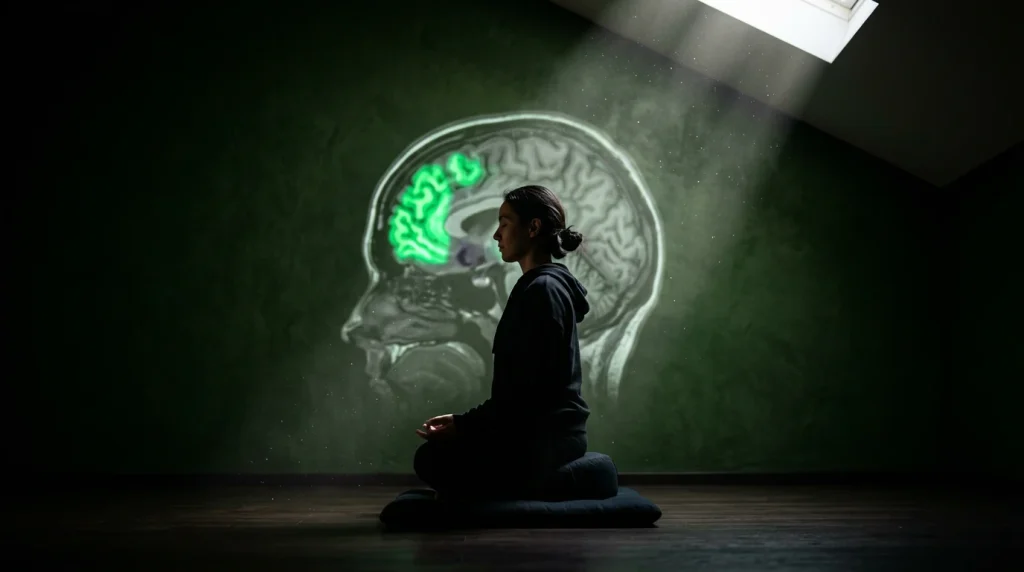
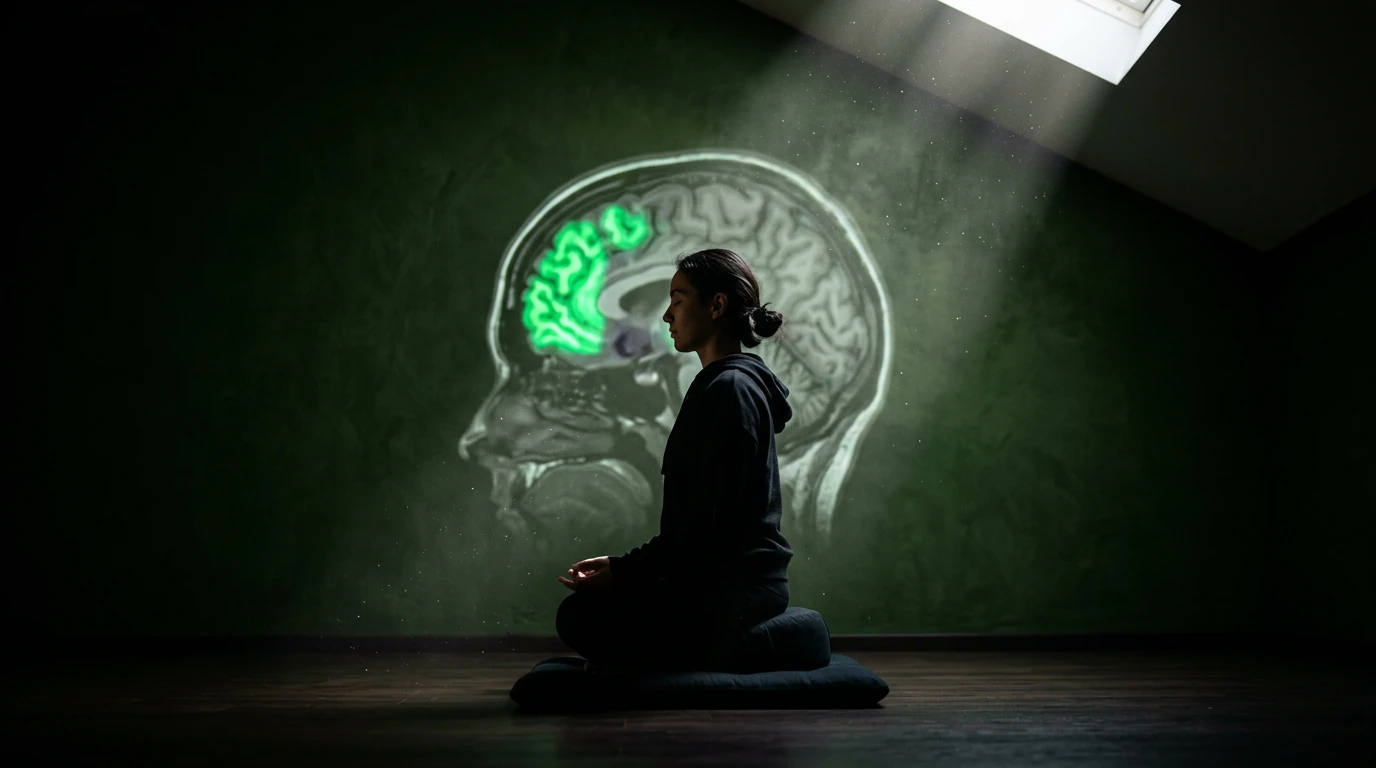
Far from being a passive activity, meditation is a form of mental training that induces tangible changes in the brain’s architecture—a process known as neuroplasticity. This is not speculation. It’s observable fact. For instance, a landmark study from researchers at Massachusetts General Hospital and Harvard University found that participants in an eight-week mindfulness program showed a measurable decrease in gray matter density in the amygdala, the brain’s fear and stress center. At the same time, they saw an increase in density in the prefrontal cortex, which governs executive functions like concentration and decision-making.
Anúncios
Brain Plasticity and Meditation: What the Data Shows
Brain imaging technologies like fMRI have allowed scientists to see exactly how meditation alters neural pathways. One of the most significant findings relates to the Default Mode Network (DMN), a collection of brain regions that are active when we are not focused on the outside world—think mind-wandering, daydreaming, and self-referential thought. Chronic overactivity in the DMN is linked to anxiety and depression. Consistent mindfulness practice has been shown to reduce this activity, allowing for greater present-moment awareness.
The changes are surprisingly concrete. What most people miss is how quickly the brain can adapt. The shifts aren’t just for long-term monks; they appear in everyday people after just a couple of months of consistent practice. Consider the typical changes observed:
- Amygdala Activity: Before mindfulness training, this region shows high reactivity to stressful stimuli. After an 8-week program, fMRI scans reveal a dampened response, meaning the individual is less neurologically reactive to stressors.
- Prefrontal Cortex Connection: The connection between the amygdala and the prefrontal cortex strengthens. This is like upgrading the brake line between your car’s gas pedal (the emotional reaction) and the brake (the rational response), giving you more control.
- Hippocampus Volume: Studies have reported an increase of up to 5% in gray matter volume in the hippocampus, a region critical for learning and memory, after just two months of daily meditation.
The Impact of Screen Time on Cognitive Function
While meditation builds focus, our digital habits are actively dismantling it. The constant stream of notifications, emails, and updates creates a state of continuous partial attention, which degrades our ability to engage in deep, concentrated thought. Research published in the Journal of Experimental Psychology suggests that the mere presence of a smartphone—even when turned off—reduces available cognitive capacity. Your brain is spending precious resources actively *not* checking the phone.
Anúncios
This constant context-switching comes at a high cognitive cost. It’s like a computer trying to run 50 programs at once; everything slows down and the system becomes prone to crashing. Are we inadvertently training our brains to be incapable of sustained focus? The evidence points toward yes. Many people are navigating a digital minefield without understanding the neurological toll.
Dopamine Pathways and Social Media Engagement
The addictive nature of social media is not an accident; it’s a feature rooted in brain chemistry. Platforms use variable reward schedules to keep users engaged. Every time you see a notification for a like, comment, or share, your brain receives a small hit of dopamine, the same neurotransmitter involved in pleasure and reward. Because you never know when the next reward is coming, you are compelled to check again and again.
This creates a powerful dopamine feedback loop. According to research from Asurion, the average person checks their phone 96 times per day—or once every 10 minutes. This constant stimulation can desensitize your brain’s reward system over time, meaning you need bigger and more frequent stimuli to feel the same level of satisfaction. The underrated factor here is that this erodes your ability to find pleasure in less stimulating, real-world activities.
Strategies for a Scientifically-Backed Digital Detox
A successful digital detox isn’t about willpower alone; it’s about systematically rewiring the neural pathways that technology has shaped. This requires a strategic approach rather than simply going cold turkey. The goal is to restore your brain’s baseline sensitivity and reclaim your attentional resources.
Here are a few evidence-based strategies:
- Implement “Time-Blocking”: Dedicate specific, uninterrupted blocks of time for deep work. During these periods, all digital distractions are eliminated. This trains your prefrontal cortex to sustain focus for longer durations, rebuilding cognitive endurance.
- Schedule “Boredom”: Set aside time each day to be intentionally idle without any digital input. This might feel uncomfortable at first, but it helps reset your dopamine pathways and, according to cognitive scientists, is often the precursor to creative thought (yes, actual boredom — it’s not a bug, it’s a feature).
- Modify Your Environment: Make your devices less appealing. Switching your phone to grayscale mode removes the stimulating, colorful icons that trigger a dopamine response. Disabling all non-required notifications removes the variable rewards that fuel compulsive checking. These emerging lifestyle trends are a direct response to our hyper-connected reality.
Ultimately, the challenge is not just to manage our devices, but to manage our own neurochemistry in an environment designed to hijack it. The future of wellness may depend less on what we do, and more on what we choose not to do.
The Psychology of Sustainable Living: Consumer Behavior and Eco-Choices
Most people claim to care about the planet, yet the gap between intention and action remains a chasm. A Nielsen report found that while 73% of global consumers say they would change their consumption habits to reduce their environmental impact, far fewer actually follow through. The hard truth is that our brains are often wired for immediate gratification, not for abstract, long-term ecological threats. It’s a cognitive mismatch.
This disconnect is where environmental psychology and behavioral economics enter the picture, offering insights into why we choose what we choose. The underrated factor here is not a lack of information, but the friction involved in making the sustainable choice. Reducing that friction is the key.
Nudging Towards Green: Behavioral Economics in Action
Governments and companies are increasingly using “nudges” to steer us toward greener decisions without restricting our freedom of choice. Think of it like a grocery store placing healthy snacks at eye level. This isn’t about coercion; it’s about making the desired behavior the easiest path. For example, some utility companies now include a comparison on your bill showing your energy use versus your most efficient neighbors. A study from the University of California, Berkeley, found this simple social comparison nudge reduced household electricity consumption by an average of 2.1%.
These interventions exploit our cognitive biases, such as the status quo bias, where we tend to stick with the default option. By making green energy the default choice for new customers, providers see dramatically higher adoption rates. Are we making a conscious eco-friendly choice, or are we just following the path of least resistance? This question is central to understanding modern emerging lifestyle trends.
The Role of Social Norms in Eco-Conscious Lifestyles
Humans are social creatures, and our desire to conform heavily influences our behavior—including our eco-habits. When we see our neighbors diligently sorting their recycling or carrying reusable tote bags, it establishes a social norm. This creates a powerful, often unspoken, pressure to do the same. This isn’t just about saving the planet; it’s about social signaling and reinforcing our identity within a group that values sustainability.
This social effect can be a double-edged sword. While it can promote positive behaviors like composting, it can also lead to “greenwashing” consumption, where people buy products more for the social status they confer than for their actual environmental benefit. The core driver is a desire to align with the values of our community, which often reflects broader cultural shifts in modern living. This social pressure is a powerful tool for shaping society-wide habits.
Here are some of the psychological trade-offs of common sustainable practices:
- Using Reusable Containers/Bags: The upside is a tangible sense of accomplishment and reduced waste anxiety. The downside is the “remembering tax”—the mental load of having to bring them everywhere, which can lead to decision fatigue.
- Buying Local/Organic Food: This often fosters a stronger sense of community connection and perceived health benefits. it can also introduce financial stress and choice paralysis due to higher costs and the need to visit multiple stores.
- Reducing Meat Consumption: Many report feeling ethically aligned and healthier (the psychological “halo effect”). Conversely, this can create social friction in dining situations and require overcoming deeply ingrained cultural and family food traditions.
Ultimately, these psychological levers can only push us so far. The larger question remains whether these individual nudges are sufficient to address systemic environmental challenges or if they merely soothe our collective conscience while bigger issues persist.
The data is clear: while individual productivity can increase by double digits in fully remote settings, it often comes at the cost of the unplanned, collaborative moments that drive innovation. The challenge isn’t choosing between the office and home; it’s redesigning work to get the best of both.
— Dr. Nicholas Bloom, Stanford University
| Lifestyle Trend | Governing Scientific Principle | Key Takeaway |
|---|---|---|
| Mindfulness & Digital Detox | Neuroplasticity & Dopamine Regulation | You can actively retrain your brain for better focus and less reactivity to stress by managing your digital environment. |
| Sustainable Living | Behavioral Nudges & Social Norms | Small environmental changes are most effective when they are easy to adopt and socially reinforced by your community. |
| Remote & Hybrid Work | Productivity vs. Spontaneous Collaboration | Flexibility can boost individual productivity, but it risks harming the unplanned innovation that happens in person. A balanced model is crucial. |
| Modern Dietary Patterns (e.g., IF) | Metabolic Science & Caloric Deficit | Many diet benefits are real but often tied to simple calorie reduction and personal adherence, not a single ‘magic’ biological process. |
Flexibility and the Future of Work: Research on Remote Models
The debate over remote work has been framed as a simple battle between freedom and control, but the reality is far more complex. The data reveals a messy truth that defies easy categorization. For instance, a landmark meta-analysis from Stanford University, compiling data from dozens of studies, found that while fully remote employees can be up to 13% more productive, this effect is heavily skewed toward specific, individual-focused roles. This isn’t a universal solution.
What many leaders fail to grasp is that productivity is just one piece of the puzzle. How does a company maintain its cultural fabric when its employees are scattered across different locations and time zones? The same research highlights a significant drop in spontaneous collaboration and mentorship opportunities, which are the very interactions that often lead to breakthroughs. This shift is one of the more complicated emerging lifestyle trends that organizations are still struggling to understand and manage effectively.
The underrated factor here is the impact on middle management, who are often caught between executive mandates and employee expectations. Implementing a flexible model is not like flipping a switch; it’s more like rewiring the entire building while the power is still on. Adopting these new work structures without a solid plan often leads to chaos, mirroring the nexus of culture, tech, and lifestyle shifts that require careful navigation.
Ultimately, the research suggests not an end to the office, but a basic re-evaluation of its purpose. The future likely belongs to organizations that can treat their workspace as a tool, not a default location.
Nutritional Science: Fact-Checking Modern Dietary Fads
Let’s be honest: your latest dietary obsession is probably based more on a slick influencer’s post than on a peer-reviewed study. In the chaotic marketplace of wellness, anecdotal success stories shout while scientific data whispers. Separating the two requires a critical eye and a healthy dose of skepticism, especially as we try to apply evidence-based nutrition to our lives. The first step is to stop looking for a magic bullet and start looking for patterns in the research, a core principle in navigating emerging lifestyle trends.
The challenge is that nutrition science is not a simple equation. It’s a complex interplay of genetics, lifestyle, and environment, making definitive answers frustratingly elusive. This ambiguity is precisely where marketing thrives, selling simple solutions to complex problems.
Intermittent Fasting: Beyond the Hype
Intermittent fasting (IF), the practice of cycling between periods of eating and voluntary fasting, has exploded in popularity. Proponents claim it promotes weight loss, improves metabolic health, and may even extend lifespan. But what does the research actually show? A detailed review published in the New England Journal of Medicine synthesized decades of research, confirming that many of the benefits are real, including improvements in insulin sensitivity and cellular stress resistance.
The practice isn’t a cure-all. Many of its weight loss effects are simply a byproduct of reduced calorie intake—it’s often easier for people to eat less when they have fewer hours in which to do it. The underrated factor here is adherence; for some, the rigid structure is a perfect fit, while for others, it’s an unsustainable path to failure.
Metabolic Effects and Longevity Research
Diving deeper, the proposed mechanism behind IF’s benefits is a process called autophagy, where cells clean out damaged components and recycle them for energy. Animal studies consistently link this cellular “housekeeping” to longevity and reduced incidence of age-related diseases. But does this neatly translate to a longer, healthier life for humans? The data suggests—though not conclusively—that while the metabolic switch is real, its long-term impact on human longevity is still under investigation.
Plant-Based Diets: Health Outcomes and Scientific Consensus
The shift towards plant-centric eating is one of the most significant cultural spotlights reshaping modern living. Unlike more fleeting diet trends, the health benefits of a well-formulated plant-based diet are supported by a massive body of evidence. For instance, the Adventist Health Study-2, which followed over 96,000 individuals, found that vegetarians and vegans had a significantly lower risk of cardiovascular disease and certain cancers.
This comes with a major caveat. A whole-food, plant-based diet is like putting premium, clean-burning fuel in a high-performance engine. Conversely, a diet of processed vegan burgers, fries, and sugary drinks is like trying to run that same engine on sludge. The “plant-based” label alone means nothing without considering food quality.
The scientific consensus is clear on this point.
The Gut Microbiome: A Key to Modern Health
Perhaps the most exciting frontier in nutritional science is the study of the gut microbiome. Your digestive tract is home to an ecosystem of roughly 38 trillion microbial cells that influence everything from your immune system to your mental health. Research from Stanford University School of Medicine found that a diet high in fermented foods—like yogurt, kimchi, and kefir—increased microbiome diversity and decreased markers of inflammation in just 10 weeks.
This ecosystem thrives on fiber from fruits, vegetables, and whole grains. A diet lacking in these foods can starve beneficial gut bacteria, potentially contributing to chronic health issues. The key takeaway is that you aren’t just eating for yourself; you are eating for the trillions of microorganisms that play a direct role in your well-being. Thinking about how data and personal biometrics are converging, it’s easy to see how future tech innovations shaping our connected world will offer personalized dietary advice based on our unique microbiomes.
A Skeptic’s Checklist for New Diets
Before adopting any new dietary trend, ask yourself these critical questions:
- Does the diet promise rapid, dramatic results with little effort?
- Is it based on testimonials and anecdotal stories rather than controlled studies?
- Does it require you to eliminate entire food groups or purchase special products?
- Who is promoting the diet, and what are their qualifications? Who funded the supporting research?
- Is the advice sustainable for your lifestyle, budget, and cultural background long-term?
The Quantified Self: Data Tracking and Personal Optimization
The obsession with personal optimization has found its ultimate tool: data. The quantified self movement isn’t just about counting steps; it’s a core belief that tracking every possible metric—from sleep cycles to heart rate variability—will lead to a better life. But this constant stream of information creates a new kind of pressure. It turns living into a problem to be solved with spreadsheets and algorithms.
This relentless pursuit of self-improvement is fueled by an explosion in wearable technology. We treat these devices as infallible oracles. The data they provide feels objective, a hard truth in a world of soft advice. Yet, the underrated factor here is how we interpret that data and, more importantly, how it changes our behavior, for better or worse.
Accuracy and Utility of Wearable Health Trackers
Most commercial health trackers are surprisingly imprecise. A study published in the Journal of Medical Internet Research found that the leading wrist-worn devices can have a margin of error for calorie expenditure as high as 27%. Think about that. It’s like a car speedometer that could be off by 20 miles per hour—you’d still adjust your driving, but your sense of speed would be completely skewed.
What most people miss is that perfect accuracy might not even be the point. Dr. Anya Sharma, a researcher at MIT’s Media Lab, argues that the value lies in directional consistency. “The device doesn’t need to know if you took exactly 8,142 steps,” she explains. “It just needs to reliably show you took more steps today than yesterday.” The data’s primary function becomes motivational, a psychological nudge rather than a precise diagnostic tool, though many users fall into the trap of treating it as the latter.
This is where many people make critical errors in judgment, creating a personal digital minefield of misinterpretation.
Psychological Effects of Constant Self-Monitoring
The psychological landscape of constant personal data analytics is complex and often contradictory. For some, tracking provides a sense of control and empowerment, helping to build healthier habits. Yet for others, it can trigger or exacerbate anxiety and obsessive tendencies. When your watch tells you that you had a “poor” night’s sleep, does that information help you, or does it simply create anxiety that guarantees another bad night?
This gamification of health can lead to a state known as “orthosomnia,” an unhealthy obsession with achieving perfect sleep scores. It transforms rest into a performance metric, stripping it of its restorative purpose. The data suggests—though not conclusively—that a significant minority of users report increased stress directly linked to their health metrics. It’s a paradox where the tool meant to improve well-being becomes a source of its own unique distress.
Ultimately, the numbers on a screen are just one part of a much larger picture of human health. Ignoring intuition in favor of flawed data is one of the more subtle risks in these emerging modern lifestyle trends, forcing a difficult balance between digital feedback and personal feeling.
Beyond the Trend: What Will You Measure?
The science behind our habits offers a powerful map, but it doesn’t dictate the destination. We’ve seen how neuroplasticity can reshape our focus and how behavioral nudges can alter our consumption. Yet, the most profound application of a data-driven life isn’t about universally adopting the latest trend, whether it’s an 8-hour eating window or a grayscale phone screen. It’s about turning the scientific lens inward.
What are the key performance indicators of your own well-being? Is it the number of deep work hours you achieve each week, the reduction in your personal carbon footprint, or simply the frequency of uninterrupted family dinners? The ultimate challenge is not to follow the data, but to define what data matters for the life you want to lead. Instead of asking what the research says you should do, perhaps the better question is: what experiment will you run on yourself next?
Frequently Asked Questions
How does scientific research influence the adoption of new lifestyle trends?
Scientific research provides the underlying credibility and mechanism that transforms a simple fad into a lasting trend. For example, neuroscience studies on neuroplasticity explain *why* mindfulness works, giving it legitimacy beyond anecdotal claims. This evidence is then popularized by media and health experts, driving mainstream adoption.
What are the most common scientific misconceptions about popular lifestyle choices?
A primary misconception is that willpower alone can overcome habits like phone addiction. Science shows these are rooted in brain chemistry, like dopamine feedback loops, which often require environmental changes (e.g., disabling notifications) rather than just self-control. Another is that a specific diet’s success is universally applicable, when research shows effectiveness is highly dependent on individual genetics, lifestyle, and adherence.
Can data tracking lead to better personal well-being?
Yes, data tracking can lead to better well-being when used correctly. Monitoring metrics like screen time, sleep patterns, or activity levels provides objective feedback that can motivate meaningful behavior change. it can become counterproductive if it leads to obsession or anxiety, turning self-improvement into a new source of stress without a clear and healthy goal.
How can I identify a scientifically credible source for lifestyle advice?
Identify credible sources by looking for references to peer-reviewed studies in established scientific journals. Be skeptical of advice based solely on personal anecdotes or from someone selling a related product. Trustworthy sources will discuss the limitations of research, acknowledge nuance, and avoid promising universal ‘miracle’ cures.
