Quantum Computing Breakthroughs: How 3 Recent Discoveries Will Impact US Cybersecurity by 2027
Anúncios
Quantum Computing Breakthroughs: How 3 Recent Discoveries Will Impact US Cybersecurity by 2027
The landscape of cybersecurity is on the cusp of a monumental shift, driven by the rapid advancements in quantum computing. What was once considered theoretical is now inching closer to practical application, and its implications for national security, particularly for the United States, are profound. By 2027, three recent quantum computing breakthroughs are poised to fundamentally alter the fabric of US cybersecurity, presenting both unprecedented threats and novel opportunities. Understanding this “quantum cybersecurity impact” is no longer a futuristic exercise but an immediate imperative.
For decades, our digital world has relied on cryptographic systems that are computationally infeasible for classical computers to break. These systems form the bedrock of secure communications, financial transactions, and critical infrastructure. However, quantum computers, with their ability to process information in fundamentally different ways, threaten to dismantle these foundational security measures. This article delves into the specific breakthroughs that are accelerating this quantum revolution and meticulously examines their projected influence on US cybersecurity within the next five years.
The Imminent Quantum Threat: A New Era of Cyber Warfare
The “quantum cybersecurity impact” is primarily associated with the potential to break current encryption standards. Algorithms like Shor’s algorithm, for instance, can efficiently factor large numbers, a task that underpins widely used public-key cryptography such as RSA and ECC. While fully fault-tolerant quantum computers capable of running Shor’s algorithm at scale are still some years away, the progress is accelerating at an astonishing rate. The timeline of 2027 is critical because even if a quantum computer capable of breaking current encryption isn’t fully operational by then, the data being collected today, if encrypted with vulnerable methods, could be stored and decrypted later by future quantum machines. This “harvest now, decrypt later” threat is a significant concern for intelligence agencies and national security apparatuses.
Anúncios
The US government, through agencies like the National Institute of Standards and Technology (NIST), has been proactive in recognizing this threat, initiating a multi-year process to standardize post-quantum cryptography (PQC) algorithms. This foresight is crucial, but the transition will be complex and resource-intensive, affecting everything from secure government communications to critical infrastructure and financial systems. The scale of this migration is unprecedented, requiring updates to hardware, software, and protocols across vast networks. The success of this transition will largely dictate the severity of the quantum cybersecurity impact on the nation.
Breakthrough 1: Enhanced Qubit Coherence and Stability
The Foundation of Quantum Computing Advancement
One of the most significant hurdles in building powerful quantum computers has been maintaining qubit coherence – the ability of quantum bits to retain their quantum state without being corrupted by environmental noise. Recent breakthroughs in materials science and quantum engineering have led to dramatically improved qubit coherence times and error rates. For example, advancements in superconducting qubits, trapped ions, and topological qubits have shown promising results. Researchers are now able to maintain quantum states for longer periods and with higher fidelity, meaning fewer errors accumulate during computations.
This enhanced stability directly translates to the ability to build larger and more complex quantum processors. A quantum computer with more stable qubits can perform more operations before errors render the computation useless. This pushes the timeline for practical quantum advantage – where a quantum computer can solve a problem significantly faster than any classical computer – closer to reality. By 2027, we can anticipate quantum processors with hundreds or even thousands of stable, error-corrected qubits, moving beyond the noisy intermediate-scale quantum (NISQ) era. Such machines, while not yet fully fault-tolerant, will be powerful enough to run specialized algorithms that could challenge certain aspects of current cybersecurity. The “quantum cybersecurity impact” stemming from this will be the increased urgency to implement PQC, as the theoretical threat becomes demonstrably more tangible.
Anúncios
Implications for US Cybersecurity by 2027
The primary implication of improved qubit coherence and stability for US cybersecurity is the accelerated timeline for cryptographic attacks. As quantum computers become more robust, the window for migrating to post-quantum cryptographic standards shrinks. If US government agencies and critical infrastructure providers do not rapidly transition their systems, they risk having their encrypted data compromised. This includes sensitive intelligence, military communications, economic data, and personal information of citizens.
Furthermore, improved qubit stability also means that quantum algorithms designed for tasks other than breaking encryption could become more feasible. For instance, quantum machine learning algorithms could enhance adversaries’ capabilities in analyzing vast datasets for vulnerabilities, developing more sophisticated malware, or even optimizing attack strategies. The US must not only focus on defensive PQC measures but also on understanding and potentially leveraging these offensive quantum capabilities to maintain a strategic advantage in the cyber domain. The “quantum cybersecurity impact” is not just about defense but also about understanding the full spectrum of quantum-enabled cyber operations.
Breakthrough 2: Development of Advanced Quantum Error Correction Codes
Overcoming the Fragility of Qubits
While improved qubit coherence is vital, quantum computers remain inherently susceptible to errors. Unlike classical bits, which are either 0 or 1, qubits exist in a superposition of states, making them extremely fragile. Quantum error correction (QEC) is crucial for building fault-tolerant quantum computers. Recent advancements in QEC codes, such as surface codes and other topological approaches, have shown remarkable progress in encoding quantum information in a redundant manner to protect it from noise.
The breakthroughs aren’t just in theoretical codes but also in their experimental implementation. Researchers are demonstrating the ability to detect and correct errors in small-scale quantum systems with increasing efficiency. While perfect, fault-tolerant QEC requires a significant overhead of physical qubits for every logical qubit, the progress in reducing this overhead and improving the fidelity of QEC operations is accelerating. This means that the path to large-scale, reliable quantum computation is becoming clearer. By 2027, we might not have fully fault-tolerant universal quantum computers, but we will likely see significant demonstrations of effective QEC in larger quantum systems, proving the viability of scaling up.
Implications for US Cybersecurity by 2027
The impact of advanced QEC codes on US cybersecurity is directly tied to the feasibility of building cryptographically relevant quantum computers. As QEC improves, the timeline for quantum computers capable of running Shor’s algorithm effectively shortens. This means that the “quantum cybersecurity impact” will be felt more acutely and sooner than previously anticipated. The US must accelerate its efforts in PQC implementation, not just in research and development, but in widespread deployment across all critical sectors.
Furthermore, the development of robust QEC also implies that quantum simulation and optimization problems can be tackled with greater accuracy and scale. This could lead to breakthroughs in materials science, drug discovery, and artificial intelligence, which, while beneficial, also present potential dual-use challenges. An adversary with superior quantum simulation capabilities could, for instance, design new materials for advanced weaponry or develop novel methods for cyber intrusion. Therefore, the US must invest heavily in both the defensive and offensive aspects of quantum technology to maintain its technological edge and ensure national security.
Breakthrough 3: Integration of Quantum and Classical Computing Architectures
Hybrid Approaches for Practical Quantum Advantage
While the ultimate goal is often a standalone, universal fault-tolerant quantum computer, a more immediate and practical breakthrough involves the integration of quantum and classical computing architectures. This hybrid approach leverages the strengths of both paradigms: quantum processors handle specific computationally intensive tasks, while classical computers manage control, data preprocessing, and post-processing. Recent developments have focused on creating seamless interfaces and programming models that allow these hybrid systems to work efficiently together.
This integration is crucial because even in the NISQ era, quantum computers can perform certain computations that are intractable for classical machines, particularly in optimization and simulation. By offloading these specific tasks to quantum co-processors, classical supercomputers can achieve new levels of performance. Breakthroughs in quantum software development kits (SDKs), cloud-based quantum access, and specialized quantum compilers are making this integration more accessible and efficient. This means that practical applications of quantum computing are emerging sooner, even before the advent of full fault tolerance.
Implications for US Cybersecurity by 2027
The integration of quantum and classical computing architectures has a multifaceted “quantum cybersecurity impact” for the US. On one hand, it could lead to enhanced defensive capabilities. For instance, quantum-enhanced machine learning could dramatically improve threat detection, anomaly identification, and the analysis of vast amounts of network traffic to identify sophisticated cyberattacks in real-time. This could provide a significant advantage in defending critical national infrastructure and government networks.
On the other hand, adversaries could also leverage these hybrid systems for more potent attacks. Quantum-accelerated cryptanalysis, while not full Shor’s algorithm, could potentially speed up certain classical attacks or break weaker cryptographic implementations. Furthermore, the complexity of integrating quantum components into existing IT infrastructure introduces new attack surfaces and vulnerabilities that cybersecurity professionals must address. The US will need to develop new security protocols and architectural designs that can secure these hybrid environments, ensuring that the quantum components themselves are not points of exploitation. This involves not only technical solutions but also robust supply chain security for quantum hardware and software.
The Broader Quantum Cybersecurity Impact: Beyond Cryptography
While the breaking of public-key cryptography is often the most cited “quantum cybersecurity impact,” the implications extend far beyond. Quantum computing has the potential to revolutionize other areas of cybersecurity, both defensively and offensively. For instance, quantum-resistant algorithms are being developed not just for public-key encryption but also for digital signatures and key exchange protocols, which are integral to secure communication and authentication.
Quantum key distribution (QKD), though distinct from quantum computing, is another area where quantum mechanics offers theoretically unbreakable encryption based on the laws of physics. While QKD has its own practical limitations and challenges in deployment, advancements in quantum technology could make it more viable for certain high-security applications. The US needs to continue investing in QKD research and evaluate its role in a multi-layered post-quantum security strategy.
Moreover, the development of quantum sensors could lead to highly sensitive detection capabilities, potentially enhancing physical security measures and even detecting subtle anomalies in electromagnetic fields that could indicate cyber intrusion attempts. Conversely, these same sensors could be used by adversaries for sophisticated surveillance or to bypass traditional security perimeters. The dual-use nature of quantum technologies means that the US must be prepared for both the defensive and offensive applications across the entire spectrum of national security.
Strategic Imperatives for US Cybersecurity by 2027
-
Accelerated PQC Transition:
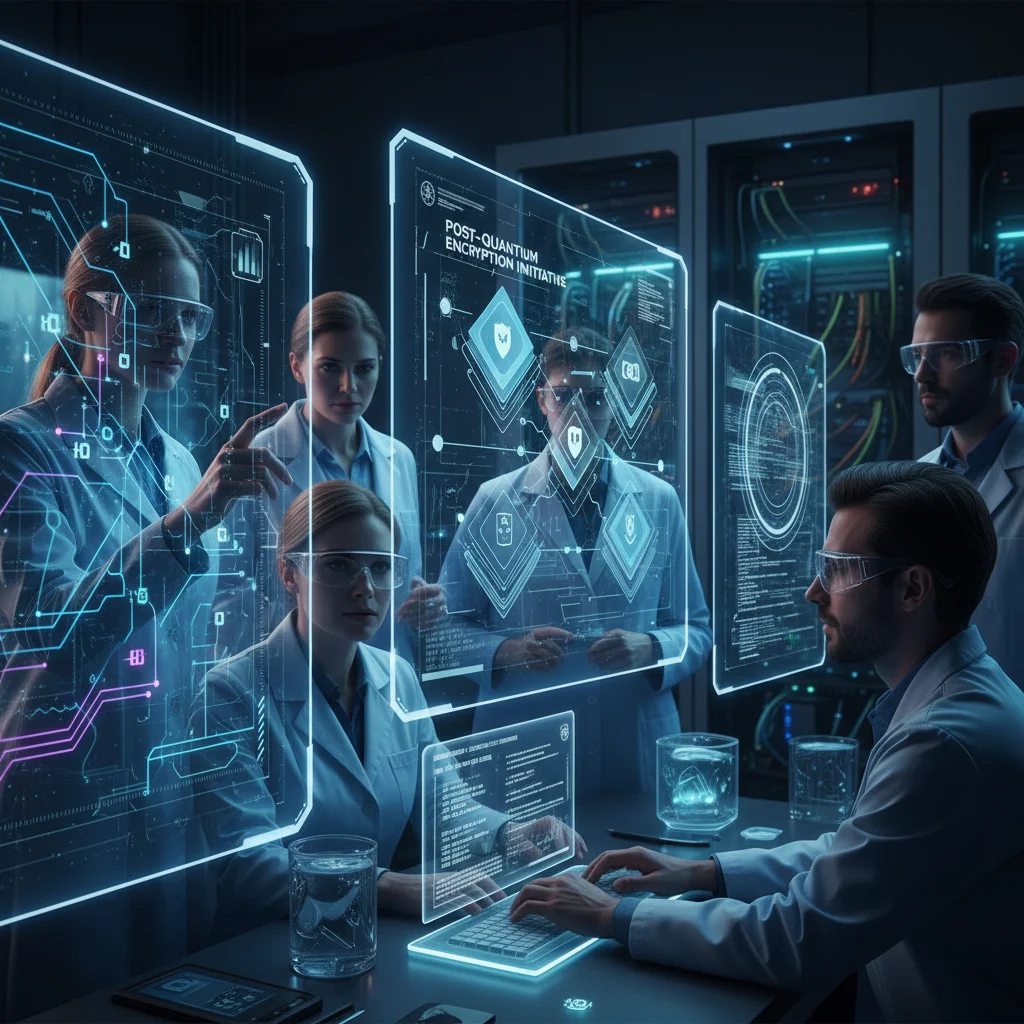
The transition to post-quantum cryptography must be treated with the utmost urgency. This involves not only finalizing NIST standards but also developing implementation guidelines, tools, and best practices for government agencies, critical infrastructure operators, and the private sector. A comprehensive inventory of cryptographic assets and a phased migration plan are essential. This is a massive undertaking that requires significant investment and coordination.
-
Investment in Quantum Research and Development:
The US must maintain and expand its leadership in quantum information science. This includes funding basic research, supporting quantum startups, and developing a skilled quantum workforce. Staying at the forefront of quantum technology is crucial for understanding emerging threats and developing countermeasures, as well as for harnessing the beneficial applications of quantum computing.
-
International Collaboration and Standard Setting:
Quantum threats are global, and a coordinated international response is necessary. The US should actively engage with allies and international bodies to develop common standards for post-quantum cryptography, share threat intelligence, and establish norms for the responsible development and use of quantum technologies. This collaboration can help create a more resilient global cybersecurity ecosystem.
-
Education and Workforce Development:
There is a significant shortage of professionals with expertise in quantum computing and quantum-safe cybersecurity. The US needs to invest in educational programs, training initiatives, and recruitment efforts to build a robust workforce capable of addressing the challenges and opportunities presented by the quantum era. This includes training current cybersecurity professionals in PQC implementation and fostering a new generation of quantum scientists and engineers.
-
Threat Intelligence and Monitoring:
Continuous monitoring of quantum computing advancements globally is paramount. Intelligence agencies and cybersecurity organizations must track the progress of potential adversaries in quantum technology development to anticipate threats and adapt defensive strategies. This includes monitoring research papers, patent filings, and experimental demonstrations to assess the evolving “quantum cybersecurity impact”.
The Road Ahead: Navigating the Quantum Frontier
The three breakthroughs – enhanced qubit coherence and stability, advanced quantum error correction codes, and the integration of quantum and classical computing architectures – are not isolated events but interconnected milestones accelerating the arrival of practical quantum computing. By 2027, their cumulative effect will have significantly heightened the “quantum cybersecurity impact” on the United States.
The challenge is immense, but so are the opportunities. Quantum computing holds the promise of solving problems currently intractable for even the most powerful supercomputers, potentially leading to breakthroughs in materials science, medicine, and artificial intelligence that could bolster national prosperity and security. However, realizing these benefits while mitigating the cryptographic threat requires proactive and sustained effort.
The US government, in collaboration with academia and the private sector, must continue to invest in a multi-pronged strategy encompassing research, standardization, deployment, and workforce development. The goal is not merely to survive the quantum revolution but to lead it, ensuring that the nation’s digital infrastructure remains resilient and secure in the face of this transformative technology. The next few years will be crucial in determining how effectively the US navigates the quantum frontier and safeguards its future in an increasingly quantum-influenced world. The “quantum cybersecurity impact” is not a distant threat, but a present reality demanding immediate and strategic action.
Conclusion: Preparing for a Quantum-Resilient Future
The rapid evolution of quantum computing presents an unprecedented challenge and opportunity for US cybersecurity. The breakthroughs in qubit coherence, error correction, and hybrid architectures are pushing the timeline for a significant “quantum cybersecurity impact” much closer. By 2027, the theoretical threats will have become more concrete, demanding a robust and swift response.
The shift to post-quantum cryptography is no longer a matter of ‘if’ but ‘when’ and ‘how fast.’ The nation’s ability to protect its most sensitive data, critical infrastructure, and military communications will depend on its capacity to adapt and innovate. This requires a national effort, combining technological prowess with strategic foresight and international cooperation. By proactively addressing these challenges, the United States can transform the potential vulnerabilities of the quantum era into a foundation for a more secure and technologically advanced future.
