
The dawn of the quantum era is upon us, and the United States stands at the forefront of this technological revolution. With unprecedented government support, burgeoning private sector investment, and a rich ecosystem of research institutions, the U.S. quantum computing landscape is rapidly evolving, presenting a wealth of investment opportunities for the discerning investor. From 2024 to 2027, we anticipate a period of significant growth and maturation, as quantum technologies transition from theoretical promise to practical application. This article will serve as your comprehensive guide to navigating these exciting waters, highlighting the key sectors, players, and strategic considerations for capitalizing on the next wave of innovation in U.S. quantum investment.
The Quantum Computing Revolution: A Brief Overview
Quantum computing harnesses the principles of quantum mechanics – such as superposition and entanglement – to perform calculations far beyond the capabilities of classical computers. This paradigm shift promises to revolutionize industries ranging from pharmaceuticals and materials science to finance and artificial intelligence. While still in its nascent stages, the potential impact of quantum computing is undeniable, drawing significant attention and capital globally, with the U.S. leading much of the charge.
The fundamental difference lies in the basic unit of information. Classical computers use bits, which can be either 0 or 1. Quantum computers use qubits, which can be 0, 1, or both simultaneously (superposition), and can be interconnected in complex ways (entanglement). These properties allow quantum computers to explore vast computational spaces exponentially faster than classical machines, making them ideal for solving problems previously considered intractable.
Why Now is the Time for US Quantum Investment
Several factors converge to make the 2024-2027 period particularly opportune for US quantum investment:
Anúncios
- National Quantum Initiative (NQI): The NQI Act of 2018, and its subsequent updates, have provided a robust framework for significant federal funding, fostering research, development, and workforce training across various government agencies, universities, and national labs. This sustained governmental commitment de-risks early-stage investments and accelerates technological progress.
- Maturing Technology: While still experimental, quantum hardware and software are steadily improving. We are moving beyond proof-of-concept demonstrations to the early stages of practical applications, especially in areas like quantum simulation and optimization.
- Growing Talent Pool: U.S. universities and research institutions are producing a growing number of quantum scientists and engineers, creating a vital talent pipeline essential for commercialization.
- Strategic Imperative: Both economic competitiveness and national security are driving forces. The U.S. aims to maintain its technological leadership in this critical domain, making US quantum investment a strategic priority.
Key Investment Sectors in the U.S. Quantum Landscape
The quantum ecosystem is multifaceted, offering diverse entry points for investors. Understanding these distinct sectors is crucial for identifying the most promising opportunities for US quantum investment.
1. Quantum Hardware Development
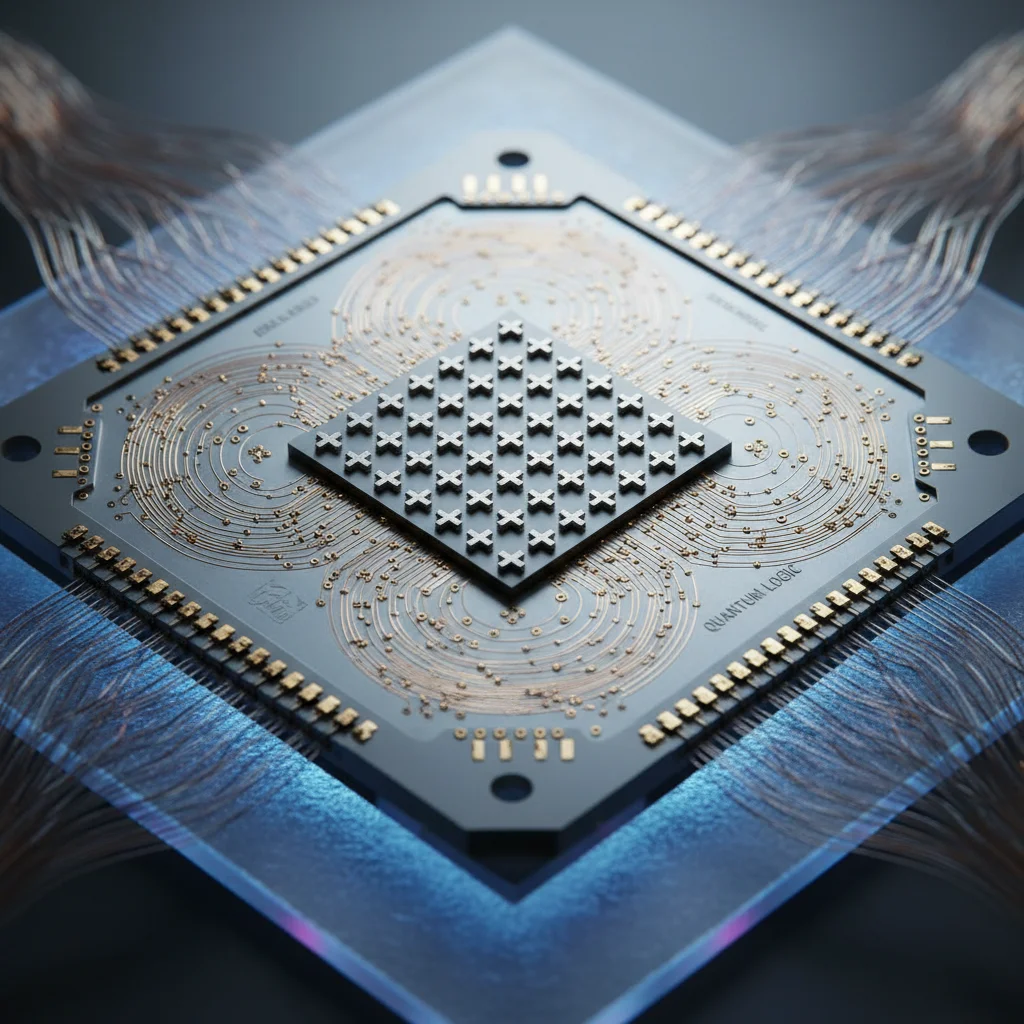
At the heart of quantum computing lies the hardware – the physical systems that house and manipulate qubits. This sector is characterized by high technical complexity and significant capital requirements but offers the potential for substantial returns as scalable, fault-tolerant quantum computers emerge. Key areas within hardware include:
- Superconducting Qubits: Companies like IBM and Google have made significant strides with superconducting circuits, which operate at ultra-low temperatures. Investment here focuses on increasing qubit count, connectivity, and coherence times.
- Trapped Ions: Companies such as IonQ are developing quantum computers based on trapped ions, which offer high qubit quality and connectivity. This approach is known for its relatively long coherence times.
- Neutral Atoms: A newer but rapidly advancing approach, neutral atom quantum computers (e.g., ColdQuanta, Atom Computing) leverage arrays of individual atoms cooled to near absolute zero, offering scalability potential.
- Photonic Quantum Computing: Utilizes photons as qubits, offering advantages in terms of room-temperature operation and compatibility with existing fiber optic infrastructure. Companies like PsiQuantum are prominent in this space.
- Topological Qubits: A long-term, highly fault-tolerant approach being explored by Microsoft, though still largely in the research phase.
- Ancillary Technologies: Beyond the qubits themselves, there’s a need for cryogenics, control electronics, microwave components, and specialized lasers. These supporting technologies represent vital, often overlooked, investment areas crucial for the overall progress of quantum hardware.
The hardware sector is a capital-intensive frontier. Investors in this space are often betting on a specific qubit modality or a breakthrough in maintaining qubit coherence and fidelity. The long development cycles mean that patience and a long-term vision are paramount for successful US quantum investment in hardware.
Anúncios
2. Quantum Software and Algorithms
Even the most powerful quantum hardware is useless without sophisticated software and algorithms to run on it. This sector is experiencing rapid growth and offers potentially faster routes to market for certain applications. Investment opportunities include:
- Quantum Algorithm Development: Companies specializing in developing novel quantum algorithms for specific industry problems (e.g., drug discovery, financial modeling, logistics optimization). This requires deep expertise in both quantum mechanics and the target industry.
- Quantum Software Development Kits (SDKs) and Compilers: Tools that allow developers to write, simulate, and execute quantum programs on various hardware platforms. These platforms aim to abstract away the complexities of the underlying quantum hardware, making quantum computing more accessible.
- Quantum Middleware: Software layers that sit between high-level applications and low-level hardware, optimizing code for specific quantum architectures and managing resources.
- Cloud-Based Quantum Services (QaaS): Platforms that provide access to quantum computers over the cloud, similar to how traditional cloud computing services operate. This democratizes access to expensive hardware and fosters innovation.
The software layer is critical for unlocking the practical value of quantum computers. As hardware matures, the demand for skilled quantum programmers and robust software tools will skyrocket. This area of US quantum investment is less capital-intensive than hardware but requires a strong understanding of computational science and application domains.
3. Quantum-Safe Cryptography (Post-Quantum Cryptography – PQC)
One of the most pressing concerns arising from quantum computing is its potential to break current encryption standards (e.g., RSA, ECC), which underpin much of our digital security. This threat has spurred intense development in quantum-safe cryptography, a field focused on developing new cryptographic algorithms resistant to quantum attacks. This represents an immediate and critical investment opportunity for US quantum investment, regardless of when fault-tolerant quantum computers become widespread.
- Algorithm Development and Standardization: Companies contributing to the development and implementation of NIST-standardized PQC algorithms.
- Migration Tools and Services: Helping organizations transition their existing IT infrastructure to quantum-safe protocols. This involves significant software and consulting services.
- Hardware Security Modules (HSMs): Developing hardware solutions that incorporate PQC algorithms for enhanced security.
- Quantum Key Distribution (QKD): While distinct from PQC, QKD offers an information-theoretically secure method for exchanging cryptographic keys using quantum mechanical properties. Investment in QKD technologies and infrastructure is also a growing area.
Unlike other quantum sectors, PQC addresses an immediate and present danger, making its market demand more predictable and urgent. This sector offers a relatively lower-risk entry point for investors seeking to capitalize on the quantum revolution in the near term.
4. Quantum Sensing and Metrology
Beyond computation, quantum mechanics offers unparalleled precision in measurement. Quantum sensors leverage phenomena like superposition and entanglement to achieve sensitivities far exceeding classical devices. This field is already seeing commercial applications and presents significant opportunities for US quantum investment.
- Atomic Clocks: Ultra-precise timekeeping for navigation, telecommunications, and fundamental science.
- Quantum Magnetometers: Highly sensitive magnetic field detection for medical imaging (e.g., MEG), geological surveying, and defense applications.
- Quantum Gravimeters: Measuring minute changes in gravity for underground mapping, natural resource exploration, and climate science.
- Quantum Imaging: Enhancing resolution and sensitivity in imaging, particularly in low-light conditions or through scattering media.
- Quantum Radar: Potentially offering enhanced stealth detection and resilience against jamming.
Quantum sensing offers a more direct path to commercialization than quantum computing, as many of these technologies are already outperforming classical counterparts in specific niches. This sector is less about building a universal quantum computer and more about leveraging quantum effects for immediate, practical benefits.
Key Players and the U.S. Ecosystem
The U.S. quantum ecosystem is a vibrant tapestry of established tech giants, innovative startups, and world-class academic institutions. Understanding the interplay between these entities is crucial for informed US quantum investment decisions.
Major Corporations
- IBM: A pioneer in superconducting quantum computing, offering cloud access to its quantum systems (IBM Quantum Experience) and developing a comprehensive software stack.
- Google: Known for its ‘quantum supremacy’ demonstration with the Sycamore processor and continued research in superconducting qubits.
- Microsoft: Focused on topological quantum computing and developing a full-stack quantum ecosystem, including its Azure Quantum platform.
- Intel: Researching silicon spin qubits and cryo-CMOS control electronics, aiming for scalable quantum chip fabrication.
- Honeywell/Quantinuum: A leader in trapped-ion quantum computing, merging Honeywell Quantum Solutions with Cambridge Quantum.
Startups and Scale-ups
The U.S. is a hotbed for quantum startups, many of which are emerging from university research labs. These companies often specialize in a particular qubit modality, software application, or sensing technology. Examples include:
- IonQ: Publicly traded, focused on trapped-ion quantum computers.
- Rigetti Computing: Publicly traded, developing superconducting quantum computers and a full-stack platform.
- PsiQuantum: Developing photonic quantum computers with significant venture backing.
- ColdQuanta (now Infleqtion): Specializing in neutral atom quantum technology and quantum sensing.
- Atom Computing: Another significant player in neutral atom quantum computing.
- Quantum Machines: Providing control systems for quantum computers.
- Q-CTRL: Developing quantum control software to improve qubit performance.
- Zapata Computing: Focusing on quantum software and algorithms for enterprise applications.
Academic and Government Research
U.S. universities (e.g., MIT, Caltech, Stanford, University of Maryland, University of Chicago) and national labs (e.g., NIST, Argonne, Oak Ridge, Pacific Northwest) are critical engines of fundamental research and talent development. They often collaborate with industry, forming partnerships that accelerate commercialization. Government funding via the NQI and agencies like NSF, DOE, and DoD plays a crucial role in sustaining this foundational research, directly impacting the viability of future US quantum investment opportunities.
Strategic Investment Considerations for 2024-2027
Investing in quantum computing requires a nuanced approach, given the technology’s early stage and inherent complexities. Here are key considerations for your US quantum investment strategy:
1. Understand the Technology Stack
Quantum computing is not a monolithic field. Investors should understand the differences between qubit modalities (superconducting, trapped ion, neutral atom, photonic), the challenges each faces, and the various layers of the quantum stack (hardware, control, error correction, software, algorithms, applications).
2. Assess the Talent and IP
The strength of a quantum company often lies in its scientific talent and intellectual property. Evaluate the expertise of the founding team, their track record, and the robustness of their patent portfolio. Strong academic ties are often a positive indicator.
3. Focus on Niche Applications and Vertical Integration
Early commercialization will likely occur in specialized niches where quantum computers offer a clear, demonstrable advantage over classical systems. Look for companies targeting specific, high-value problems in industries like drug discovery, materials science, or financial optimization. Furthermore, companies that offer vertically integrated solutions, from hardware to software to application, may have a competitive edge.
4. Consider the Time Horizon and Risk Tolerance
Quantum computing is a long-term play. While quantum sensing and PQC offer nearer-term returns, universal fault-tolerant quantum computers are still years, if not decades, away. Investors must have a high tolerance for risk and a long investment horizon. Diversifying across different quantum sectors and stages of development can mitigate some of this risk.
5. Monitor Government Policy and Funding
Government support, particularly from the NQI, is a major driver of the U.S. quantum ecosystem. Stay abreast of policy changes, funding initiatives, and strategic priorities from agencies like NIST, DOE, and DOD, as these can significantly impact the landscape for US quantum investment.
6. Evaluate Partnerships and Ecosystem Development
No single company will build the entire quantum ecosystem. Look for companies that are actively forging partnerships with hardware providers, software developers, academic institutions, and end-users. A collaborative approach often signals a more robust and adaptable business model.
7. The Role of Quantum-Safe Security
As mentioned, PQC offers a unique, immediate investment pathway. The transition to quantum-safe algorithms is a global imperative, creating a guaranteed market demand for solutions. Companies specializing in PQC implementation, consulting, and hardware modules are poised for significant growth in the 2024-2027 timeframe. This is a critical area for US quantum investment that addresses a near-term threat.

Challenges and Risks
While the opportunities are vast, investors must also be aware of the significant challenges and risks inherent in the quantum computing space:
- Technical Hurdles: Building scalable, fault-tolerant quantum computers is incredibly difficult. Challenges include qubit instability, error rates, and the complexity of control systems.
- Long Development Cycles: The path from research to commercial product can be lengthy, requiring sustained investment without immediate returns.
- High Capital Requirements: Especially for hardware development, the costs associated with specialized facilities, cryogenics, and advanced manufacturing are substantial.
- Talent Scarcity: While growing, the pool of highly skilled quantum engineers and scientists remains limited, leading to intense competition for talent.
- Uncertainty of Applications: While theoretical applications are compelling, identifying commercially viable, quantum-advantage problems is still an active area of research.
- Competition: The global race for quantum supremacy is intense, with significant investment coming from China, Europe, and other regions.
- Exaggerated Hype: The quantum field is susceptible to over-hype, leading to unrealistic expectations. Investors must distinguish between genuine breakthroughs and incremental progress.
The Future Outlook for US Quantum Investment
Looking ahead to 2027 and beyond, the U.S. is poised to solidify its position as a global leader in quantum technologies. The coming years will likely see:
- Increased Specialization: As the field matures, companies will likely specialize further, focusing on particular qubit types, software stacks, or application domains.
- Hybrid Quantum-Classical Computing: The immediate future will involve leveraging quantum processors as accelerators for classical supercomputers, integrating quantum capabilities into existing computational workflows.
- Consolidation: As with any emerging technology, some consolidation among startups and acquisitions by larger tech companies are to be expected.
- Emergence of ‘Quantum Advantage’ in Specific Niches: We will likely see clearer demonstrations of quantum computers outperforming classical ones for specific, practical problems, moving beyond academic benchmarks.
- Growing Demand for Quantum Workforce: The need for quantum-literate individuals across various industries will continue to grow, creating opportunities in education and training.
The U.S. government’s steadfast commitment, coupled with the dynamism of its private sector and academic prowess, creates a fertile ground for US quantum investment. Investors who strategically navigate this landscape, focusing on fundamental technological advancements, robust intellectual property, and clear pathways to commercialization, are well-positioned to reap significant rewards from this transformative technology.
Conclusion
The U.S. quantum computing landscape is brimming with potential, making the period from 2024 to 2027 a pivotal time for strategic investment. From the foundational hardware that underpins quantum operations to the sophisticated software that unlocks their power, and the critical quantum-safe solutions safeguarding our digital future, the opportunities are diverse and impactful. By understanding the nuances of each sector, assessing the talent and intellectual property, and adopting a long-term, risk-aware perspective, investors can effectively participate in and profit from the quantum revolution. The journey into quantum computing is complex, but for those willing to embark, the rewards of successful US quantum investment promise to be truly revolutionary.
