Blockchain Beyond Crypto: 5 Enterprise Applications for US Businesses in 2026
Anúncios
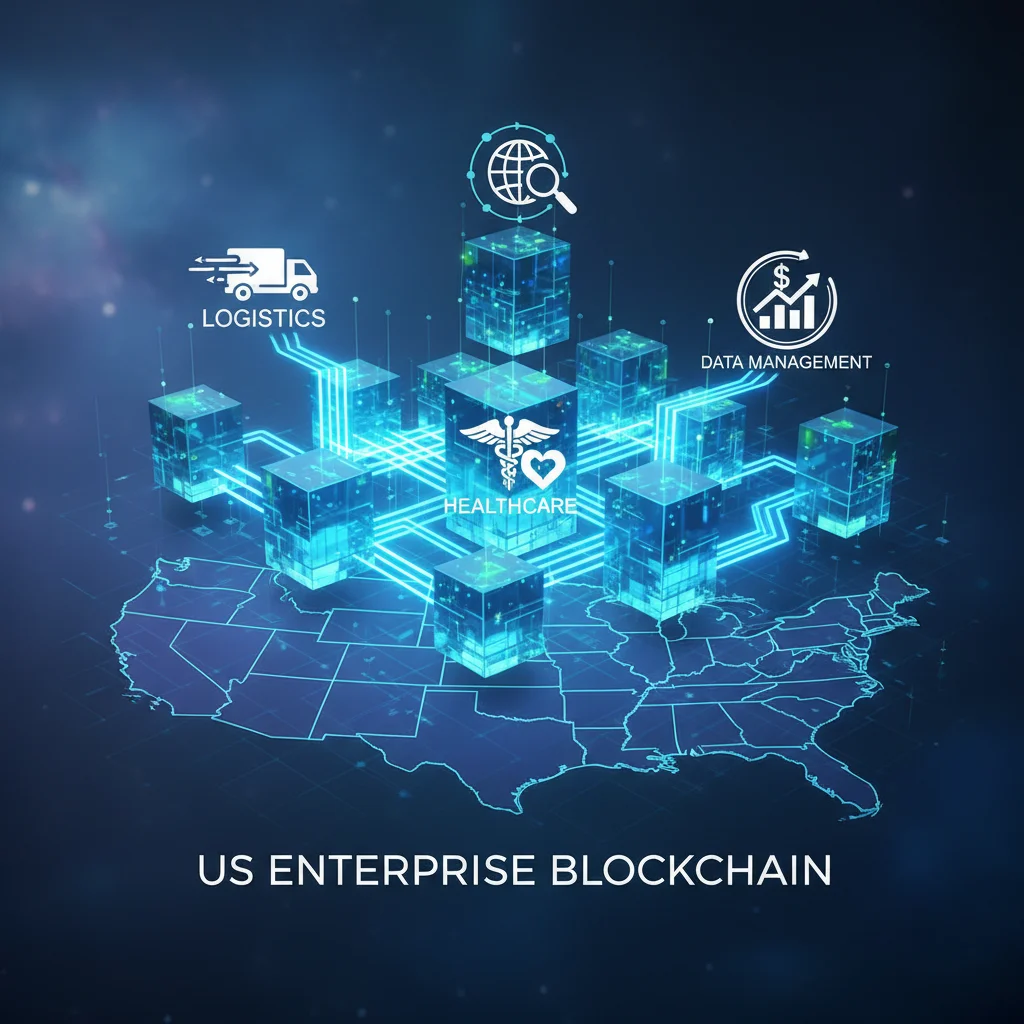
In the dynamic landscape of technological advancement, few innovations have garnered as much attention and misunderstanding as blockchain. Initially gaining notoriety as the underlying technology for cryptocurrencies like Bitcoin, blockchain’s true potential extends far beyond speculative digital assets. For US businesses, the year 2026 is poised to be a watershed moment, as enterprise blockchain applications move from nascent experiments to indispensable operational tools. This article delves into five pivotal enterprise blockchain applications that will redefine efficiency, security, and transparency across various sectors.
The allure of enterprise blockchain applications lies in its fundamental properties: decentralization, immutability, transparency (within defined parameters), and enhanced security through cryptography. These characteristics address long-standing challenges in traditional business models, such as data silos, lack of trust among participants, fraud, and inefficient reconciliation processes. As organizations mature in their understanding and implementation of this technology, the strategic advantages of adopting enterprise blockchain applications become increasingly evident.
Understanding the distinction between public blockchains (like those underpinning Bitcoin) and private or consortium blockchains (often favored by enterprises) is crucial. Enterprise blockchain applications typically leverage private or permissioned blockchains, where participants are known and authorized, allowing for greater control over data access and transaction throughput while retaining the core benefits of distributed ledger technology. This hybrid approach offers the best of both worlds, enabling businesses to harness blockchain’s power within a regulated and controlled environment.
Anúncios
1. Revolutionizing Supply Chain Management with Enterprise Blockchain Applications
One of the most impactful areas where enterprise blockchain applications are making significant strides is in supply chain management. The complexities of global supply chains, often involving numerous intermediaries, disparate data systems, and a lack of real-time visibility, present fertile ground for blockchain’s transformative capabilities. By 2026, US businesses will increasingly rely on blockchain to create transparent, immutable records of goods as they move from origin to consumer.
Imagine a scenario where every step of a product’s journey – from raw material sourcing and manufacturing to shipping and delivery – is recorded on a shared, distributed ledger. This eliminates information asymmetry, reduces the likelihood of fraud, and provides unparalleled traceability. For instance, in the food industry, blockchain can enable consumers to scan a QR code on a product and instantly access its journey, including farm origin, processing dates, and transportation details. This level of transparency builds consumer trust and allows for rapid identification and recall of contaminated products, mitigating health risks and financial losses.
Beyond traceability, enterprise blockchain applications enhance efficiency by streamlining documentation and payment processes. Smart contracts, self-executing agreements with the terms directly written into code, can automate payments upon the successful completion of predefined conditions, such as goods arriving at a port or passing a quality inspection. This reduces administrative overhead, minimizes disputes, and accelerates cash flow for all parties involved. Companies like Walmart and IBM have already demonstrated the power of blockchain in their supply chains, significantly reducing the time it takes to trace food products from weeks to seconds. By 2026, such implementations will be commonplace, offering a competitive edge to companies that embrace these enterprise blockchain applications.
Anúncios
Furthermore, the immutability of blockchain records makes it incredibly difficult to tamper with data, providing a robust defense against counterfeiting. This is particularly valuable for industries dealing with high-value goods, pharmaceuticals, and luxury items, where product authenticity is paramount. The enhanced data integrity fostered by enterprise blockchain applications leads to more reliable inventory management, better forecasting, and ultimately, a more resilient and responsive supply chain.

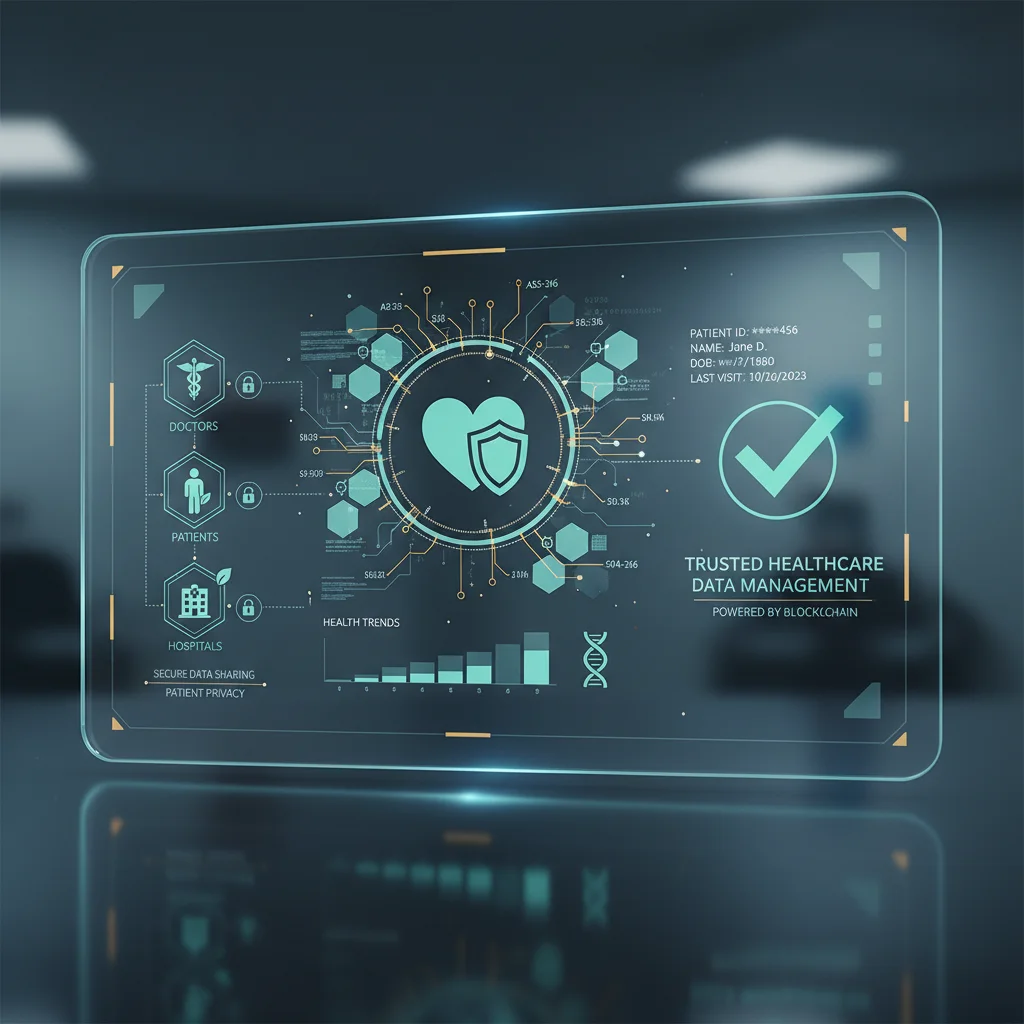
2. Enhancing Healthcare Data Security and Interoperability
The healthcare sector in the US grapples with immense challenges related to data security, patient privacy, and interoperability among disparate systems. Electronic health records (EHRs) are often fragmented across different providers, making it difficult for patients to access their complete medical history and for healthcare professionals to gain a holistic view of a patient’s health. Enterprise blockchain applications offer a promising solution to these long-standing issues by providing a secure, immutable, and patient-centric framework for managing health data.
By 2026, we can anticipate a significant shift towards blockchain-powered platforms that enable patients to control access to their medical records. Instead of healthcare providers owning patient data, blockchain can empower individuals with digital identities that grant them granular control over who can view and update their health information. This not only enhances patient privacy but also fosters greater trust in the healthcare system. For example, a patient could grant temporary access to a new specialist, revoke it after a consultation, and have an immutable record of all access attempts.
Moreover, enterprise blockchain applications can significantly improve interoperability. By creating a shared, encrypted ledger where authorized parties can securely access and update patient data, the problem of data silos can be mitigated. This means a seamless exchange of information between hospitals, clinics, pharmacies, and insurance companies, leading to more coordinated care, fewer medical errors, and reduced administrative burden. The cryptographic nature of blockchain ensures that data remains secure and tamper-proof, addressing critical compliance requirements like HIPAA.
Beyond individual patient records, blockchain can also revolutionize clinical trials and pharmaceutical supply chains. The integrity of clinical trial data is paramount, and blockchain can provide an immutable audit trail for every data point, ensuring transparency and reducing the potential for fraud. In the pharmaceutical supply chain, similar to general supply chains, enterprise blockchain applications can track medications from manufacturing to patient, combating counterfeiting and ensuring the authenticity and safety of drugs. The potential for enterprise blockchain applications to create a more efficient, secure, and patient-centric healthcare ecosystem is immense and will be increasingly realized by 2026.
3. Streamlining Financial Services and Cross-Border Payments
The financial services industry, characterized by its reliance on intermediaries, complex reconciliation processes, and significant transaction costs, is another prime candidate for disruption by enterprise blockchain applications. While cryptocurrencies have already demonstrated blockchain’s potential in peer-to-peer transactions, the enterprise adoption focuses on enhancing existing financial infrastructure rather than replacing it entirely.
By 2026, US financial institutions will be leveraging enterprise blockchain applications to streamline cross-border payments, reduce settlement times, and lower operational costs. Traditional international payments often involve multiple banks, each taking a fee and adding to the transaction’s duration. Blockchain can facilitate near real-time, secure, and cheaper international transfers by creating a direct, immutable ledger between participating financial institutions. This eliminates the need for numerous intermediaries and manual reconciliation, significantly improving efficiency.
Beyond payments, blockchain is set to transform trade finance. The current system relies heavily on paper-based documentation, letters of credit, and complex verification processes, leading to delays and increased risk. Enterprise blockchain applications, combined with smart contracts, can digitize these processes. For example, a smart contract can automatically release payment to an exporter once a shipment’s arrival at its destination is verified on the blockchain, contingent on all contractual terms being met. This increases trust, reduces fraud, and accelerates global trade.
Securities settlement is another area ripe for blockchain innovation. The current two-day settlement cycle (T+2) for equities introduces counterparty risk and ties up capital. Enterprise blockchain applications can enable instantaneous or near-instantaneous settlement (T+0), significantly reducing risk and improving liquidity in financial markets. The Depository Trust & Clearing Corporation (DTCC) has already explored blockchain solutions to modernize its post-trade processes, demonstrating the industry’s commitment to adopting these transformative technologies. The security and immutability of blockchain also make it ideal for maintaining robust audit trails and ensuring regulatory compliance, which is critical in the heavily regulated financial sector. The implementation of enterprise blockchain applications will lead to a more agile, secure, and cost-effective financial ecosystem for US businesses.
4. Digital Identity and Authentication Solutions
In an increasingly digital world, managing and verifying identities poses a significant challenge for both individuals and businesses. Traditional identity systems are often centralized, making them vulnerable to data breaches and identity theft. Enterprise blockchain applications offer a decentralized and secure approach to digital identity management, giving individuals greater control over their personal data.
By 2026, US businesses will increasingly adopt self-sovereign identity (SSI) solutions powered by blockchain. With SSI, individuals own and control their digital identities, storing verifiable credentials (e.g., driver’s license, academic degrees, professional certifications) on a blockchain. Instead of relying on a central authority to verify identity, individuals can selectively present verifiable proofs to businesses without revealing unnecessary personal information. For instance, to prove age for an online service, a user could present a cryptographic proof that they are over 21, without disclosing their exact birth date or address.
This approach enhances privacy, reduces the risk of identity theft, and streamlines verification processes for businesses. For companies, onboarding new customers or employees becomes faster and more secure, as the authenticity of credentials can be instantly verified on the blockchain. This reduces administrative costs and improves the customer experience. Furthermore, enterprise blockchain applications can help businesses comply with stringent data privacy regulations like GDPR and CCPA by enabling individuals to manage consent and control access to their data more effectively.
Beyond individual identities, blockchain can also be used for authenticating devices in the Internet of Things (IoT). As the number of connected devices proliferates, ensuring the integrity and security of these devices becomes critical. Blockchain can provide a secure registry for IoT devices, verifying their authenticity and recording their interactions, preventing unauthorized access and data manipulation. The robust and tamper-proof nature of enterprise blockchain applications makes them an ideal foundation for the next generation of digital identity and authentication solutions, bolstering security and trust across the digital economy.
5. Protecting Intellectual Property and Royalty Distribution
For industries heavily reliant on creative works and innovation, such as media, entertainment, and technology, protecting intellectual property (IP) and ensuring fair royalty distribution are persistent challenges. Piracy, unauthorized use, and opaque payment structures often lead to significant revenue loss and disputes. Enterprise blockchain applications offer a powerful framework to address these issues, providing immutable proof of ownership and transparent mechanisms for royalty payments.
By 2026, US businesses in creative sectors will increasingly leverage blockchain to timestamp and register IP assets, creating an unalterable record of creation and ownership. Whether it’s a piece of music, a patent, a design, or a software code, recording it on a blockchain provides undeniable proof of its existence at a specific time. This can be invaluable in legal disputes, offering a clear and transparent audit trail of IP rights.
More significantly, enterprise blockchain applications can revolutionize royalty distribution. Smart contracts can be programmed to automatically distribute royalties to creators, artists, and rights holders whenever their work is consumed or used. For example, if a song is streamed or downloaded, a smart contract can instantly and transparently allocate the appropriate percentage of revenue to the songwriter, performer, and publisher, based on predefined terms. This eliminates the need for complex, often slow, and opaque intermediary systems, ensuring that creators are paid fairly and promptly.
This level of transparency and automation fosters greater trust within the creative ecosystem and empowers creators. It also provides businesses with a more efficient and accurate way to manage their IP portfolios and comply with licensing agreements. Furthermore, blockchain can facilitate the fractional ownership of IP, allowing for new models of investment and revenue sharing. As the digital economy continues to grow, the ability of enterprise blockchain applications to safeguard IP and ensure equitable compensation will become an indispensable tool for US businesses operating in creative and innovative industries.
The Road Ahead for Enterprise Blockchain Applications in US Businesses
The journey of enterprise blockchain applications from niche technology to mainstream business solution is well underway. While challenges such as scalability, regulatory clarity, and integration with legacy systems still exist, ongoing advancements are rapidly addressing these hurdles. The increasing investment from major technology firms, the formation of industry consortiums, and the growing pool of skilled blockchain developers are all indicators of a robust future for enterprise blockchain applications.
For US businesses, the imperative is clear: to remain competitive and innovative, understanding and strategically adopting enterprise blockchain applications is no longer optional but a strategic necessity. The benefits of enhanced security, unparalleled transparency, increased efficiency, and significant cost reductions are too compelling to ignore. Early adopters are already demonstrating the tangible value these technologies bring, setting a precedent for broader adoption.
The transformative power of enterprise blockchain applications extends across virtually every sector, promising to reshape how businesses operate, interact with customers, and manage their most valuable assets. By 2026, the landscape of US commerce will be profoundly influenced by these distributed ledger technologies, moving far beyond the realm of cryptocurrency to become a foundational element of the digital economy. Businesses that proactively explore and implement these solutions will be best positioned to thrive in this new era of decentralized trust and efficiency.
Investing in pilot projects, educating internal teams, and collaborating with blockchain experts will be crucial steps for businesses looking to harness the full potential of enterprise blockchain applications. The shift towards a blockchain-powered future is not merely a technological upgrade but a fundamental change in how value is created, exchanged, and secured. The five applications discussed herein represent just a glimpse into the vast potential that enterprise blockchain applications hold for US businesses in the coming years, promising a future that is more secure, transparent, and efficient for all.
