U.S. Intelligence Community in 2026: Adapting to 5 New Forms of Global Information Warfare
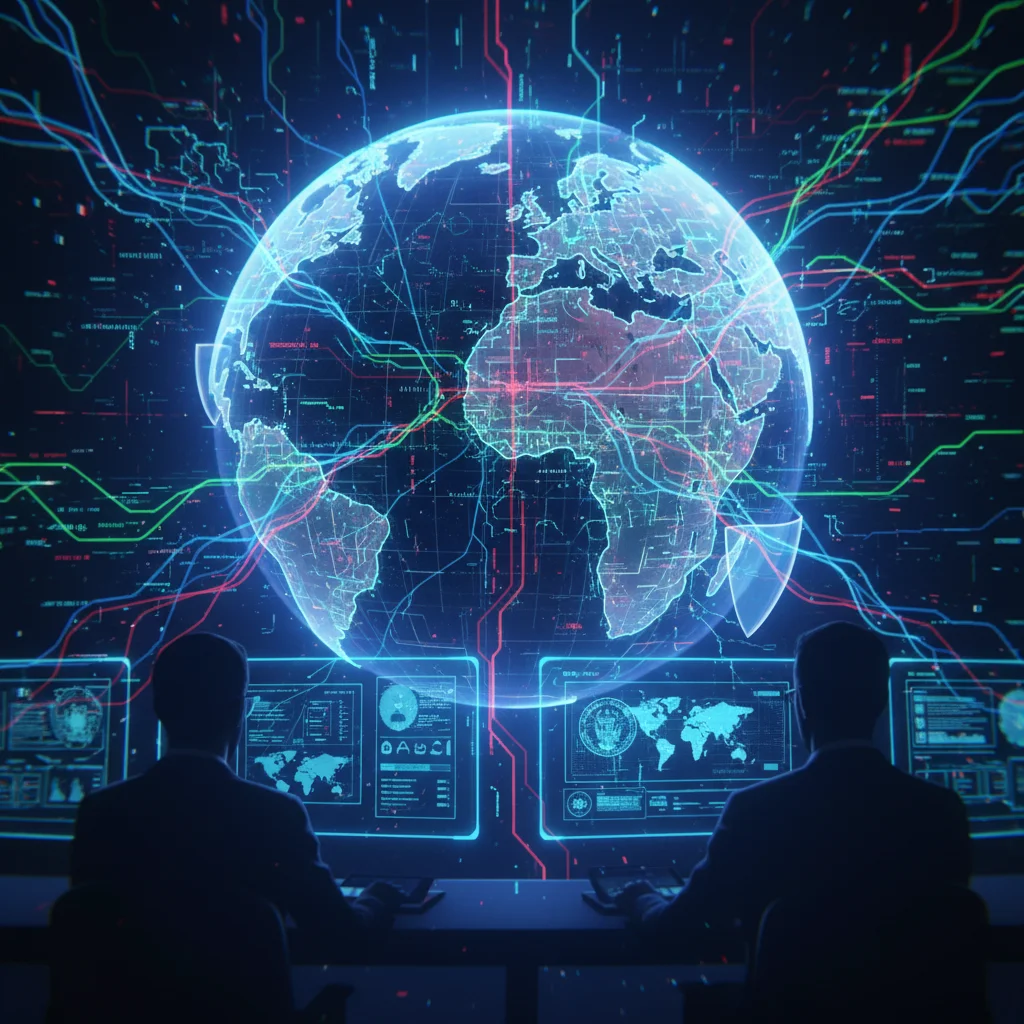
The landscape of global conflict is no longer confined to physical battlefields. In the 21st century, a new and insidious front has emerged: information warfare. As we look towards 2026, the U.S. Intelligence Community (IC) faces an accelerated evolution of this threat, demanding unprecedented agility, technological prowess, and strategic foresight. The very fabric of truth, public perception, and national stability is under constant assault from state and non-state actors wielding sophisticated tools of influence and deception. Understanding these evolving threats is paramount to safeguarding national security and maintaining global stability.
The traditional intelligence cycle – collection, processing, analysis, dissemination – is being challenged and reshaped by the sheer volume, velocity, and veracity issues inherent in the digital age. Adversaries are no longer just seeking classified documents; they are targeting minds, sowing discord, and undermining democratic institutions through complex campaigns of disinformation, cyberattacks, and psychological operations. The stakes have never been higher, and the need for the U.S. Intelligence Community to adapt to these new forms of global information warfare is critical.
This article delves into five emergent forms of global information warfare future threats that the U.S. Intelligence Community must contend with by 2026. We will explore the nature of these threats, the challenges they pose, and the innovative strategies and technological advancements being deployed to counter them. From the hyper-realistic fabrications of deepfakes to the weaponization of social media algorithms, the intelligence apparatus is in a perpetual state of evolution, racing to stay ahead of an ever-innovating adversary.
Anúncios
1. Hyper-Realistic Deepfake and Synthetic Media Campaigns
One of the most alarming developments in the realm of information warfare future is the rapid advancement and weaponization of deepfake technology and other forms of synthetic media. What was once a niche technological curiosity has matured into a powerful tool for deception, capable of generating highly convincing audio, video, and images that are virtually indistinguishable from authentic content. By 2026, the sophistication and accessibility of these tools will have reached a critical threshold, posing significant challenges for intelligence agencies.
Adversaries can leverage deepfakes to create fabricated events, statements, or scenarios that could ignite geopolitical crises, manipulate public opinion, or undermine trust in legitimate news sources. Imagine a deepfake video of a world leader making incendiary remarks, or a synthetic audio recording of a military commander issuing false orders. Such content, if released at a critical juncture, could have catastrophic consequences, leading to miscalculation, panic, or even armed conflict. The ability to convincingly impersonate individuals, coupled with the speed of digital dissemination, makes this a formidable threat.
Challenges for the U.S. Intelligence Community:
- Attribution: Pinpointing the origin of a deepfake campaign is incredibly difficult. The technology allows for anonymization and obfuscation, making it hard to identify the perpetrators and hold them accountable.
- Detection: While detection technologies are improving, they are in a constant arms race with generation technologies. As deepfakes become more sophisticated, distinguishing them from reality becomes increasingly challenging for both human analysts and automated systems.
- Trust Erosion: Even if a deepfake is eventually debunked, the initial impact can be devastating. The mere existence of such convincing fakes erodes public trust in all media, creating an environment ripe for further manipulation and societal fragmentation. This erosion of trust is a long-term strategic goal for many adversaries engaging in information warfare future tactics.
Adaptation Strategies:
The U.S. Intelligence Community is investing heavily in advanced AI and machine learning for deepfake detection and forensic analysis. This includes developing algorithms that can identify subtle anomalies, inconsistencies in lighting, or digital watermarks. Furthermore, fostering public awareness and media literacy is crucial, empowering citizens to critically evaluate information. International collaboration with allies and tech companies is also vital to establish common standards and share threat intelligence regarding synthetic media.
Anúncios

2. Algorithmic Manipulation and Weaponized Social Media
Social media platforms have become central to modern communication, but their underlying algorithms represent a new frontier in global information warfare future. Adversaries are no longer just pushing propaganda; they are learning to manipulate algorithms to amplify their narratives, suppress dissenting voices, and create echo chambers that radicalize populations. By 2026, the understanding and exploitation of these algorithmic vulnerabilities will be highly sophisticated.
The goal of algorithmic manipulation is to subtly steer public discourse, influence political outcomes, and exacerbate societal divisions without direct, overt propaganda. This can involve creating vast networks of bot accounts to generate artificial trends, buying targeted advertising to push specific messages to susceptible demographics, or exploiting platform vulnerabilities to gain preferential visibility. The psychological impact can be profound, as individuals are unknowingly fed a curated diet of information designed to reinforce specific viewpoints, regardless of their factual basis.
Challenges for the U.S. Intelligence Community:
- Scale and Speed: The sheer volume of data and the speed at which information spreads on social media make comprehensive monitoring and intervention incredibly difficult.
- Attribution Complexity: Tracing algorithmic manipulation back to its source is a complex task, often involving analyzing vast datasets and understanding the intricate workings of platform algorithms, which are often proprietary. This makes the task of countering these information warfare future tactics particularly challenging.
- Domestic vs. Foreign Influence: Distinguishing between legitimate domestic discourse and foreign-backed influence operations is a constant challenge, raising complex legal and ethical considerations regarding surveillance and intervention.
- Platform Cooperation: Gaining timely and effective cooperation from social media companies, who often prioritize user growth and engagement, can be an obstacle.
Adaptation Strategies:
The IC is enhancing its capabilities in social media analysis, employing advanced AI to identify bot networks, detect coordinated inauthentic behavior, and track narrative propagation. This involves developing sophisticated tools for natural language processing (NLP) and graph analysis to map influence networks. Furthermore, the IC is working to understand and anticipate algorithmic changes to predict potential vulnerabilities. Collaboration with academic researchers, think tanks, and technology companies is also crucial to sharing insights into platform dynamics and developing countermeasures against algorithmic manipulation in the information warfare future.
3. Cognitive Hacking and Psychological Operations 2.0
Beyond simply influencing opinions, the next evolution of information warfare future involves direct cognitive hacking – targeting human vulnerabilities and cognitive biases to achieve strategic objectives. This is psychological operations (PSYOPs) on steroids, leveraging insights from behavioral science, neuroscience, and advanced data analytics to craft highly personalized and impactful influence campaigns. By 2026, these operations will be more precise, pervasive, and psychologically sophisticated than ever before.
Cognitive hacking seeks to alter perceptions, memories, and decision-making processes by exploiting inherent human biases, fears, and desires. This can involve micro-targeting individuals with tailored disinformation, using emotional manipulation to drive specific behaviors, or even employing neuro-linguistic programming techniques in online interactions. The goal is to create a desired psychological state – whether it’s apathy, anger, fear, or division – that serves the adversary’s geopolitical agenda. This represents a fundamental shift from simply disseminating information to actively manipulating the cognitive landscape of target populations.
Challenges for the U.S. Intelligence Community:
- Ethical Boundaries: Countering cognitive hacking often involves delving into sensitive areas of human psychology, raising ethical concerns about intelligence agencies’ involvement in influencing public thought, even for defensive purposes.
- Subtlety of Attack: These campaigns are often designed to be subtle and incremental, making them difficult to identify as malicious attacks rather than organic shifts in public sentiment.
- Measuring Impact: Quantifying the success or failure of cognitive hacking operations, and therefore the effectiveness of countermeasures, is inherently complex due to the subjective nature of human thought and behavior.
- Multi-Domain Integration: Cognitive hacking often integrates with other forms of warfare, from cyberattacks to economic pressure, making it difficult to isolate and counter as a standalone threat. This holistic approach to information warfare future demands a similarly integrated defense.
Adaptation Strategies:
The IC is building multidisciplinary teams that include psychologists, sociologists, data scientists, and linguists to better understand human cognitive vulnerabilities and adversary methodologies. This involves developing advanced behavioral analytics to identify patterns indicative of cognitive hacking attempts. Furthermore, the IC is focusing on resilience-building strategies within target populations, promoting critical thinking, and supporting initiatives that foster media literacy and digital hygiene. Understanding the cultural and psychological nuances of target groups is also crucial to developing effective counter-narratives and building resilience against these sophisticated information warfare future threats.
4. The Rise of AI-Powered Autonomous Propaganda Engines
The current generation of disinformation campaigns often relies on human operators to craft narratives and manage bot networks. However, by 2026, we are likely to see the emergence of fully or semi-autonomous AI-powered propaganda engines. These systems will be capable of generating vast quantities of contextually relevant, linguistically sophisticated, and emotionally resonant disinformation without significant human intervention, marking a significant leap in information warfare future capabilities.
These AI engines could analyze real-time events, identify opportune moments for intervention, generate tailored narratives in multiple languages, and disseminate them across various platforms, all while adapting to feedback and optimizing for maximum impact. Imagine an AI system that monitors global news, identifies a developing crisis, then automatically drafts and publishes articles, social media posts, and even deepfake content designed to exacerbate tensions or spread a specific narrative, all within minutes. This level of automation will dramatically increase the scale, speed, and sophistication of disinformation campaigns, overwhelming traditional human-centric intelligence analysis.
Challenges for the U.S. Intelligence Community:
- Volume and Velocity: The sheer volume of AI-generated content will make it nearly impossible for human analysts to keep pace. The speed of dissemination will also outstrip current response mechanisms.
- Adaptability: Autonomous systems can learn and adapt, making static defenses quickly obsolete. Identifying and neutralizing these evolving threats will require equally dynamic and adaptive intelligence tools.
- Attribution in the Machine Age: Attributing AI-generated propaganda to specific state or non-state actors will become even more challenging, as the human footprint on content creation diminishes. This complicates the ability to respond effectively to these information warfare future threats.
- Ethical AI Development: The IC must also ensure that its own defensive AI tools are developed ethically and do not inadvertently contribute to the problem of information overload or bias.
Adaptation Strategies:
The U.S. Intelligence Community is investing heavily in advanced AI-driven counter-propaganda systems. This includes developing AI that can detect patterns in AI-generated text and media, identify stylistic fingerprints of different propaganda engines, and even predict the next likely moves of adversarial AI. Furthermore, the IC is exploring the use of defensive AI to generate counter-narratives and debunk false information at scale and speed. This requires a significant upgrade in computational infrastructure and a focus on developing explainable AI to ensure transparency and accountability. The development of AI-powered tools is seen as a critical component in addressing the challenges posed by the information warfare future.
5. Quantum-Enabled Information Obfuscation and Encryption
While not directly a form of offensive information warfare in the traditional sense, the advent of quantum computing poses a significant disruptive threat to the U.S. Intelligence Community’s ability to collect and analyze intelligence, thereby fundamentally altering the balance of information warfare future. Quantum computing’s potential to break current encryption standards could render vast archives of classified information vulnerable and make secure communication impossible using existing methods. Conversely, adversaries could use quantum-enabled techniques to obfuscate their own information, making it virtually unreadable.
The threat is twofold: offensive quantum capabilities could decrypt sensitive communications and data, exposing intelligence assets and operations; defensive quantum capabilities, if adopted by adversaries, could make their communications and data impenetrable to conventional intelligence gathering. This creates an intelligence blackout scenario, severely hampering the IC’s ability to understand adversary intentions, capabilities, and activities. The transition to a post-quantum cryptographic world is not merely a technical upgrade; it’s a strategic imperative that will redefine the playing field of information superiority.
Challenges for the U.S. Intelligence Community:
- Encryption Vulnerability: The most significant challenge is the potential for current cryptographic standards, upon which global secure communications rely, to be broken by quantum computers.
- Quantum Obfuscation: Adversaries could leverage quantum principles to create new methods of information hiding and encryption that are currently undetectable or unbreakable.
- Talent Gap: There is a global shortage of quantum computing experts, making it challenging for the IC to recruit and retain the necessary talent to develop and deploy quantum-resistant solutions.
- Cost and Infrastructure: Developing and implementing quantum-safe cryptographic infrastructure across all government and military systems will be an enormous and costly undertaking, requiring significant investment and coordination.
Adaptation Strategies:
The U.S. Intelligence Community is actively engaged in researching and developing post-quantum cryptography (PQC) standards. This involves collaborating with the National Institute of Standards and Technology (NIST) and other government agencies to identify and standardize encryption algorithms that are resistant to quantum attacks. The IC is also investing in quantum computing research itself, not only to develop defensive capabilities but also to understand potential offensive applications. This includes training a new generation of quantum-savvy intelligence professionals and exploring quantum key distribution (QKD) as a potential long-term solution for secure communication. The race to achieve quantum supremacy, or at least quantum resilience, is a defining aspect of the information warfare future.

The Overarching Imperative: Unity of Effort and Strategic Foresight
Beyond these five specific forms of information warfare future, an overarching imperative for the U.S. Intelligence Community is the need for enhanced unity of effort and strategic foresight. The interconnected nature of these threats means that no single agency can tackle them in isolation. A truly integrated approach, spanning across the 18 elements of the IC, as well as close collaboration with international partners, academia, and the private sector, is absolutely essential.
This unity of effort must manifest in several key areas:
- Information Sharing and Integration: Breaking down silos between intelligence agencies and fostering seamless information exchange is critical. This includes sharing threat intelligence, best practices, and technological solutions to create a more resilient collective defense.
- Talent Acquisition and Development: The IC needs to attract and retain top talent in cutting-edge fields like AI, quantum computing, behavioral science, and data analytics. This requires competitive compensation, innovative recruitment strategies, and continuous professional development to keep pace with rapid technological advancements.
- Public-Private Partnerships: Many of the technologies central to both offensive and defensive information warfare originate in the private sector. Close collaboration with tech companies, cybersecurity firms, and research institutions is vital for early threat detection, co-development of countermeasures, and rapid deployment of solutions.
- Legal and Ethical Frameworks: As information warfare evolves, so too must the legal and ethical frameworks governing intelligence operations. Striking the right balance between protecting national security and upholding democratic values, civil liberties, and international law is a complex but necessary challenge.
- Proactive Deterrence and Resilience: Moving beyond reactive measures, the IC must develop proactive strategies for deterrence. This includes publicly attributing malicious activities when appropriate, building national resilience against disinformation, and strengthening democratic institutions against foreign interference.
The threats outlined above are not static; they are dynamic and constantly evolving. The U.S. Intelligence Community’s ability to anticipate future shifts, adapt its strategies, and innovate at an accelerated pace will be the defining factor in successfully navigating the complex landscape of information warfare future. The battle for information superiority is a continuous one, and vigilance, adaptability, and collaboration are the ultimate weapons in this new era of global conflict.
Conclusion: Securing the Information Domain in 2026 and Beyond
By 2026, the U.S. Intelligence Community will be operating in an information environment profoundly shaped by hyper-realistic deepfakes, algorithmic manipulation, sophisticated cognitive hacking, autonomous propaganda engines, and the looming quantum threat. These five new forms of global information warfare future represent a multi-faceted challenge that demands a holistic and integrated response.
The intelligence apparatus is not merely reacting; it is proactively transforming. Through significant investments in advanced AI, machine learning, quantum research, and multidisciplinary talent, the IC is building a more robust and adaptive defense. The emphasis on interagency collaboration, international partnerships, and public engagement underscores a recognition that securing the information domain is a collective responsibility.
The future of national security hinges on the ability to not only understand but also effectively counter these evolving threats. The U.S. Intelligence Community’s ongoing adaptation to the complexities of information warfare future is a testament to its commitment to protecting the nation’s interests, values, and democratic processes in an increasingly volatile and digitally interconnected world. The struggle for truth and perception will continue, and the intelligence community stands at the forefront, safeguarding the integrity of information itself.
